Get your free personalized podcast brief
We scan new podcasts and send you the top 5 insights daily.
The nomination of Kevin Warsh as Fed Chair is not a traditional hawk vs. dove decision. Instead, it signals the Federal Reserve's transformation into a subordinate arm of the Treasury, tasked with executing a nationalist 'economic statecraft' agenda rather than maintaining its theoretical independence and focusing on traditional inflation targets.

Related Insights
The appointment of Kevin Warsh as Fed Chair shifts the focus from purely economic decisions to a fundamental governance question: will the central bank remain independent or take political orders from the president? This represents a potential paradigm shift in the separation of powers.

The nomination of Kevin Warsh, perceived as more hawkish, is a deliberate move to restore credibility around the Fed's balance sheet. This counters investor skepticism, signaled by rising gold prices, and buys time for the administration's economic strategy to succeed.

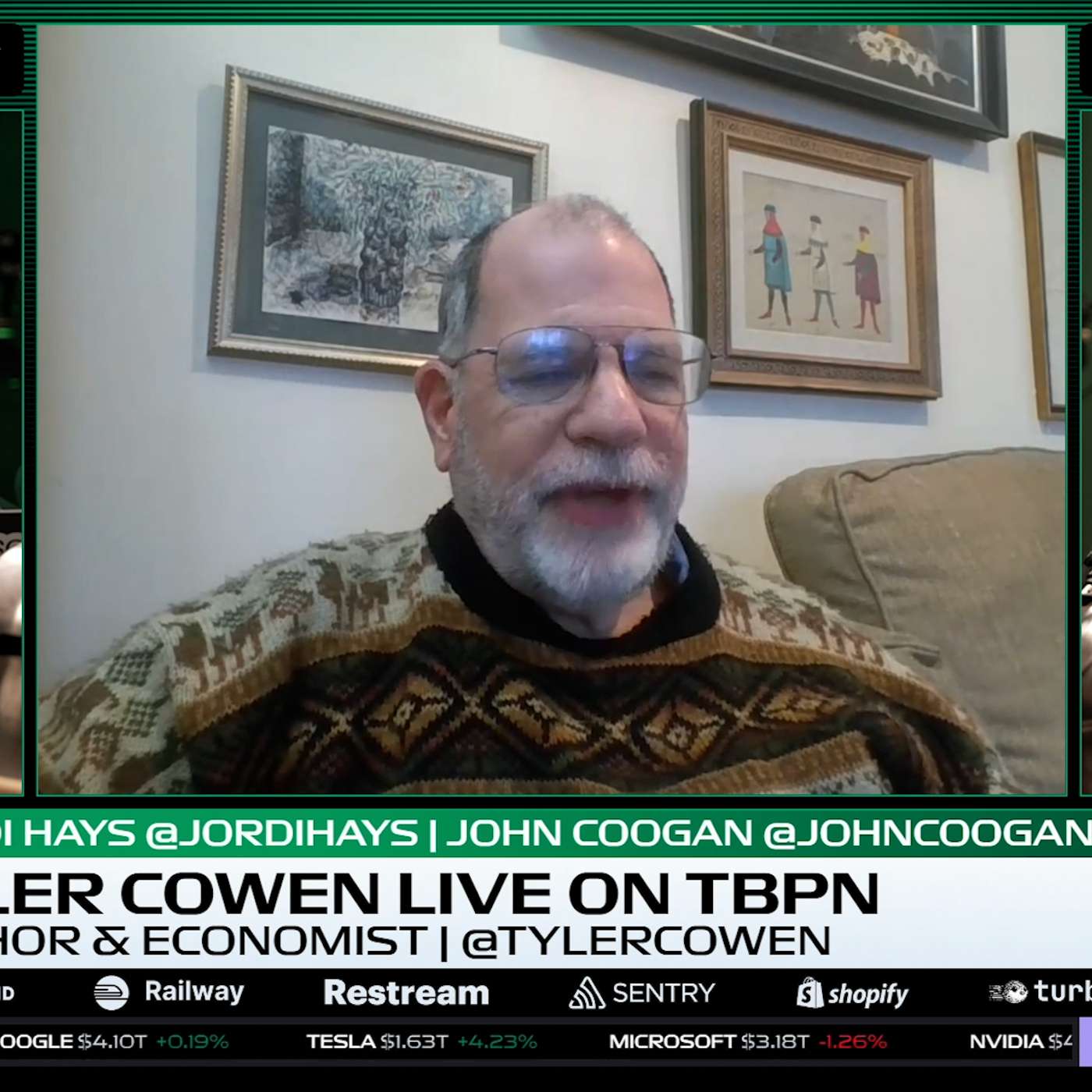
Tyler Cowen argues that Kevin Warsh is a political operator whose past economic stances are less predictive of his future actions than his desire to navigate the political landscape, particularly his relationship with Trump. Warsh's personal wealth from the Lauder family gives him the freedom to act independently if necessary, making his political calculus the key variable.
The consideration of Kevin Hassett for Fed Chair highlights a significant change in the expected profile for the role. Once viewed as a technocratic economist who published in academic journals, Hassett is now widely seen as a partisan political operator, raising questions about whether the Fed will be led by an independent expert or a political agent.

Central bank independence is a relatively new concept from the 1990s. Historically, central banks operated as junior partners to the government, executing industrial policy. The move to subordinate the Fed to the Treasury is a return to a long-standing historical model.
Critics allege Kevin Warsh exhibits a pattern of partisanship, worrying about inflation and fiscal excess under Democratic presidents but pivoting to pro-growth, lower-rate stances under Republicans. This behavior raises serious questions about his political independence and commitment to the Fed's dual mandate, regardless of the administration in power.

Despite his reputation as an inflation hawk, Fed Chair nominee Kevin Warsh is arguing for lower interest rates. He claims a coming AI-driven productivity boom will be disinflationary, allowing for looser monetary policy. This stance strategically aligns with President Trump's desire for rate cuts, making his nomination politically palatable.

The idea of an independent Fed is a relatively modern concept, dating effectively to 1951. Historically, from its creation in 1913, the Fed has consistently acted as an arm of the state, financing wars and executing government policy, making the current shift towards explicit statecraft a return to its roots.
Trump's nomination of Kevin Warsh for Fed Chair created unusual political divisions, drawing support from mainstream liberals like Jason Furman while facing opposition from others like Paul Krugman, unlike typical partisan confirmation battles.
The Trump administration's desire for rate cuts is a given. Warsh's distinct, long-held agenda is to reduce the Fed's balance sheet. This reconciles his hawkish reputation with the dovish policy of cutting rates, a consensus view within the administration.