Get your free personalized podcast brief
We scan new podcasts and send you the top 5 insights daily.
Despite his reputation as an inflation hawk, Fed Chair nominee Kevin Warsh is arguing for lower interest rates. He claims a coming AI-driven productivity boom will be disinflationary, allowing for looser monetary policy. This stance strategically aligns with President Trump's desire for rate cuts, making his nomination politically palatable.

Related Insights
Warsh advocates for a nuanced Fed policy: simultaneously cutting interest rates while passively shrinking the balance sheet by letting bonds mature. This "passive quantitative tightening" aims to reduce the Fed's market footprint without the shock of active selling, representing a middle ground between aggressive easing and hawkish tightening.

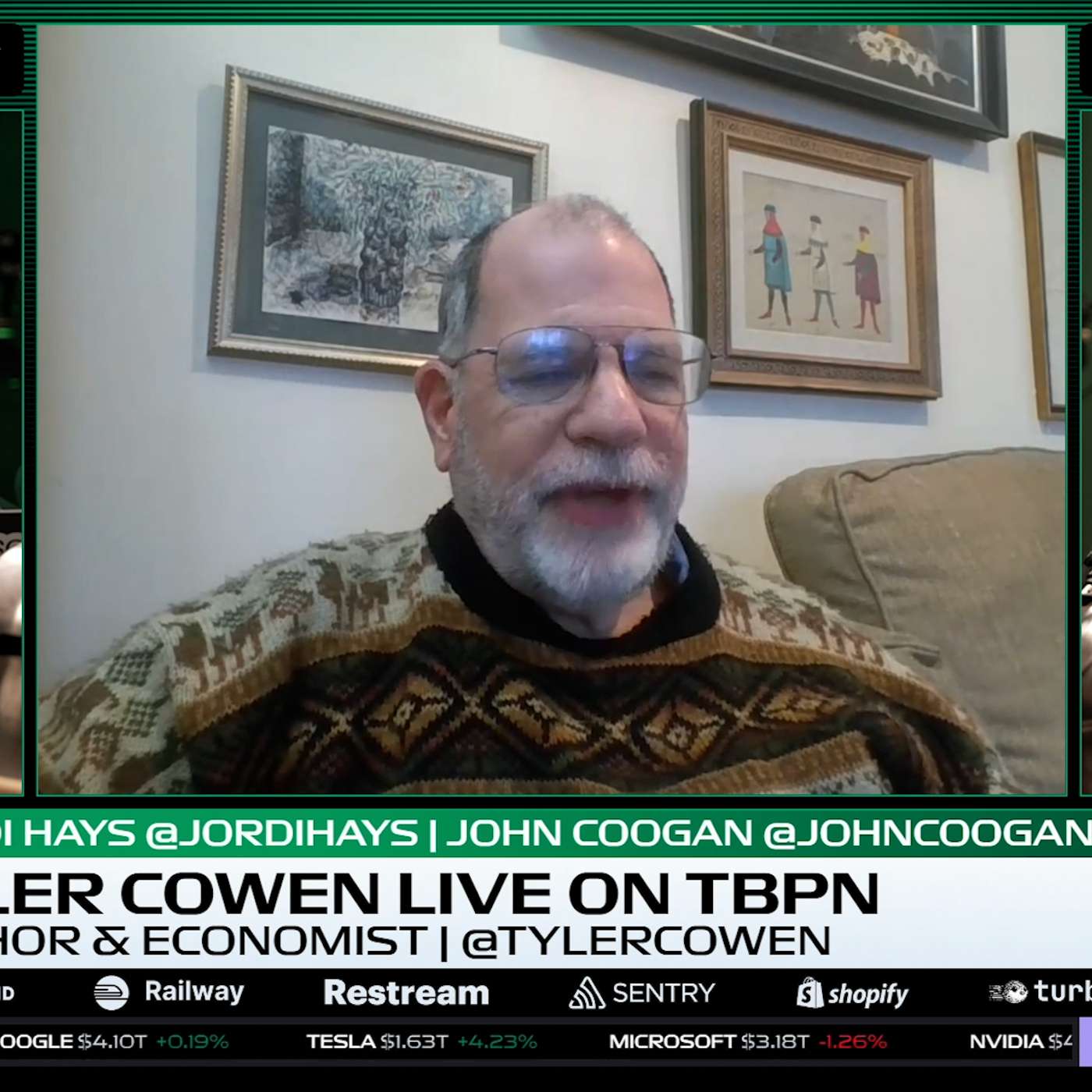
Tyler Cowen argues that Kevin Warsh is a political operator whose past economic stances are less predictive of his future actions than his desire to navigate the political landscape, particularly his relationship with Trump. Warsh's personal wealth from the Lauder family gives him the freedom to act independently if necessary, making his political calculus the key variable.
AI challenges traditional monetary policy logic. Historically, lower interest rates spur capital investment that creates jobs. However, if lower rates now incentivize investment in job-reducing AI, the Fed's primary tool for boosting employment may become less effective or even have ambiguous effects, a new dynamic policymakers must understand.

Despite strong economic data suggesting the Fed should hold rates, markets are pricing 40-50 basis points of cuts. This discrepancy is driven by political uncertainty around the appointment of a new Fed Chair, as the administration's focus on lower rates makes it difficult for markets to price out easing until the new leadership is confirmed.

Kevin Warsh argues the Fed has experienced "scope creep" by taking on quantitative easing, broad bank regulation, and social initiatives. He advocates for a return to a narrow mandate focused on price stability, using interest rates as the primary tool and exiting non-conventional mechanisms.
Critics allege Kevin Warsh exhibits a pattern of partisanship, worrying about inflation and fiscal excess under Democratic presidents but pivoting to pro-growth, lower-rate stances under Republicans. This behavior raises serious questions about his political independence and commitment to the Fed's dual mandate, regardless of the administration in power.
Kevin Warsh advocates for a nuanced economic policy that avoids both the short-termism of temporary stimulus checks and the punishing effects of pure fiscal austerity. His approach focuses on pro-growth supply-side reforms like simplifying the tax code and reducing regulation to foster long-term investment rather than just reinflating consumer bubbles.

AI is creating a secular trend of higher productivity but lower labor demand, leading to a 'jobless recovery' and structurally higher unemployment. This consistent threat to the Fed's maximum employment mandate will compel it to maintain dovish monetary policy long-term, irrespective of political pressures or short-term inflation data.

The podcast highlights a contradiction in the argument that an AI productivity boom justifies rate cuts. Standard economic theory suggests that higher productivity increases the economy's potential, raising the equilibrium interest rate (R-star). To prevent overheating, the Fed should theoretically raise, not lower, its policy rate.
A rapid, broad adoption of AI could significantly boost productivity, leading to faster real GDP growth while simultaneously causing disinflation. This supply-side-driven scenario would present a puzzle for the Fed, potentially allowing it to lower interest rates to normalize policy even amid a strong economy.
