Get your free personalized podcast brief
We scan new podcasts and send you the top 5 insights daily.
The appointment of Kevin Warsh as Fed Chair shifts the focus from purely economic decisions to a fundamental governance question: will the central bank remain independent or take political orders from the president? This represents a potential paradigm shift in the separation of powers.

Related Insights
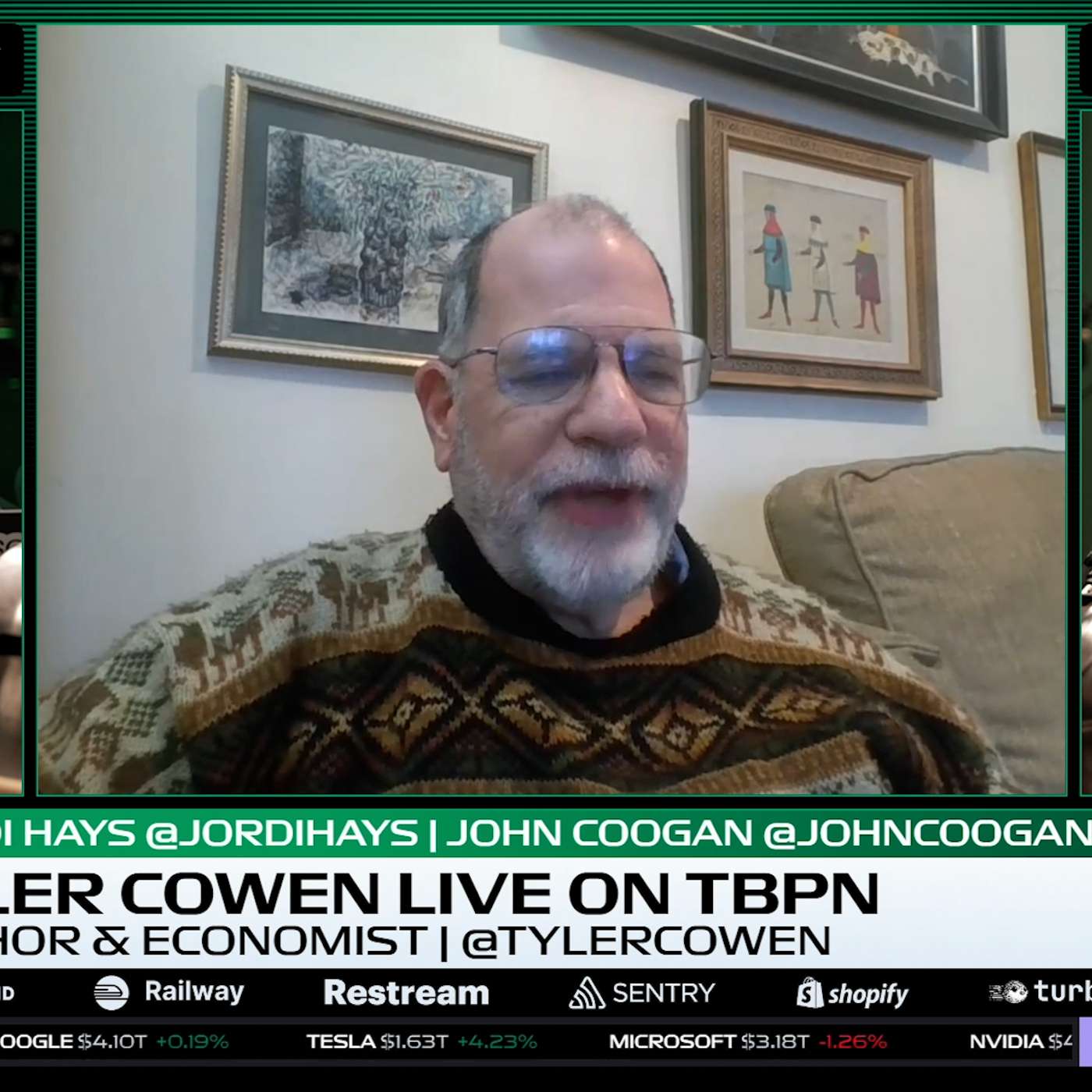
Tyler Cowen argues that Kevin Warsh is a political operator whose past economic stances are less predictive of his future actions than his desire to navigate the political landscape, particularly his relationship with Trump. Warsh's personal wealth from the Lauder family gives him the freedom to act independently if necessary, making his political calculus the key variable.
Increasing political influence, including presidential pressure and politically-aligned board appointments, is compromising the Federal Reserve's independence. This suggests future monetary policy may be more dovish than economic data warrants, as the Fed is pushed to prioritize short-term growth ahead of elections.

The consideration of Kevin Hassett for Fed Chair highlights a significant change in the expected profile for the role. Once viewed as a technocratic economist who published in academic journals, Hassett is now widely seen as a partisan political operator, raising questions about whether the Fed will be led by an independent expert or a political agent.

The threat to the Federal Reserve's independence is not limited to a single appointment. It involves a broader potential strategy of simultaneously nominating a chair, replacing other board members like Lisa Cook, and filling vacancies as they arise. This creates the possibility for a majority of the Fed board to become politically aligned with the administration.
Critics allege Kevin Warsh exhibits a pattern of partisanship, worrying about inflation and fiscal excess under Democratic presidents but pivoting to pro-growth, lower-rate stances under Republicans. This behavior raises serious questions about his political independence and commitment to the Fed's dual mandate, regardless of the administration in power.

The arguments to allow presidential firing of FTC commissioners create a slippery slope that threatens other independent, multi-member bodies. This logic could extend to the Federal Reserve's Board of Governors, potentially politicizing U.S. monetary policy—an outcome so significant that even the court's conservative justices appear wary of its implications.
Despite intense political criticism, a coalition including former Fed chairs, Treasury secretaries from both parties, and major bank CEOs has publicly defended the central bank's independence. This signals that markets view a non-politicized Fed as critical for economic stability, overriding political allegiances.
Alan Blinder argues that financial markets are severely underpricing the risk of political interference at the Federal Reserve. He cites the President's attempt to remove a governor and political appointments as clear threats that defy historical norms, calling it "one of the biggest underreactions" he's ever seen.
Despite the perception of independence, the Federal Reserve historically yields to political pressure from the White House. Every US president, regardless of party, has ultimately obtained the monetary policy they desired, a pattern that has held true since the Fed's creation.

In crises like 2008 and 2020, the Fed's perceived independence allowed it to broker vital policy solutions between a divided government. Appointing a figure seen as highly partisan, like Kevin Warsh, risks destroying this institutional trust, potentially paralyzing the Fed's ability to act as a reliable crisis manager when it is needed most.