Get your free personalized podcast brief
We scan new podcasts and send you the top 5 insights daily.
Analysts often mistakenly constrain a disruptor's potential to the size of the existing market it's replacing (e.g., valuing Uber based on the taxi market). Truly disruptive products create entirely new behaviors and expand the total addressable market (TAM) by orders of magnitude, a key insight for valuing high-growth companies.

Related Insights
"Blocked" customers aren't using a bad alternative; they're doing nothing because no viable solution exists. You can't observe their struggle. Unlocking this latent demand, as Uber did for people who previously wouldn't travel, doesn't just steal market share—it creates a new market entirely.

The narrative that successful tech platforms are simply "rent extractors" overlooks their fundamental value creation. DoorDash, for example, created a new market for at-home restaurant dining, massively increasing the addressable market for restaurants and creating new jobs for drivers, rather than just inserting itself into an existing transaction.

During a fundamental technology shift like the current AI wave, traditional market size analysis is pointless because new markets and behaviors are being created. Investors should de-emphasize TAM and instead bet on founders who have a clear, convicted vision for how the world will change.

Founders in deep tech and space are moving beyond traditional TAM analysis. They justify high valuations by pitching narratives of creating entirely new markets, like interplanetary humanity or space-based data centers. This shifts the conversation from 'what is the market?' to 'what could the market become?'.

The true market opportunity for AI is not merely replacing existing software but automating human labor. This reframes the total addressable market (TAM) from the ~$400 billion global software industry to the $13 trillion US-only labor market, representing a thirty-fold increase in potential value.

Traditional market sizing, which analyzes existing demand, is useless for true technological breakthroughs. A fundamental change on the supply side (e.g., GPUs for AI, cloud for software) unlocks markets that are orders of magnitude larger than their predecessors (e.g., gaming, on-prem software).
Companies like Amazon (from books to cloud) and Intuitive Surgical (from one specific surgery to many) became massive winners by creating new markets, not just conquering existing ones. Investors should prioritize businesses with the innovative capacity to expand their TAM, as initial market sizes are often misleadingly small.

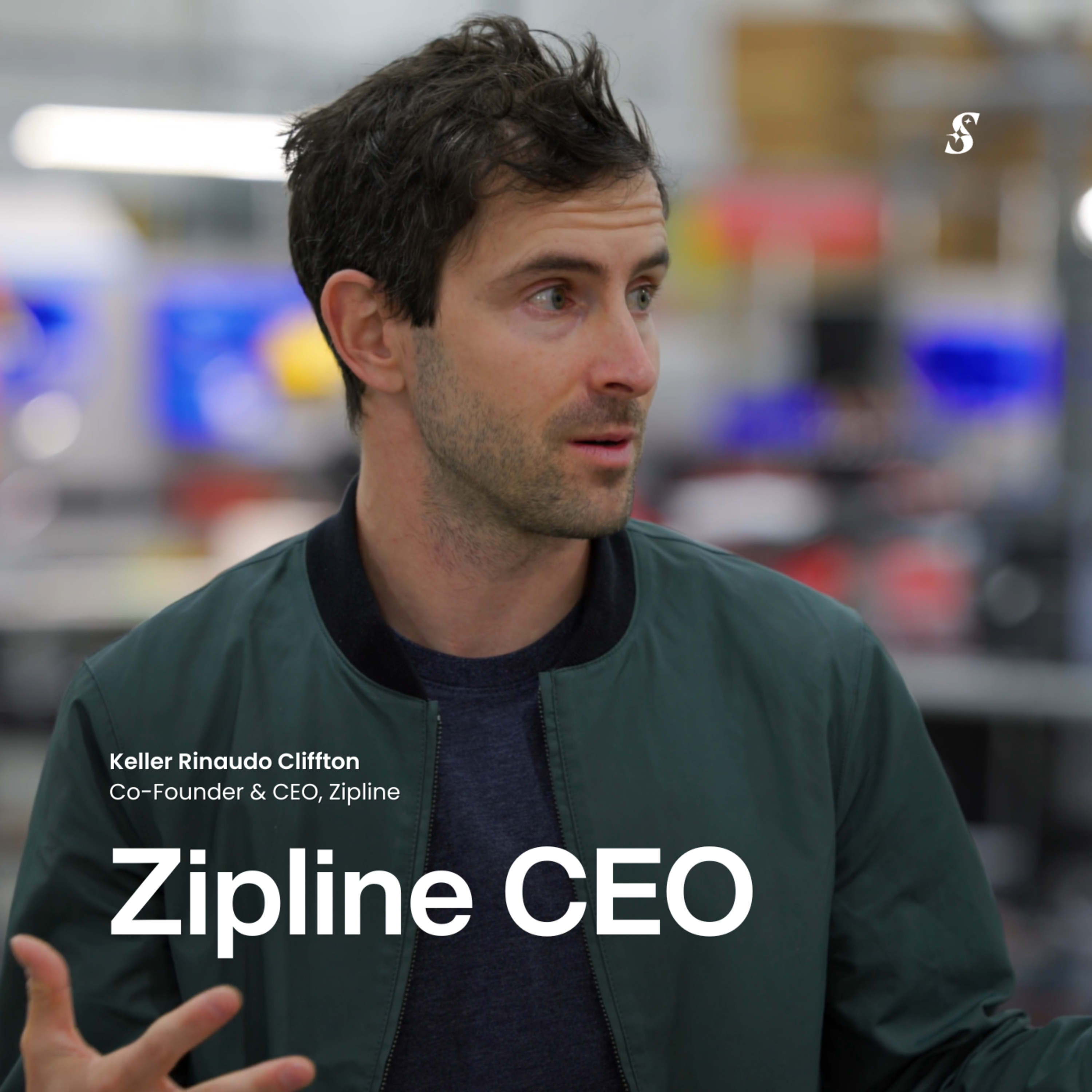
Zipline found that making delivery 10x faster and more convenient didn't just win customers from existing apps. It fundamentally changed user behavior, increasing order frequency so dramatically that they project the total addressable market is actually 10 times larger than currently estimated.
Investors err when they size a new market based on its predecessor (e.g., Uber vs. taxis). A fundamental supply-side change creates new capabilities that unlock massive, previously invisible demand, making initial market size calculations dangerously conservative.

When evaluating revolutionary ideas, traditional Total Addressable Market (TAM) analysis is useless. VCs should instead bet on founders with a "world-bending vision" capable of inducing a new market, not just capturing an existing one. Have the humility to admit you can't predict market size and instead back the visionary founder.