Get your free personalized podcast brief
We scan new podcasts and send you the top 5 insights daily.
A recent executive order and new FAA regulations (like the upcoming Part 108) have dramatically accelerated the path to scaling drone operations in the US. This policy shift has transformed the country into the most attractive market globally, enabling approvals in 30 days that previously took years.
Related Insights
By banning only *new models* of foreign drones, the FCC is signaling a long-term protected market for U.S. manufacturers. This gradual approach acknowledges that the current domestic industry is uncompetitive and needs time and incentive to scale up to compete with firms like DJI.

Zipline counters safety concerns by highlighting its zero-incident record over 135M miles, contrasting it with the hundreds of crashes and multiple fatalities cars would have over the same distance. This reframes drones as a safer alternative.
Creating a new hardware category in a regulated space like aviation requires more than capital; it demands proactive government engagement to write new laws. Archer initiated efforts to establish the regulatory framework for its eVTOL aircraft, demonstrating the necessity of shaping policy for market creation.

A new economic layer is forming in the low-altitude airspace above urban areas. This "1,000-foot economy" includes drone delivery for retail and medical supplies (Walmart, Zipline) and passenger air taxis (Joby), signaling a shift in infrastructure investment from ground-level to the sky.

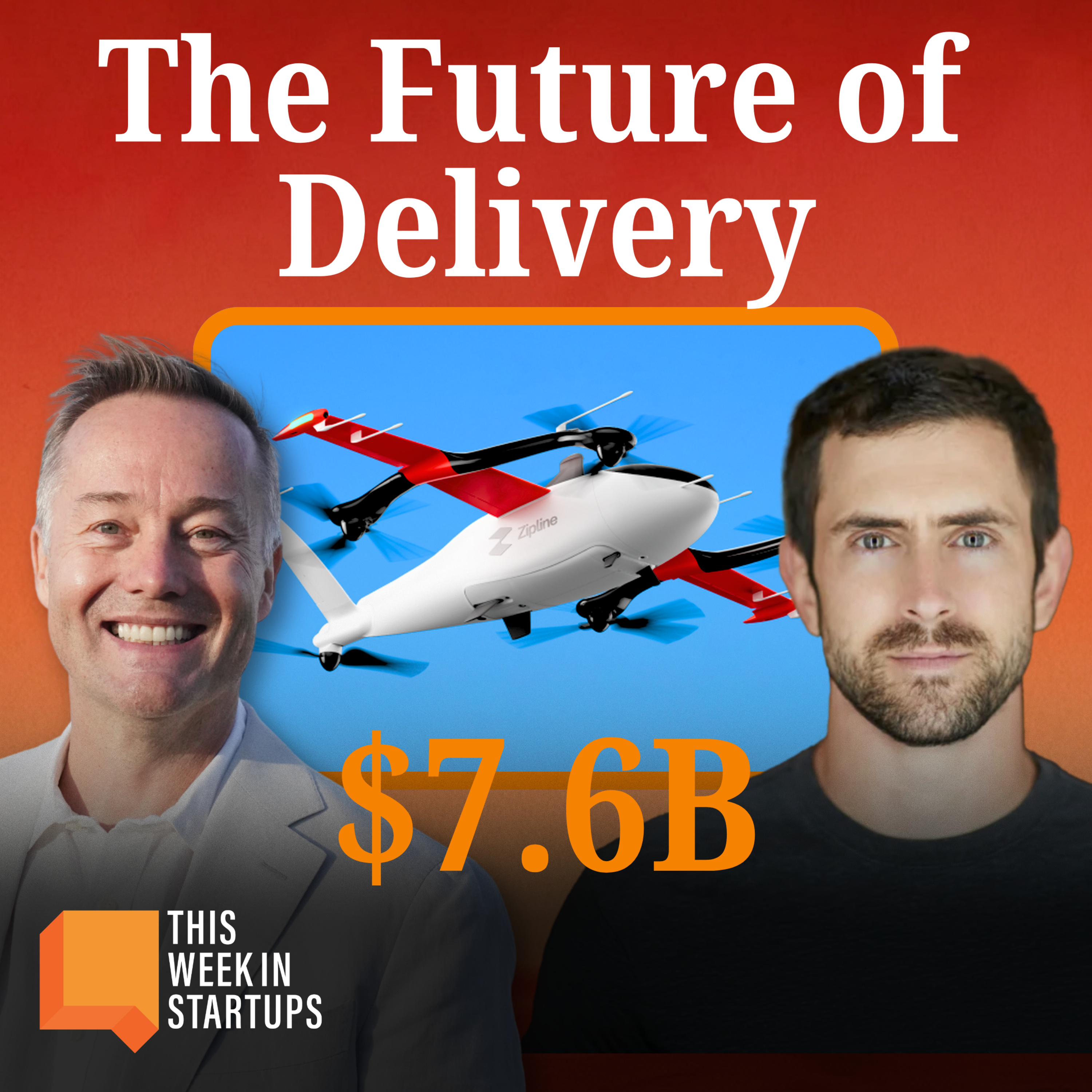
Zipline's CEO reveals the aircraft is a small part of their solution. The real challenge and value lie in the vertically integrated network: ground infrastructure, traffic management, regulatory approval, and customer-facing apps.
Instead of competing with giants like FedEx and DHL, some drone companies are offering them a white-labeled, fully integrated autonomous delivery system. This B2B model allows logistics operators to adopt drone technology without building it from scratch, treating it as an addition to their existing fleet.

Drone delivery service Zipline achieved 46% market penetration among households in one of its Dallas service areas, far exceeding typical 2-5% market share benchmarks for new tech. This demonstrates that highly differentiated services can achieve utility-like adoption levels very rapidly, becoming a new normal for communities.

The U.S. ban on new foreign drones is a strategic industrial policy. By eliminating competition from market leader DJI, the policy is designed to foster a domestic drone industry that can serve consumer needs while building the capacity to scale production for potential military conflicts.

The upcoming FAA Part 108 regulation enables Beyond Visual Line of Sight (BVLOS) drone operations. This is a crucial shift, analogous to moving from Level 2 to Level 4 autonomous driving, as it allows remote supervision of multiple drones, unlocking scalability.
While competitors publicly blamed the FAA for delays, Zipline engaged the agency as a partner. They co-developed regulatory frameworks and flew officials to their Rwanda operation to demonstrate high safety standards. This partnership approach was key to securing critical flight approvals in the U.S.