Get your free personalized podcast brief
We scan new podcasts and send you the top 5 insights daily.
The upcoming FAA Part 108 regulation enables Beyond Visual Line of Sight (BVLOS) drone operations. This is a crucial shift, analogous to moving from Level 2 to Level 4 autonomous driving, as it allows remote supervision of multiple drones, unlocking scalability.

Related Insights
Rather than just replacing drivers, autonomy will allow logistics to operate 24/7 during the midnight-to-8am "third shift." This will dramatically increase the world's operational intensity and create new demand as automation drives down costs and enables services that were previously too expensive.

Creating the Dot delivery robot wasn't just a hardware challenge. DoorDash had to build the vehicle hardware, a custom L4 autonomy software stack, integrate them, and then plug the entire system into its complex logistics and merchant platform—a multi-year, first-principles effort.

By coining the term 'low altitude economy,' China is signaling a deliberate, top-down industrial strategy to own the market for autonomous flying vehicles (EVTOLs) and delivery drones. This isn't just about a single company; it's about creating and regulating a new economic sector to establish a global manufacturing and operational lead.

Waymo's co-CEO argues that Level 4/5 autonomy will not emerge by incrementally improving Level 2/3 driver-assist systems. The hardest challenges of operating without a human driver are entirely absent in assist systems, requiring a "qualitative jump" and a completely different approach from the outset.

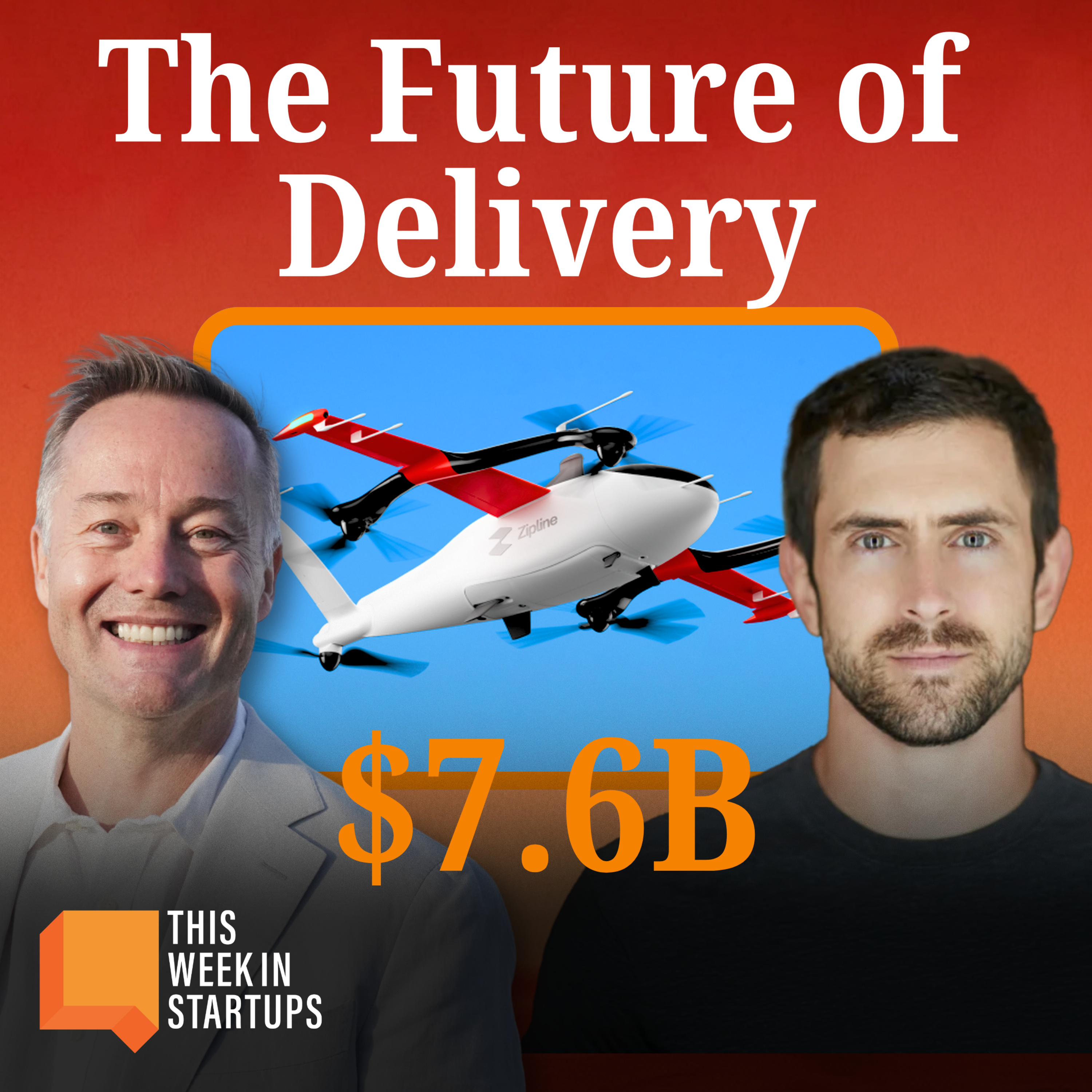
For serious cargo delivery, tilt-rotor hybrid drones are more effective than simple quadcopters. They combine the convenience of vertical takeoff with the energy efficiency of fixed-wing flight, enabling longer ranges (60+ miles) and heavier payloads (40+ lbs).
Zipline's CEO reveals the aircraft is a small part of their solution. The real challenge and value lie in the vertically integrated network: ground infrastructure, traffic management, regulatory approval, and customer-facing apps.
Instead of competing with giants like FedEx and DHL, some drone companies are offering them a white-labeled, fully integrated autonomous delivery system. This B2B model allows logistics operators to adopt drone technology without building it from scratch, treating it as an addition to their existing fleet.
Autonomous commerce will be a multimodal ecosystem using drones, sidewalk bots, and AVs. This creates a massive integration problem for retailers. The winning strategy is not building one vehicle, but creating the universal orchestration layer that allows retailers to manage all autonomous delivery form factors seamlessly.

The high cost of advanced aircraft like the F-35 fighter jet stems from ensuring pilot safety. Drones, by being unmanned, remove this expensive constraint. Since crashes are acceptable, drones can be produced cheaply and at scale, unlocking their disruptive economic potential across industries.

The rise of drones is more than an incremental improvement; it's a paradigm shift. Warfare is moving from human-manned systems where lives are always at risk to autonomous ones where mission success hinges on technological reliability. This changes cost-benefit analyses and reduces direct human exposure in conflict.
