Get your free personalized podcast brief
We scan new podcasts and send you the top 5 insights daily.
Open-source agent frameworks like OpenClaw allow users to retain ownership of their data and context. This enables them to switch between different LLMs (OpenAI, Anthropic, Google) for different tasks, like swapping engines in a car, avoiding the data lock-in promoted by major AI companies.

Related Insights
To counteract OpenAI's potential control over the OpenClaw project, venture firm Launch announced a dedicated investment thesis to fund startups building core infrastructure around it. The strategy is to foster a decentralized ecosystem focused on security, ease of use, hosting, and skills to ensure the project remains open.
Tools like Clawdbot offer unbridled power because they are open source, placing all liability for data leaks or misuse on the user. This is a deliberate risk model that large AI companies like Anthropic have avoided, as they are unwilling to accept the legal consequences of such a powerful, unrestricted tool.
The core appeal of open-source projects like OpenClaw is that they run locally on user hardware, granting full control over personal data. This contrasts with cloud-based agents from Meta, positioning data ownership and privacy as a key differentiator against convenience.

The open vs. closed source debate is a matter of strategic control. As AI becomes as critical as electricity, enterprises and nations will use open source models to avoid dependency on a single vendor who could throttle or cut off their "intelligence supply," thereby ensuring operational and geopolitical sovereignty.

The VC firm FinCapital decided against investing in major proprietary LLMs. Their thesis was that open-source alternatives would significantly improve and compete on key metrics like intelligence, speed, and cost, which has been happening with projects like OpenClaw.

Clawdbot, an open-source project, has rapidly achieved broad, agentic capabilities that large AI labs (like Anthropic with its 'Cowork' feature) are slower to release due to safety, liability, and bureaucratic constraints.
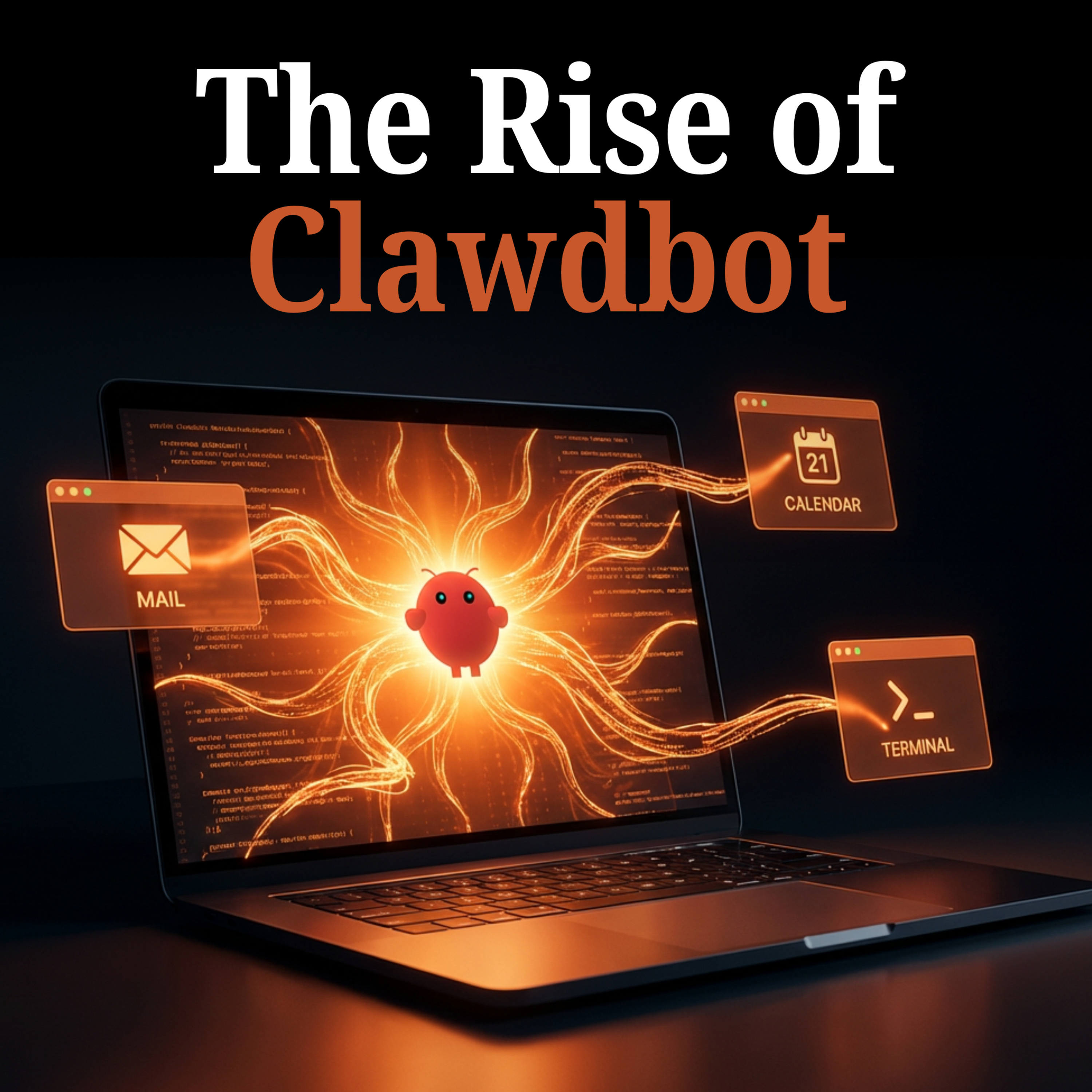
By running on a local machine, Clawdbot allows users to own their data and interaction history. This creates an 'open garden' where they can swap out the underlying AI model (e.g., from Claude to a local one) without losing context or control.
The release of Kimi 2.5, a powerful trillion-parameter open-source model, marks a pivotal moment. It democratizes access to state-of-the-art AI reasoning, giving individuals and nations data sovereignty and control. This is a clear challenge to the dominance of closed-source, 'black box' models from companies like OpenAI and Google.
For many companies, 'AI sovereignty' is less about building their own models and more about strategic resilience. It means having multiple model providers to benchmark, avoid vendor lock-in, and ensure continuous access if one service is cut off or becomes too expensive.

The primary driver for running AI models on local hardware isn't cost savings or privacy, but maintaining control over your proprietary data and models. This avoids vendor lock-in and prevents a third-party company from owning your organization's 'brain'.