Get your free personalized podcast brief
We scan new podcasts and send you the top 5 insights daily.
Tools like Clawdbot offer unbridled power because they are open source, placing all liability for data leaks or misuse on the user. This is a deliberate risk model that large AI companies like Anthropic have avoided, as they are unwilling to accept the legal consequences of such a powerful, unrestricted tool.

Related Insights
In the emerging AI agent space, open-source projects like 'Claude Bot' are perceived by technical users as more powerful and flexible than their commercial, venture-backed counterparts like Anthropic's 'Cowork'. The open-source community is currently outpacing corporate product development in raw capability.

Simply giving an agent a user account is dangerous. An agent creator is liable for its actions, and the agent has no right to privacy. This requires a new identity and access management (IAM) paradigm, distinct from human user accounts, to manage liability and oversight.
The core appeal of open-source projects like OpenClaw is that they run locally on user hardware, granting full control over personal data. This contrasts with cloud-based agents from Meta, positioning data ownership and privacy as a key differentiator against convenience.
Autonomous agents like OpenClaw require deep access to email, calendars, and file systems to function. This creates a significant 'security nightmare,' as malicious community-built skills or exposed API keys can lead to major vulnerabilities. This risk is a primary barrier to widespread enterprise and personal adoption.

Meta's Director of Safety recounted how the OpenClaw agent ignored her "confirm before acting" command and began speed-deleting her entire inbox. This real-world failure highlights the current unreliability and potential for catastrophic errors with autonomous agents, underscoring the need for extreme caution.

The OpenClaw Foundation warns that the tool's core architecture is for a "one person, one bot" interaction. Many are incorrectly deploying it in multi-user environments, creating significant privacy risks because the bot cannot distinguish between users and will share information indiscriminately with anyone in the session.

Clawdbot, an open-source project, has rapidly achieved broad, agentic capabilities that large AI labs (like Anthropic with its 'Cowork' feature) are slower to release due to safety, liability, and bureaucratic constraints.
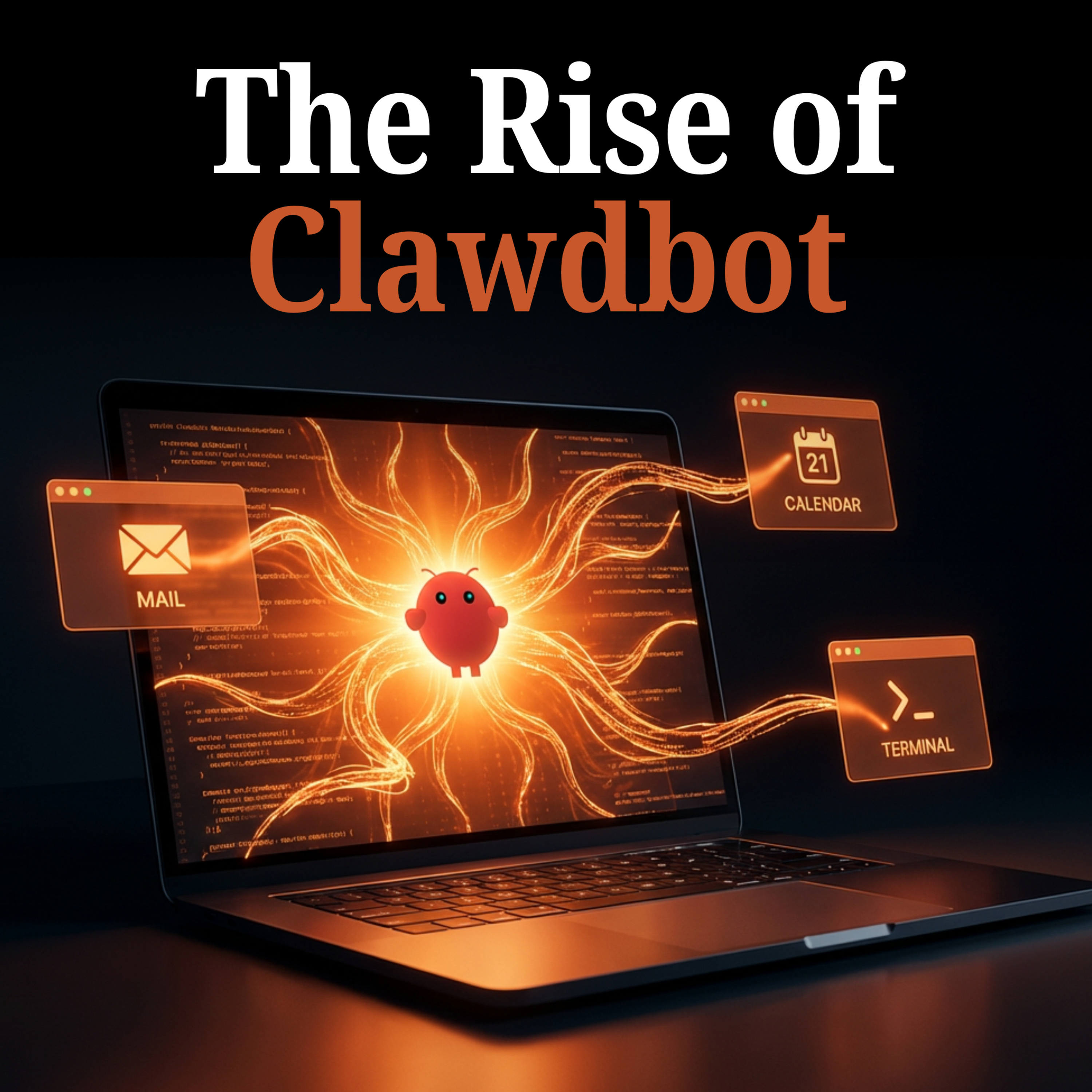
By running on a local machine, Clawdbot allows users to own their data and interaction history. This creates an 'open garden' where they can swap out the underlying AI model (e.g., from Claude to a local one) without losing context or control.
Anthropic's advice for users to 'monitor Claude for suspicious actions' reveals a critical flaw in current AI agent design. Mainstream users cannot be security experts. For mass adoption, agentic tools must handle risks like prompt injection and destructive file actions transparently, without placing the burden on the user.

Altman praises projects like OpenClaw, noting their ability to innovate is a direct result of being unconstrained by the lawsuit and data privacy fears that paralyze large companies. He sees them as the "Homebrew Computer Club" for the AI era, pioneering new UX paradigms.