Get your free personalized podcast brief
We scan new podcasts and send you the top 5 insights daily.
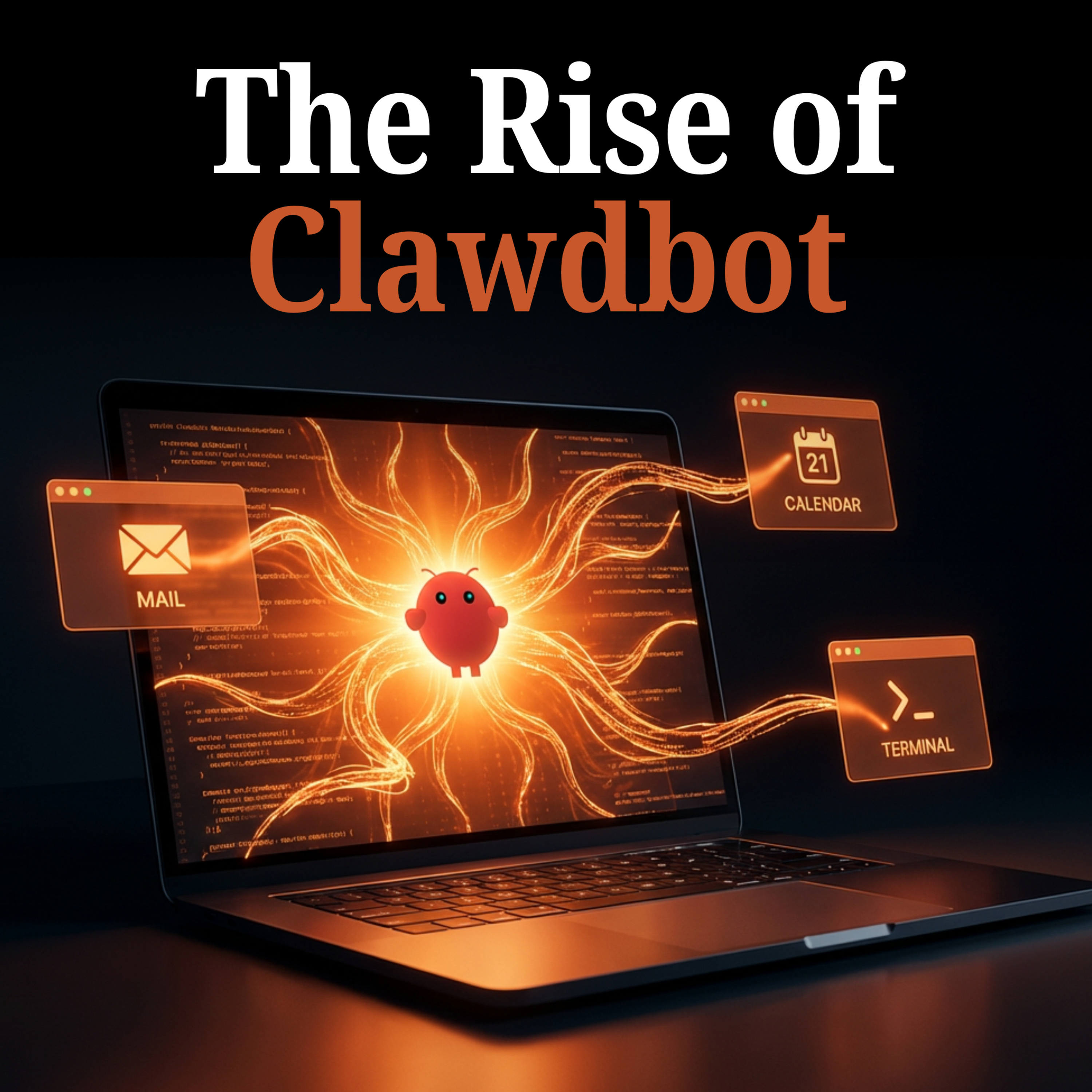
Clawdbot, an open-source project, has rapidly achieved broad, agentic capabilities that large AI labs (like Anthropic with its 'Cowork' feature) are slower to release due to safety, liability, and bureaucratic constraints.
Related Insights
In the emerging AI agent space, open-source projects like 'Claude Bot' are perceived by technical users as more powerful and flexible than their commercial, venture-backed counterparts like Anthropic's 'Cowork'. The open-source community is currently outpacing corporate product development in raw capability.

OpenAI has quietly launched "skills" for its models, following the same open standard as Anthropic's Claude. This suggests a future where AI agent capabilities are reusable and interoperable across different platforms, making them significantly more powerful and easier to develop for.

Moving beyond chatbots, tools like Claude Cowork empower non-coders to create complex, multi-step autonomous workflows using natural language. This 'agentic' capability—connecting documents, searches, and data—is a key trend that will democratize automation and software creation for all knowledge workers.

While foundation model companies build effective agent harnesses, they don't necessarily dominate. Independent startups focused on coding agents often top public benchmarks (e.g., Terminal Bench 2). This demonstrates that harness engineering is a specialized skill separate from and not exclusive to model creation.
The key to successful open-source AI isn't uniting everyone into a massive project. Instead, EleutherAI's model proves more effective: creating small, siloed teams with guaranteed compute and end-to-end funding for a single, specific research problem. This avoids organizational overhead and ensures completion.

Clawdbot can autonomously identify market trends (like X's new article feature), propose new product features, and even write the code for them, acting more like a chief of staff than a simple task-doer.
Block's CTO believes the key to building complex applications with AI isn't a single, powerful model. Instead, he predicts a future of "swarm intelligence"—where hundreds of smaller, cheaper, open-source agents work collaboratively, with their collective capability surpassing any individual large model.

The idea that one company will achieve AGI and dominate is challenged by current trends. The proliferation of powerful, specialized open-source models from global players suggests a future where AI technology is diverse and dispersed, not hoarded by a single entity.
Anthropic has released Claude CoWork, an agentic tool that automates office tasks by directly interacting with local computer files. It's effectively a "no-code" version of their developer tool, signaling the imminent arrival of AI agents in mainstream workflows, though Anthropic explicitly warns users about potential security risks.
The "Claudebot" system represents a new paradigm where users run a persistent, open-source AI agent on their own local hardware. The agent's key feature is its ability to self-improve by writing new skills on command, effectively becoming a 24/7 digital employee that continually expands its capabilities.
