Get your free personalized podcast brief
We scan new podcasts and send you the top 5 insights daily.
The VC firm FinCapital decided against investing in major proprietary LLMs. Their thesis was that open-source alternatives would significantly improve and compete on key metrics like intelligence, speed, and cost, which has been happening with projects like OpenClaw.

Related Insights
In the emerging AI agent space, open-source projects like 'Claude Bot' are perceived by technical users as more powerful and flexible than their commercial, venture-backed counterparts like Anthropic's 'Cowork'. The open-source community is currently outpacing corporate product development in raw capability.

To counteract OpenAI's potential control over the OpenClaw project, venture firm Launch announced a dedicated investment thesis to fund startups building core infrastructure around it. The strategy is to foster a decentralized ecosystem focused on security, ease of use, hosting, and skills to ensure the project remains open.
The collective innovation pace of the VLLM open-source community is so rapid that even well-resourced internal corporate teams cannot keep up. Companies find that maintaining an internal fork or proprietary engine is unsustainable, making adoption of the open standard the only viable long-term strategy to stay on the cutting edge.

Creating frontier AI models is incredibly expensive, yet their value depreciates rapidly as they are quickly copied or replicated by lower-cost open-source alternatives. This forces model providers to evolve into more defensible application companies to survive.
According to Jerry Murdock, AI-native startups are using open-source autonomous agents like OpenClaw to write code so effectively that they view heavily-funded tools like Cursor as obsolete. This highlights the existential threat that fast-moving open-source AI poses to established players.

The choice between open and closed-source AI is not just technical but strategic. For startups, feeding proprietary data to a closed-source provider like OpenAI, which competes across many verticals, creates long-term risk. Open-source models offer "strategic autonomy" and prevent dependency on a potential future rival.

Open source AI models don't need to become the dominant platform to fundamentally alter the market. Their existence alone acts as a powerful price compressor. Proprietary model providers are forced to lower their prices to match the inference cost of open-source alternatives, squeezing profit margins and shifting value to other parts of the stack.
Companies are becoming wary of feeding their unique data and customer queries into third-party LLMs like ChatGPT. The fear is that this trains a potential future competitor. The trend will shift towards running private, open-source models on their own cloud instances to maintain a competitive moat and ensure data privacy.
To escape platform risk and high API costs, startups are building their own AI models. The strategy involves taking powerful, state-subsidized open-source models from China and fine-tuning them for specific use cases, creating a competitive alternative to relying on APIs from OpenAI or Anthropic.
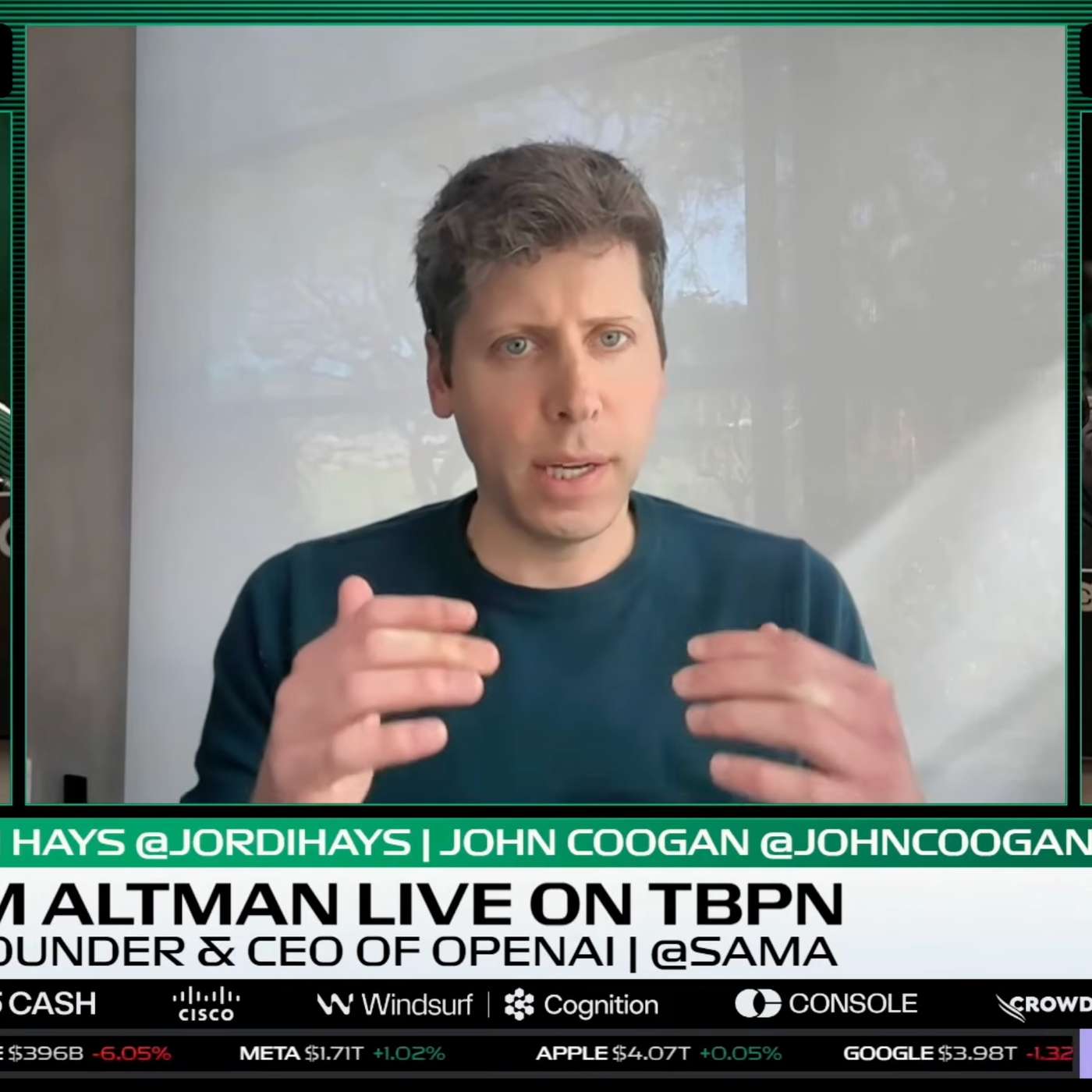
Altman praises projects like OpenClaw, noting their ability to innovate is a direct result of being unconstrained by the lawsuit and data privacy fears that paralyze large companies. He sees them as the "Homebrew Computer Club" for the AI era, pioneering new UX paradigms.