Get your free personalized podcast brief
We scan new podcasts and send you the top 5 insights daily.
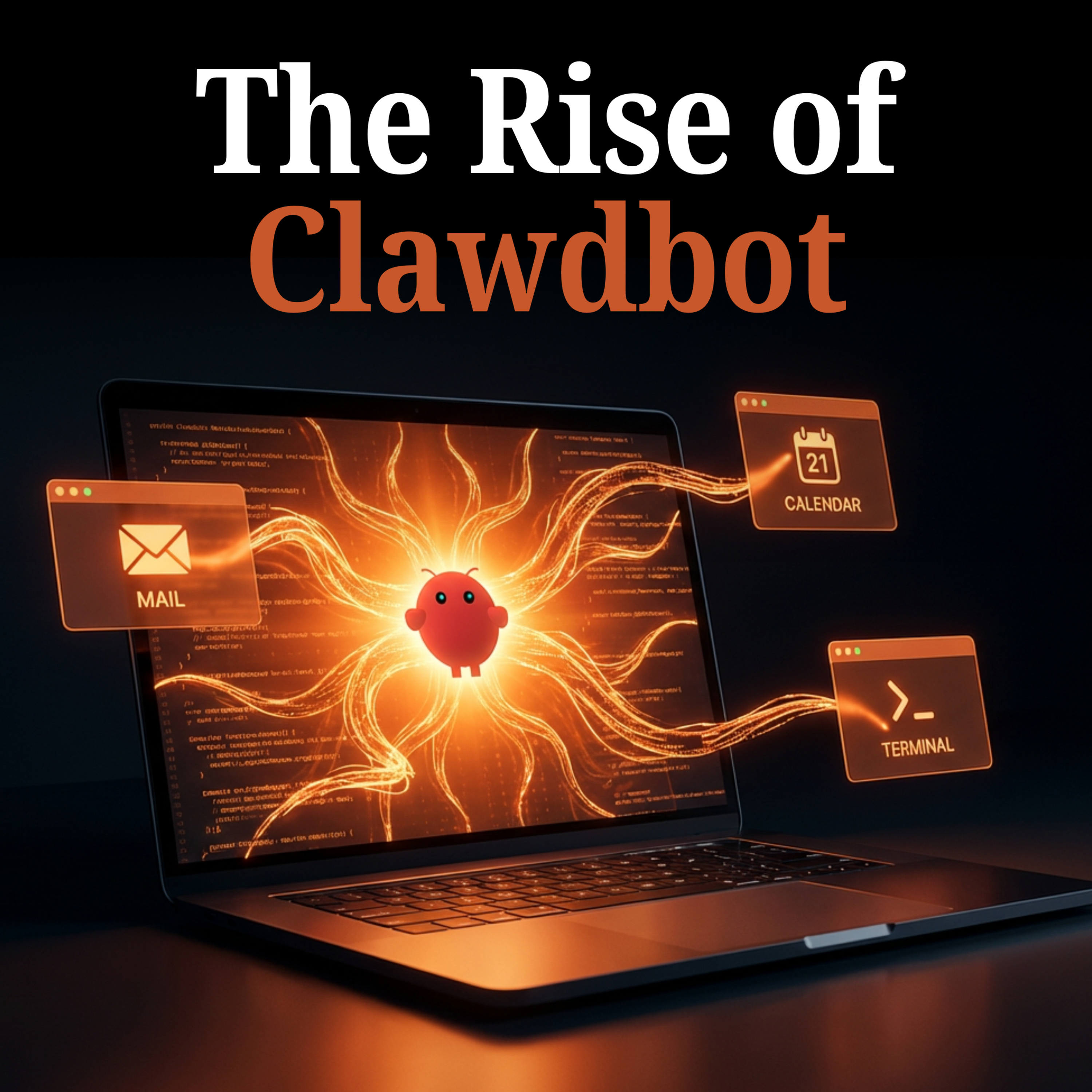
By running on a local machine, Clawdbot allows users to own their data and interaction history. This creates an 'open garden' where they can swap out the underlying AI model (e.g., from Claude to a local one) without losing context or control.
Related Insights
The most significant switching cost for AI tools like ChatGPT is its memory. The cumulative context it builds about a user's projects, style, and business becomes a personalized knowledge base. This deep personalization creates a powerful lock-in that is more valuable than any single feature in a competing product.

While often discussed for privacy, running models on-device eliminates API latency and costs. This allows for near-instant, high-volume processing for free, a key advantage over cloud-based AI services.
The true building block of an AI feature is the "agent"—a combination of the model, system prompts, tool descriptions, and feedback loops. Swapping an LLM is not a simple drop-in replacement; it breaks the agent's behavior and requires re-engineering the entire system around it.

The future of AI isn't just in the cloud. Personal devices, like Apple's future Macs, will run sophisticated LLMs locally. This enables hyper-personalized, private AI that can index and interact with your local files, photos, and emails without sending sensitive data to third-party servers, fundamentally changing the user experience.
Clawdbot, an open-source project, has rapidly achieved broad, agentic capabilities that large AI labs (like Anthropic with its 'Cowork' feature) are slower to release due to safety, liability, and bureaucratic constraints.
A key advantage of Claude Cowork is its ability to run locally and access files directly on a user's computer. This provides the AI with vastly more context than is possible with cloud tools that have limited file uploads, enabling complex analysis of large, local datasets like hundreds of documents.

For AI to function as a "second brain"—synthesizing personal notes, thoughts, and conversations—it needs access to highly sensitive data. This is antithetical to public cloud AI. The solution lies in leveraging private, self-hosted LLMs that protect user sovereignty.

Companies are becoming wary of feeding their unique data and customer queries into third-party LLMs like ChatGPT. The fear is that this trains a potential future competitor. The trend will shift towards running private, open-source models on their own cloud instances to maintain a competitive moat and ensure data privacy.
The "Claudebot" system represents a new paradigm where users run a persistent, open-source AI agent on their own local hardware. The agent's key feature is its ability to self-improve by writing new skills on command, effectively becoming a 24/7 digital employee that continually expands its capabilities.

While personal history in an AI like ChatGPT seems to create lock-in, it is a weaker moat than for media platforms like Google Photos. Text-based context and preferences are relatively easy to export and transfer to a competitor via another LLM, reducing switching friction.
