Get your free personalized podcast brief
We scan new podcasts and send you the top 5 insights daily.
LLMs excel at 'spatial aesthetics'—arranging elements on a static page. For video, they must learn 'temporal aesthetics,' where information is revealed over time without requiring eye movement. This is a key training challenge for creating compelling AI-generated motion content.

Related Insights
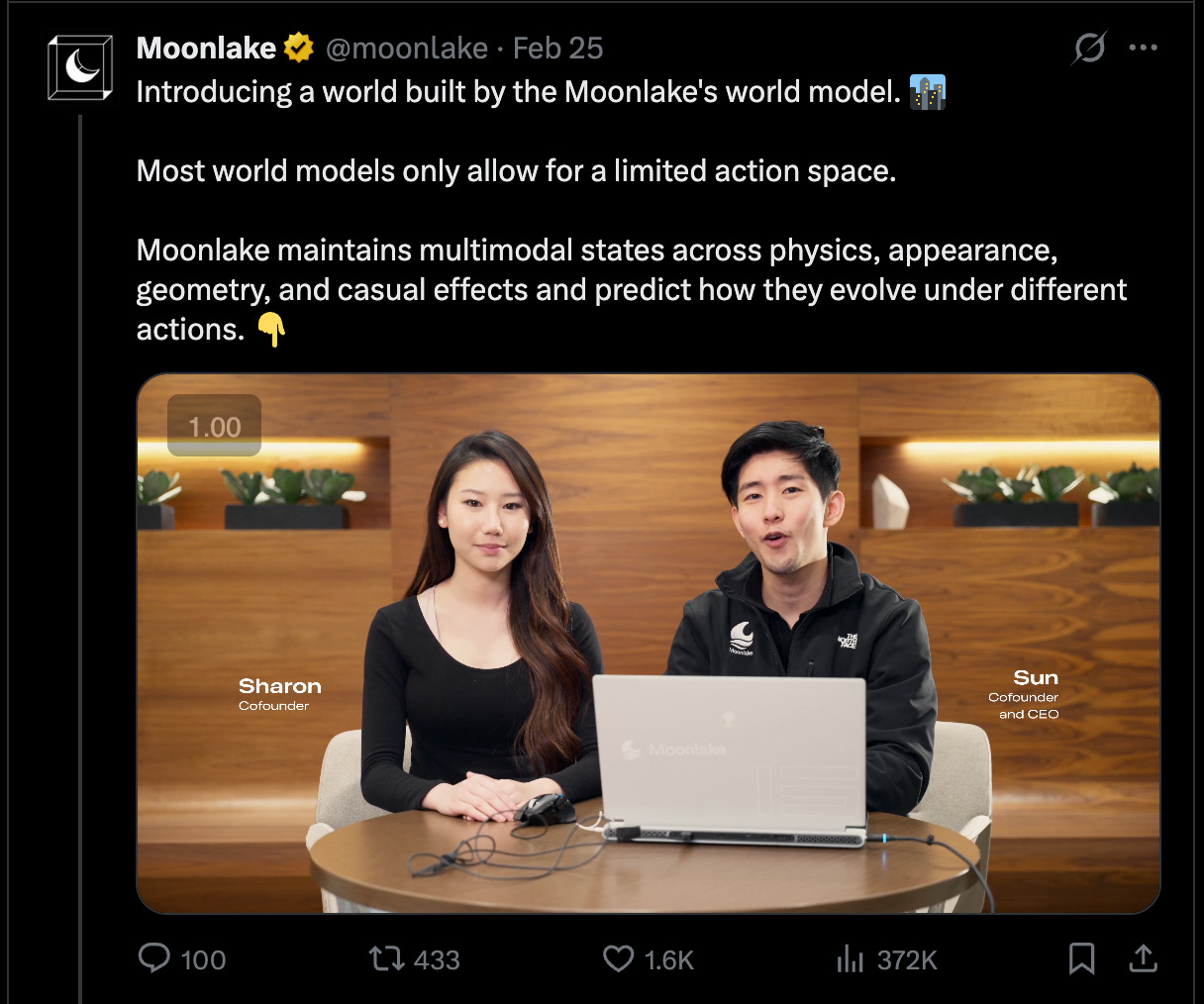
Unlike video generation models that merely predict pixels, Moonlake argues a true world model must understand and predict the consequences of actions over time. This requires an abstracted, semantic understanding of the world, not just visual fidelity.
The perceived intelligence of video generation models is often an illusion. The heavy lifting is done by a large language model that rewrites simple user prompts into highly detailed scenes. The video diffusion model itself is less intelligent, simply executing these detailed instructions literally.

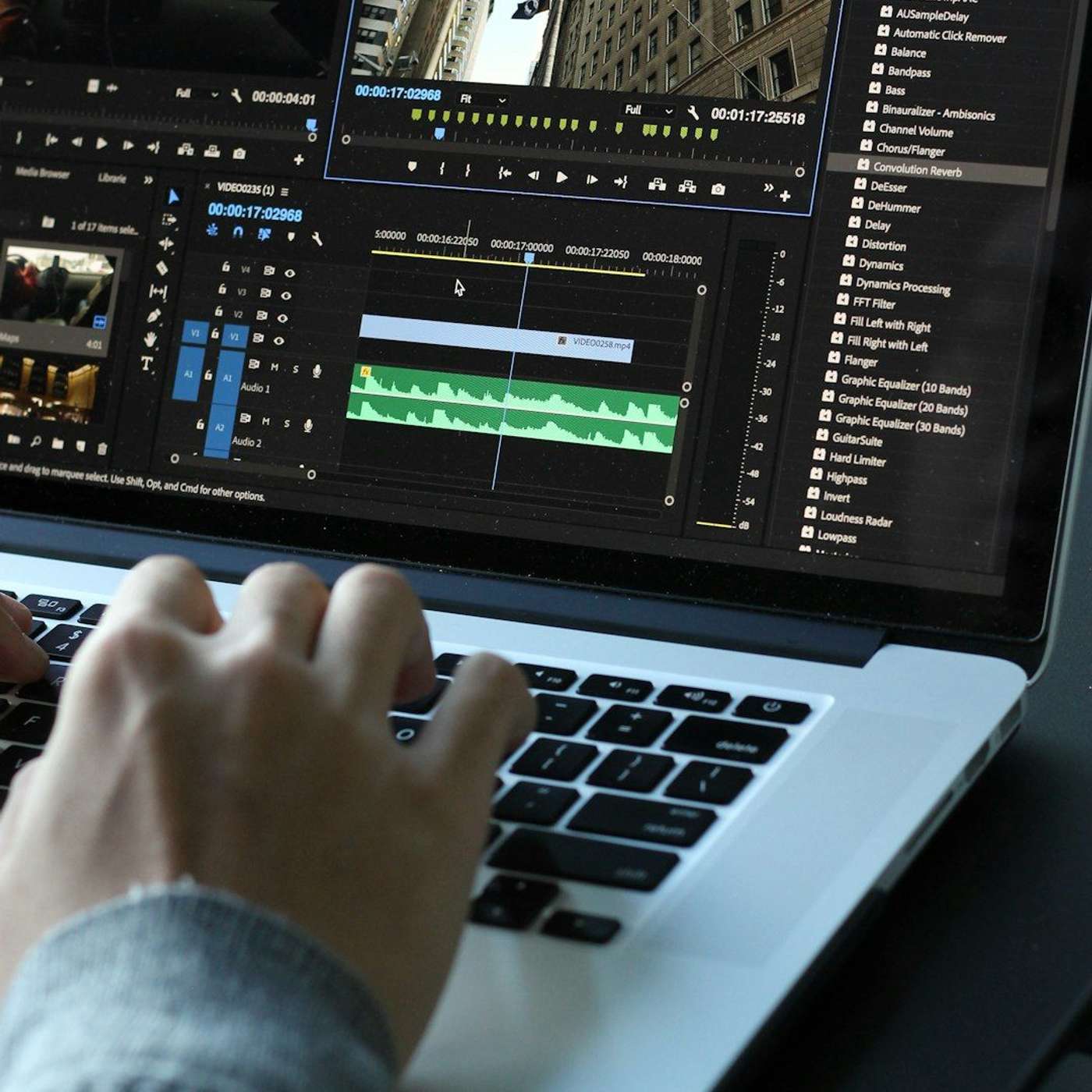
Traditional video editors use JSON/XML backends, which LLMs struggle to visualize. Hyperframes uses HTML, CSS, and JavaScript, a format LLMs are highly proficient in, allowing agents to express not just structure but also visual aesthetics, solving the 'visual intelligence' gap.
To truly evaluate a video AI's capabilities, developers should test its performance on complex temporal tasks. This includes analyzing rapid scene changes for context-switching ability and tracking the precise order of events for temporal accuracy.
A significant challenge in automated content creation is aesthetic consistency. AI tools like Notebook LM's cinematic video generator can select a specific visual style—like an oil painting look—and apply it across an entire video, creating a cohesive brand identity rather than a random assortment of images.

Hera's core technology treats motion graphics as code. Its AI generates HTML, JavaScript, and CSS to create animations, similar to a web design tool. This code-based approach is powerful but introduces the unique challenge of managing the time dimension required for video.

Traditional video models process an entire clip at once, causing delays. Descartes' Mirage model is autoregressive, predicting only the next frame based on the input stream and previously generated frames. This LLM-like approach is what enables its real-time, low-latency performance.

The next leap in video generation won't come from monolithic models but from AI agents. These LLM-driven agents will use a suite of tools—including diffusion models, video editors like FFmpeg, and image editors—to iteratively create and refine complex, long-form videos.
The workflow of generating AI video scene-by-scene and stitching clips together is becoming obsolete. Newer models like Kling 3.0 can interpret multi-scene prompts, creating a single, continuous video with multiple shots. This drastically simplifies production and improves narrative coherence.

The primary challenge in creating stable, real-time autoregressive video is error accumulation. Like early LLMs getting stuck in loops, video models degrade frame-by-frame until the output is useless. Overcoming this compounding error, not just processing speed, is the core research breakthrough required for long-form generation.