Get your free personalized podcast brief
We scan new podcasts and send you the top 5 insights daily.
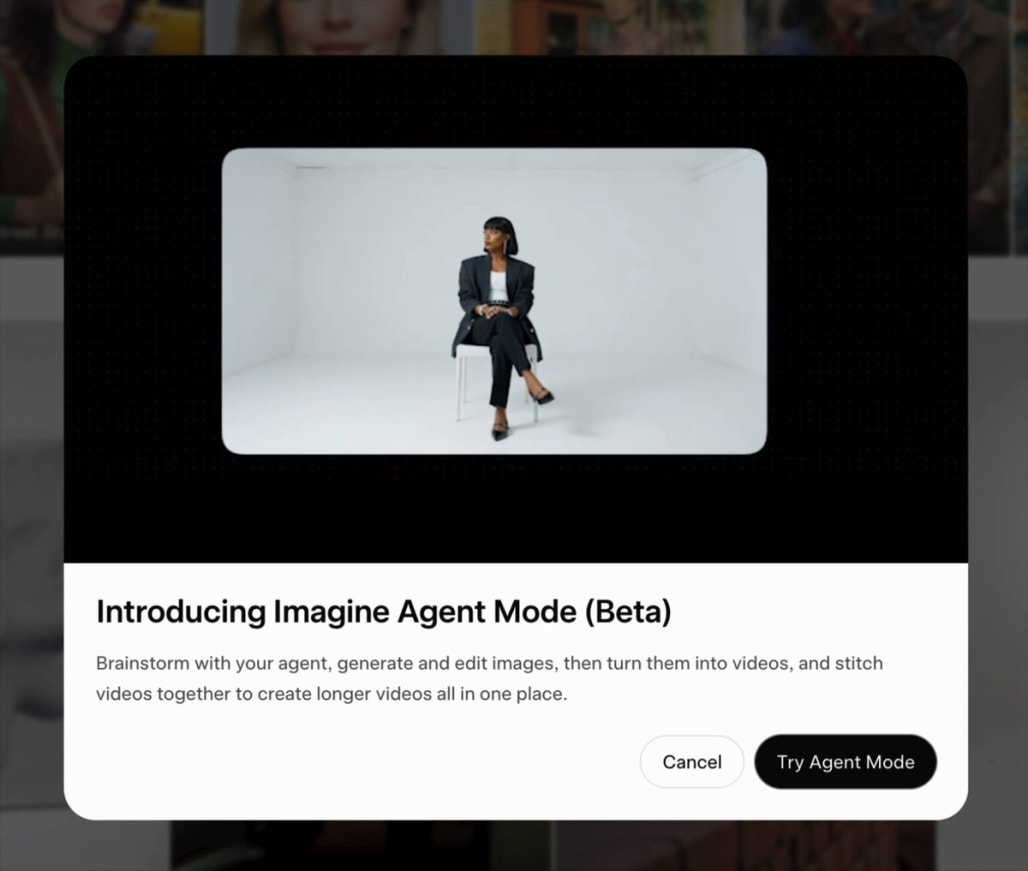
The next leap in video generation won't come from monolithic models but from AI agents. These LLM-driven agents will use a suite of tools—including diffusion models, video editors like FFmpeg, and image editors—to iteratively create and refine complex, long-form videos.
Related Insights
Advanced generative media workflows are not simple text-to-video prompts. Top customers chain an average of 14 different models for tasks like image generation, upscaling, and image-to-video transitions. This multi-model complexity is a key reason developers prefer open-source for its granular control over each step.

Seedance V2's multi-input capability—combining images, videos, and audio—makes it function more like an advanced video editor than a simple text-to-video tool. This reframes its use case from pure creation to complex modification and composition, enabling tasks like character and background replacement within existing footage.

The perceived intelligence of video generation models is often an illusion. The heavy lifting is done by a large language model that rewrites simple user prompts into highly detailed scenes. The video diffusion model itself is less intelligent, simply executing these detailed instructions literally.
Most generative AI tools get users 80% of the way to their goal, but refining the final 20% is difficult without starting over. The key innovation of tools like AI video animator Waffer is allowing iterative, precise edits via text commands (e.g., "zoom in at 1.5 seconds"). This level of control is the next major step for creative AI tools.

While many competitors focus on prompt-based "agentic editing," Tela's founder believes this is a temporary step. The ultimate goal is for AI to analyze a raw recording and automatically produce a high-quality final video without any user prompts or editing commands, leaving only the 'fun part of telling your story'.
Exceptional AI content comes not from mastering one tool, but from orchestrating a workflow of specialized models for research, image generation, voice synthesis, and video creation. AI agent platforms automate this complex process, yielding results far beyond what a single tool can achieve.
Don't accept the false choice between AI generation and professional editing tools. The best workflows integrate both, allowing for high-level generation and fine-grained manual adjustments without giving up critical creative control.

Move beyond single LLMs to autonomous agents like Manus. These "digital employees" can execute complex, multi-step projects by autonomously selecting and weaving together the best models and tools (e.g., Gemini for video analysis, others for PDF generation) for each sub-task.
AI video is evolving from passive generation to active engagement. Synthesia's new products focus on the intersection of video and AI agents, allowing users to, for example, watch a training video and then enter a role-playing simulation with an AI to test their comprehension.

Marketers without video editing skills can now produce high-quality videos. By instructing an AI agent to use an open-source library like Remotion, you can generate and edit complex, animated videos entirely through text commands.
