Get your free personalized podcast brief
We scan new podcasts and send you the top 5 insights daily.
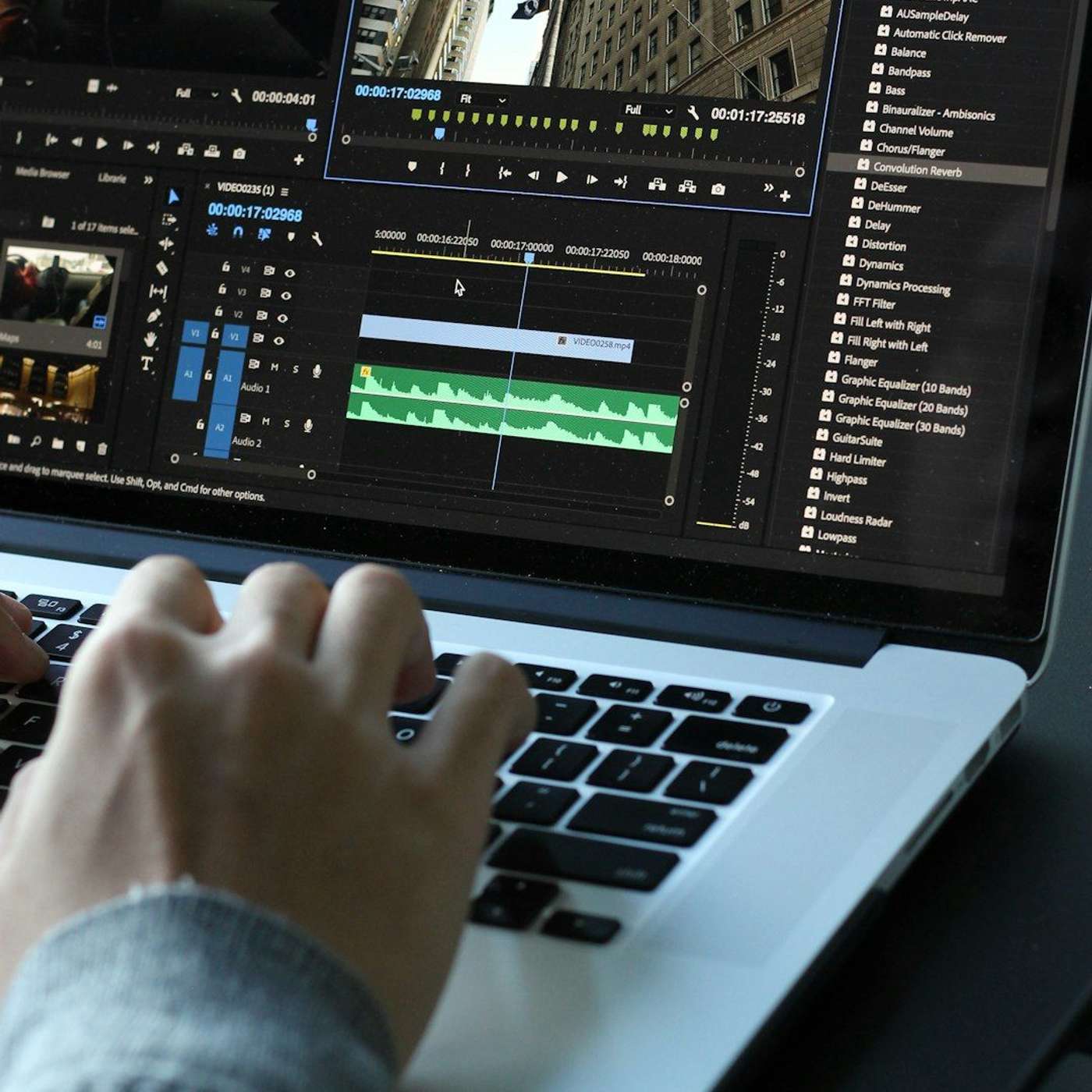
To truly evaluate a video AI's capabilities, developers should test its performance on complex temporal tasks. This includes analyzing rapid scene changes for context-switching ability and tracking the precise order of events for temporal accuracy.
Related Insights
AI struggles with long-horizon tasks not just due to technical limits, but because we lack good ways to measure performance. Once effective evaluations (evals) for these capabilities exist, researchers can rapidly optimize models against them, accelerating progress significantly.
Not all AI video models excel at the same tasks. For scenes requiring characters to speak realistically, Google's VEO3 is the superior choice due to its high-quality motion and lip-sync capabilities. For non-dialogue shots, other models like Kling or Luma Labs can be effective alternatives.

Traditional video models process an entire clip at once, causing delays. Descartes' Mirage model is autoregressive, predicting only the next frame based on the input stream and previously generated frames. This LLM-like approach is what enables its real-time, low-latency performance.

YouTube's new AI editing tool isn't just stitching clips; it intelligently analyzes content, like recipe steps, and arranges them in the correct logical sequence. This contextual understanding moves beyond simple montage creation and significantly reduces editing friction for busy marketers and creators.

To analyze video cost-effectively, Tim McLear uses a cheap, fast model to generate captions for individual frames sampled every five seconds. He then packages all these low-level descriptions and the audio transcript and sends them to a powerful reasoning model. This model's job is to synthesize all the data into a high-level summary of the video.

The primary challenge in creating stable, real-time autoregressive video is error accumulation. Like early LLMs getting stuck in loops, video models degrade frame-by-frame until the output is useless. Overcoming this compounding error, not just processing speed, is the core research breakthrough required for long-form generation.
The primary performance bottleneck for LLMs is memory bandwidth (moving large weights), making them memory-bound. In contrast, diffusion-based video models are compute-bound, as they saturate the GPU's processing power by simultaneously denoising tens of thousands of tokens. This represents a fundamental difference in optimization strategy.

Demis Hassabis sees video generation as more than a content tool; it's a step toward building AI with "world models." By learning to generate realistic scenes, these models develop an intuitive understanding of physics and causality, a foundational capability for AGI to perform long-term planning in the real world.

To maintain visual consistency in AI-generated videos, don't rely on text-to-video prompts alone. First, create a library of static 'ingredient' images for characters, settings, and props. Then, feed these reference images into the AI for each scene to ensure a coherent look and feel across all clips.

To maintain visual consistency across an action sequence, instruct your AI image generator to create a 2x2 grid showing four distinct moments from the same scene. This ensures lighting and characters remain constant. You can then crop and animate each quadrant as separate shots.