Get your free personalized podcast brief
We scan new podcasts and send you the top 5 insights daily.
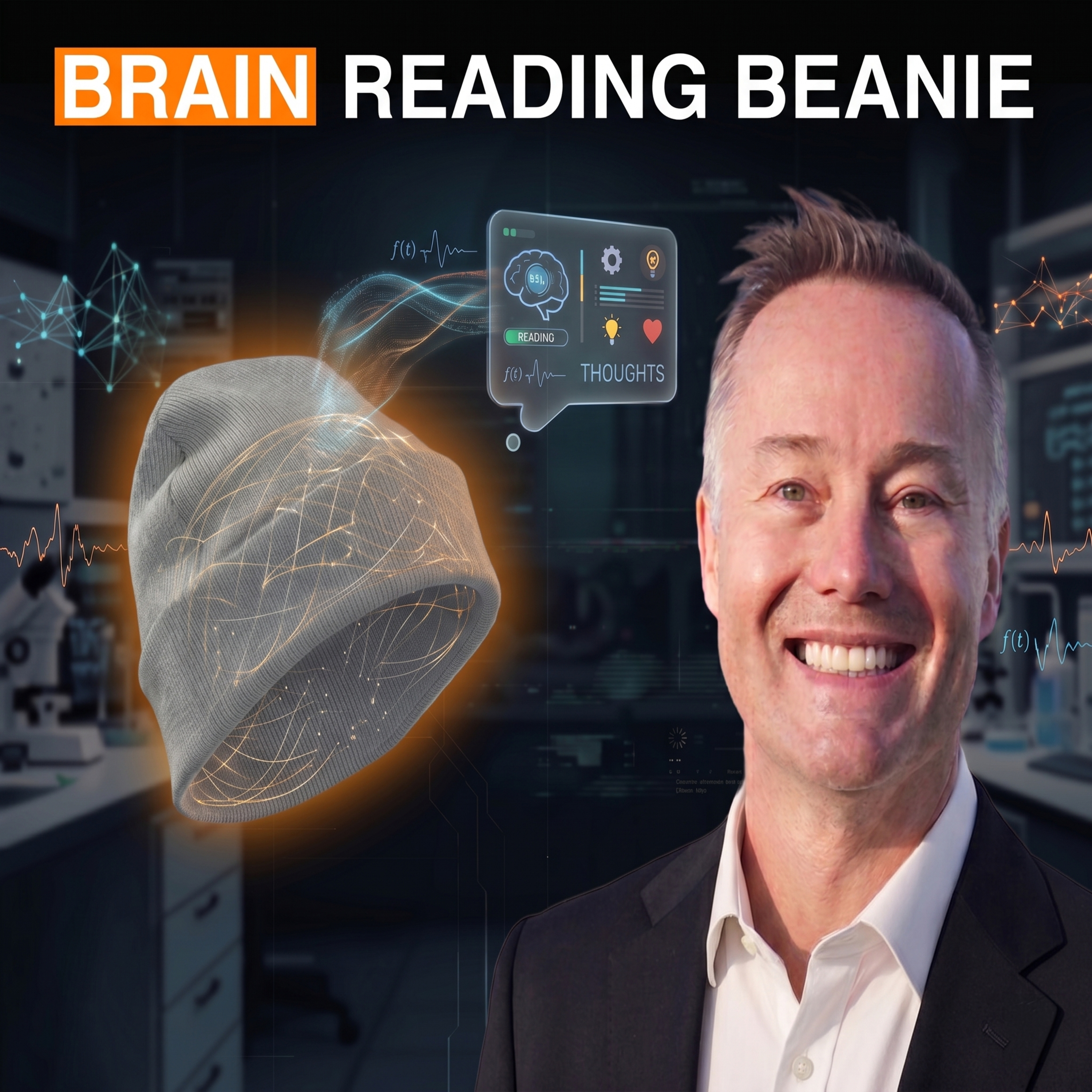
For startups with audacious technology like Sabi's BCI, building trust is crucial. The hosts highlight a powerful credibility stack: a top-tier investor (Vinod Khosla), a premium four-letter domain name, and strong academic backgrounds (Stanford) to overcome skepticism.
Related Insights
Before seeking major funding, Elysian validated its radical aircraft design with skeptical professors from TU Delft and MIT. Winning over these experts provided the critical credibility and third-party proof needed to build investor confidence in their unproven deep-tech concept.

Despite the common wisdom that investors prefer co-founding teams, Juxta's solo founder raised $5 million in 48 hours without a single investor questioning his status. This suggests that for complex, deep tech ideas, a powerful vision and a credible team can completely mitigate concerns about being a solo founder.

Aphaia's co-founder, a full professor, credits his deep academic connections for the company's success. Being part of the University of Toronto, a hub for GLP-1 research, allowed him to vet his unconventional idea with world-leading experts. This access to high-caliber, informal peer review was critical for making the decision to move forward.
To overcome skepticism around complex products like AI, leverage internal networks for social proof. Have your CTO ask their engineering contact at the target company to send a note to the economic buyer (e.g., the CRO) vouching for your company's technical credibility. This cross-functional validation builds immense trust.

In the AI era, where technology can be replicated quickly, the true moat is a founder's credibility and network built over decades. This "unfair advantage" enables faster sales cycles with trusted buyers, creating a first-mover advantage that is difficult for competitors to overcome.

A top-tier VC's primary value isn't just capital; it's the immediate credibility they lend to a startup that may not have earned it yet. This credibility is then 'harvested' to attract elite talent, future funding, and crucial brand momentum.
When you have no brand or track record, you can't sell trust in yourself. Instead, sell trust in the experienced, credible experts you'll bring to the project. This shifts the focus from your inexperience to their proven expertise, opening doors that would otherwise be closed.

To build credibility for a new safety device without industry access, the founder hired a senior NASA engineer as a consultant. Leveraging expertise and simulation tools from an industry with even higher safety standards, like aerospace, provides powerful third-party validation that can overcome skepticism from incumbents.

A founder's credibility acts as a multiplier on the perceived value of their narrative. An entrepreneur like Elon Musk, with a track record of success, receives a "multiple expansion on trust," allowing their futuristic stories to attract capital at valuations and scales that a first-time founder could not achieve.

For deep tech startups lacking traditional revenue metrics, the fundraising pitch should frame the market as inevitable if the technology works. This shifts the investor's bet from market validation to the team's ability to execute on a clear technical challenge, a more comfortable risk for specialized investors.