Get your free personalized podcast brief
We scan new podcasts and send you the top 5 insights daily.
Despite the common wisdom that investors prefer co-founding teams, Juxta's solo founder raised $5 million in 48 hours without a single investor questioning his status. This suggests that for complex, deep tech ideas, a powerful vision and a credible team can completely mitigate concerns about being a solo founder.

Related Insights
Co-founding a business is often harder than a marriage, yet receives far less diligence. The probability of two individuals maintaining perfect alignment on effort, finances, and vision over many years is incredibly low, making solo ventures statistically safer.

DeepMind's founders knew their ambitious AGI mission wouldn't appeal to mainstream VCs. They specifically targeted Peter Thiel, believing they needed "someone crazy enough to fund an AGI company" who valued ambitious, contrarian ideas over a clear business plan, demonstrating the importance of strategic investor-founder fit.
Duolingo's first investors admitted they didn't believe in the education market, which they considered a bad business. They invested solely because founder Luis von Ahn had a previous successful exit to Google, demonstrating that a founder's track record can be more persuasive to early VCs than the business idea itself.

After 100 investor rejections, Synthesia cold-emailed Mark Cuban, who committed within 10 hours. The key difference was that Cuban had already prototyped similar technology and deeply understood the vision, allowing him to evaluate the team's execution rather than needing to be educated on the concept's validity.

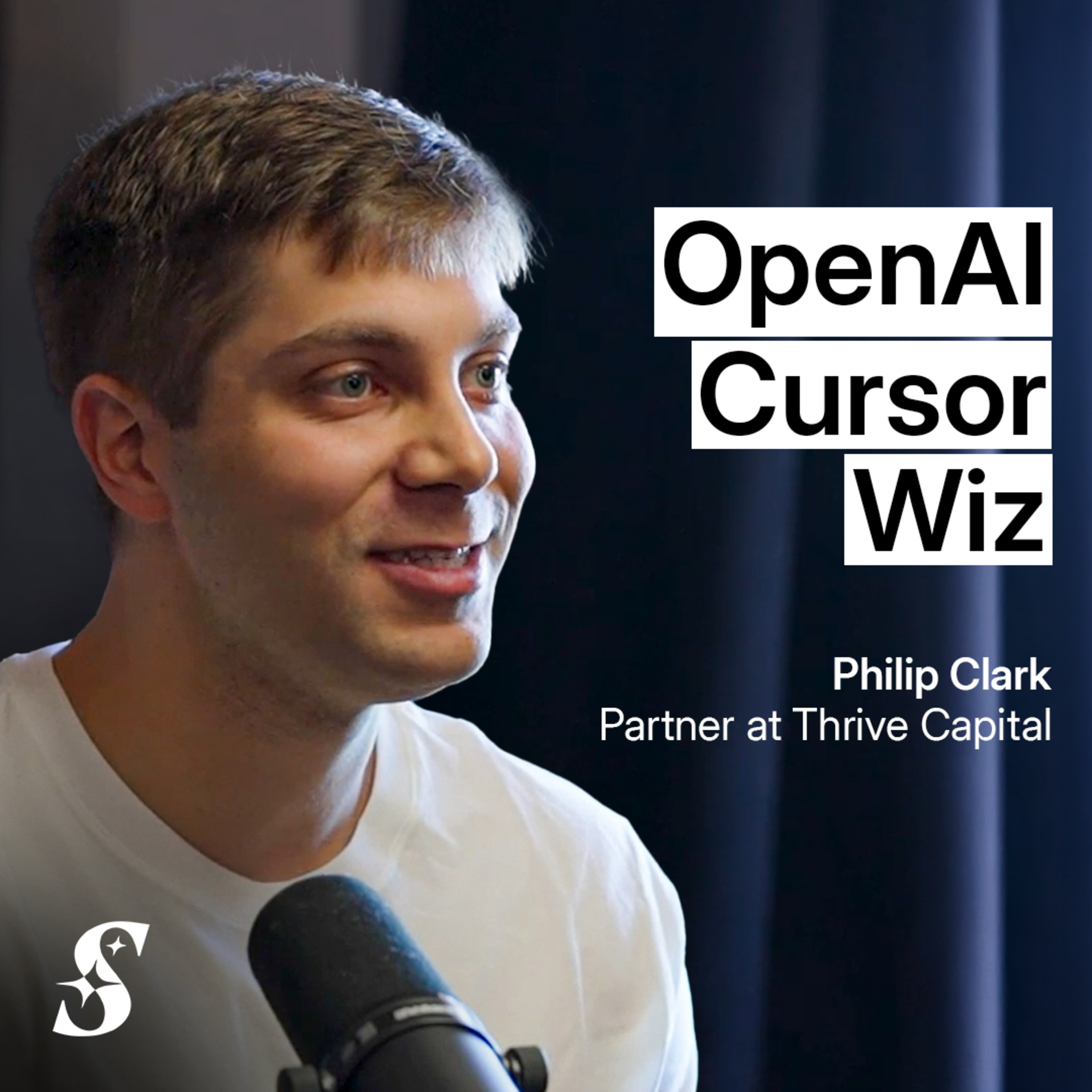
When meeting Cursor's founder, the investor felt an "electric energy" even as the founder was pivoting away from his original idea. This highlights that for elite early-stage investors, the founder's intrinsic drive and potential are the constant to bet on, as ideas will inevitably change.
Monologue's success, built by a single developer with less than $20,000 invested, highlights how AI tools have reset the startup playing field. This lean approach enabled rapid development and achieved product-market fit where heavily funded competitors have struggled, proving capital is no longer the primary moat.

There's a strong correlation between solo founders and deep tech ventures. The hypothesis is that if you're audacious enough to tackle a monumental technical challenge, the added difficulty of doing it alone feels like a rounding error. The entire endeavor is already set to maximum difficulty.
A founder's credibility acts as a multiplier on the perceived value of their narrative. An entrepreneur like Elon Musk, with a track record of success, receives a "multiple expansion on trust," allowing their futuristic stories to attract capital at valuations and scales that a first-time founder could not achieve.

AI tools enable solo builders to bypass the slow, traditional "hire-design-refine" loop. This massive speed increase in iteration allows them to compete effectively against larger, well-funded incumbents who are bogged down by process and legacy concerns.

For deep tech startups lacking traditional revenue metrics, the fundraising pitch should frame the market as inevitable if the technology works. This shifts the investor's bet from market validation to the team's ability to execute on a clear technical challenge, a more comfortable risk for specialized investors.