Get your free personalized podcast brief
We scan new podcasts and send you the top 5 insights daily.
Inserting dynamic billboards into establishing shots avoids creative conflicts with directors and delivers clearer brand messages than placing a product next to an actor. This standardized "ad unit" is more scalable and drives higher message recall, separating supply and demand.

Related Insights
GenAI transforms advertising's core pillars. It enables hyper-personalized creatives at scale, democratizes ad production for smaller businesses, and fundamentally enhances the two most critical functions of any ad platform: predicting user behavior and measuring campaign outcomes.

The least intrusive way to introduce ads into LLMs is during natural pauses, such as the wait time for a "deep research" query. This interstitial model offers a clear value exchange: the user gets a powerful, free computation sponsored by an advertiser, avoiding disruption to the core interactive experience.
The largest advertisers on platforms like Meta launch over 10,000 new creatives a year, equating to more than 40 per workday. This massive scale of experimentation is manually impossible for most companies, creating a clear market need for AI platforms that automate and scale video production.

AI can now analyze video ads frame by frame, identifying the most compelling moments and justifying its choices with sophisticated creative principles like color theory and narrative juxtaposition. This allows for deep qualitative analysis of creative effectiveness at scale, surpassing simple A/B testing.

AI in creative doesn't have to dilute a brand. Coca-Cola's successful holiday ad used AI, but its high brand recall (83%) was driven by focusing on iconic assets like Santa. The AI execution was effective because it was largely invisible, proving the creative idea still drives the ad, not the tech.
Successful AI video production doesn't jump from text to video. The optimal process involves scripting, using ChatGPT for a shot list, generating still images for each shot with tools like Rev, animating those images with models like VEO3, and finally, editing them together.

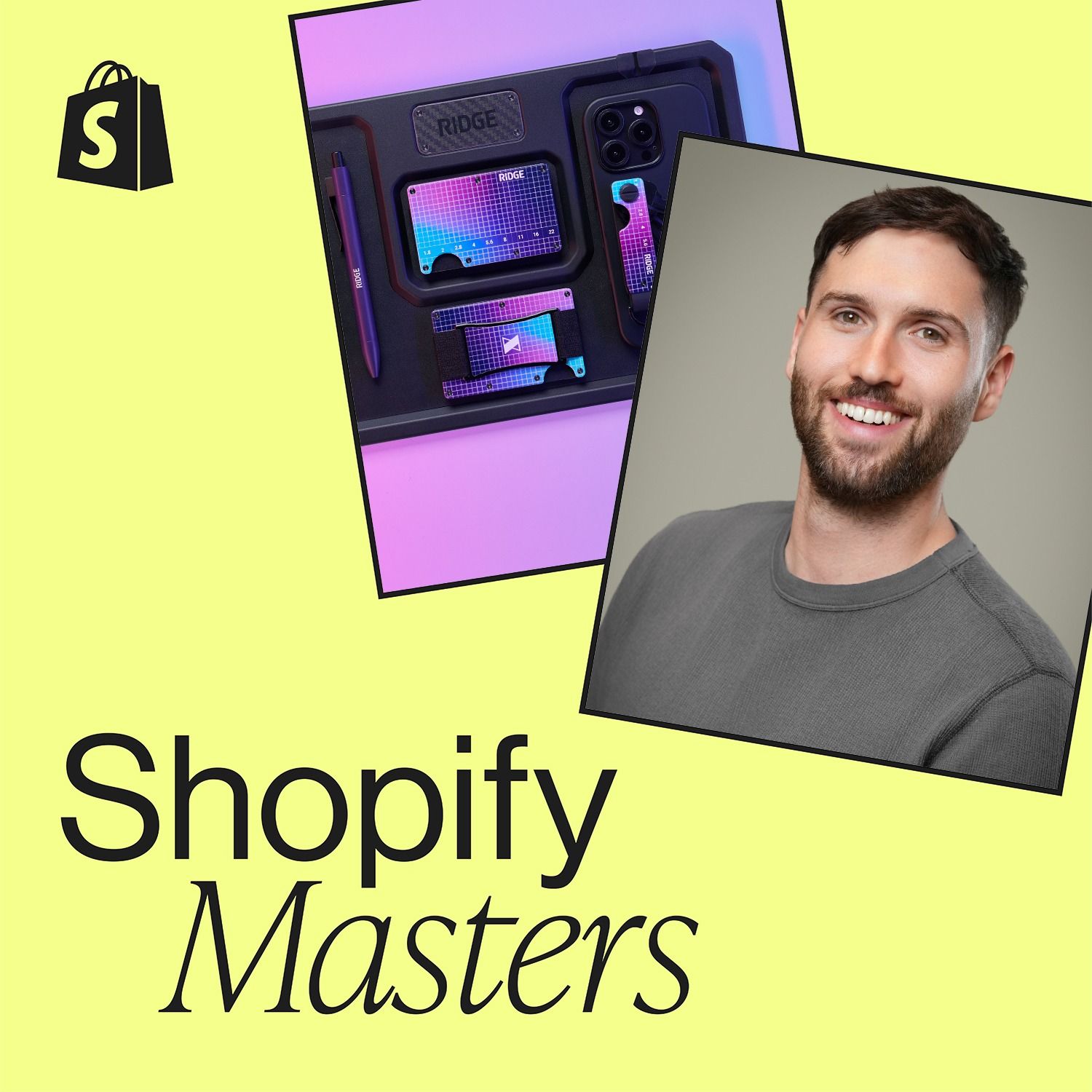
Ridge automates ad creation using a custom GPT and N8N, producing 500 static ads daily. Even if 90% are unusable, the remaining 50 ads provide a constant stream of testable creative, increasing the chances of finding winning variants for personalized campaigns at scale.
Instead of testing individual ad variations, advertisers can use the "Dynamic Creative" (for leads) or "Flexible Creative" (for sales) toggles. This allows combining multiple top-performing images, videos, headlines, and text into a single ad unit, which Meta’s algorithm then mixes and matches to find the optimal combination for different users.

Most advertisers compete in the general ad auction, but DPAs operate in a separate, less-crowded auction space. Brands can dominate this "carpool lane" by enhancing product catalogs with dynamic data like ratings and sale badges, moving beyond the default white backgrounds everyone else uses.
The goal for advertising in AI shouldn't just be to avoid disruption. The aim is to create ads so valuable and helpful that users would prefer the experience *with* the ads. This shifts the focus from simple relevance to actively enhancing the user's task or solving their immediate problem.
