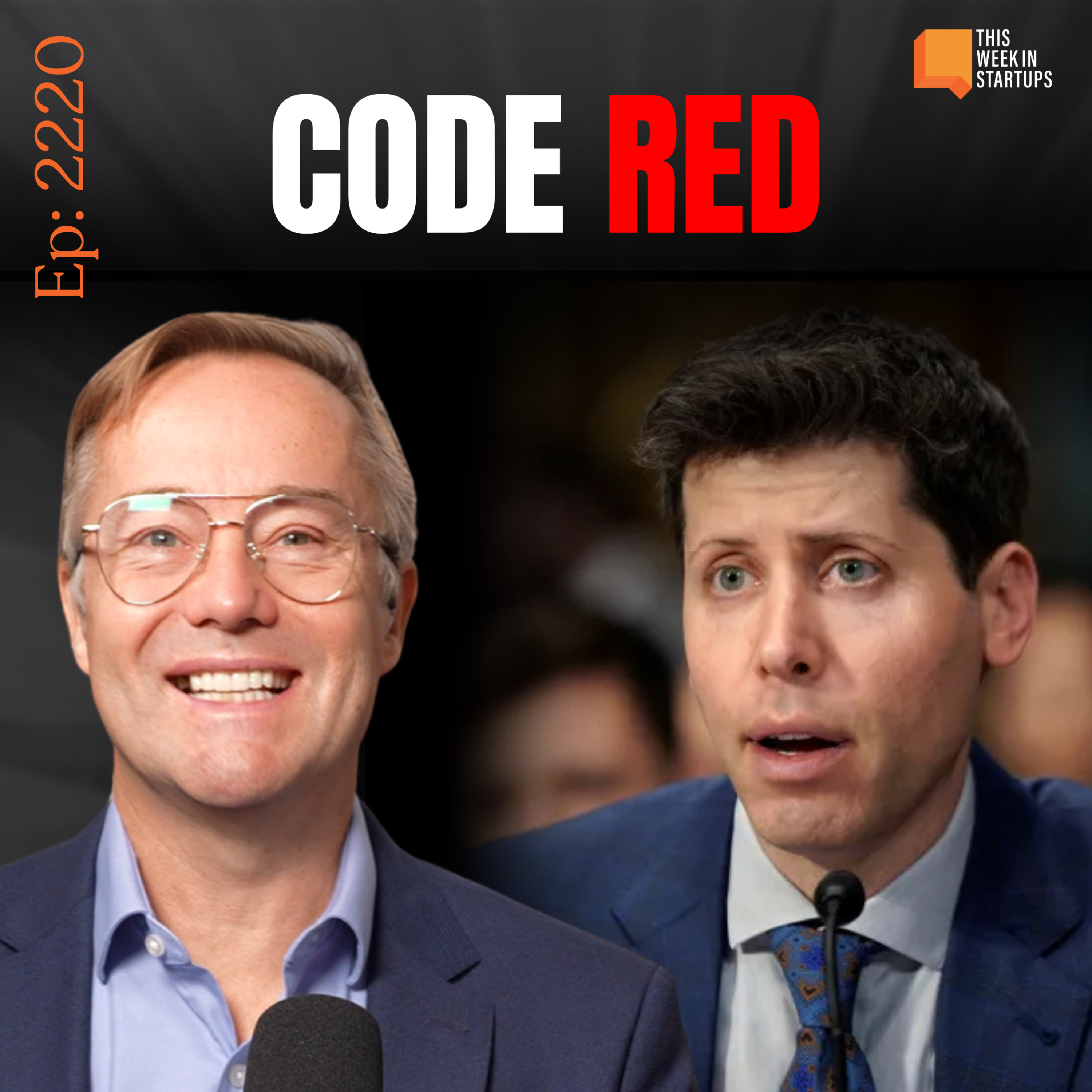
Calling a "code red" is a strategic leadership move used to shock the system. Beyond solving an urgent issue, it serves as a loyalty test to identify the most committed team members, build collective confidence through rapid problem-solving, and rally everyone against competitive threats.
As competitors like Google's Gemini close the quality gap with ChatGPT, OpenAI loses its unique product advantage. This commoditization will force them to adopt advertising sooner than planned to sustain their massive operational costs and offer a competitive free product, despite claims of pausing such efforts.
Netflix's content strategy has adapted to the reality of dual-screen viewing. Realizing audiences are often on their phones, they produce shows that are easy to follow in the background. This involves constant plot "signposting" so a distracted viewer can look up and immediately understand what's happening.
Michael Burry's comparison of OpenAI to Netscape is apt regarding market share erosion due to intense competition. However, the AI market is expanding exponentially. Unlike the browser market of the 90s, OpenAI can lose market share percentage yet still see massive absolute revenue and usage growth.
Netflix's bid for Warner Bros. may be a brilliant game theory play. Even if the deal is blocked by regulators, it forces its primary rival into a multi-year acquisition limbo. This distraction freezes the competitor's strategy, allowing Netflix to extend its market lead. It's a win-win for Netflix.
A proposed government service would allow companies to pay for a pre-vetted antitrust assessment before announcing a merger. This "TSA Pre-Check" for deals would involve independent reports and a public interest test, aiming to streamline the process, reduce political favoritism, and avoid lengthy, uncertain reviews.
High-stakes bidding for legacy media assets like Warner Bros. is driven by status-seeking among the ultra-wealthy, not a sound bet on the future of media. They are acquiring prestigious "shiny objects" from the past, while the actual attention economy has shifted to platforms like TikTok and YouTube.
The least intrusive way to introduce ads into LLMs is during natural pauses, such as the wait time for a "deep research" query. This interstitial model offers a clear value exchange: the user gets a powerful, free computation sponsored by an advertiser, avoiding disruption to the core interactive experience.