Get your free personalized podcast brief
We scan new podcasts and send you the top 5 insights daily.
Michael Pollan's experience quitting caffeine revealed his normal, productive self was a state maintained by a drug. His non-caffeinated brain felt like a different person, highlighting our dependence on substances to construct and maintain our perceived identity.

Related Insights
Humans evolved to have different "drugs of choice" as a survival mechanism. If everyone sought the same rewards, groups would quickly deplete a single resource. This once-adaptive trait now makes us vulnerable to a wide array of modern, hyper-stimulating temptations.

Studies show that while stimulants like caffeine can make individuals feel they are performing better on complex cognitive tasks, they actually make more errors. This dissociation between subjective feeling and objective performance is a critical risk of using stimulants for cognitive enhancement.
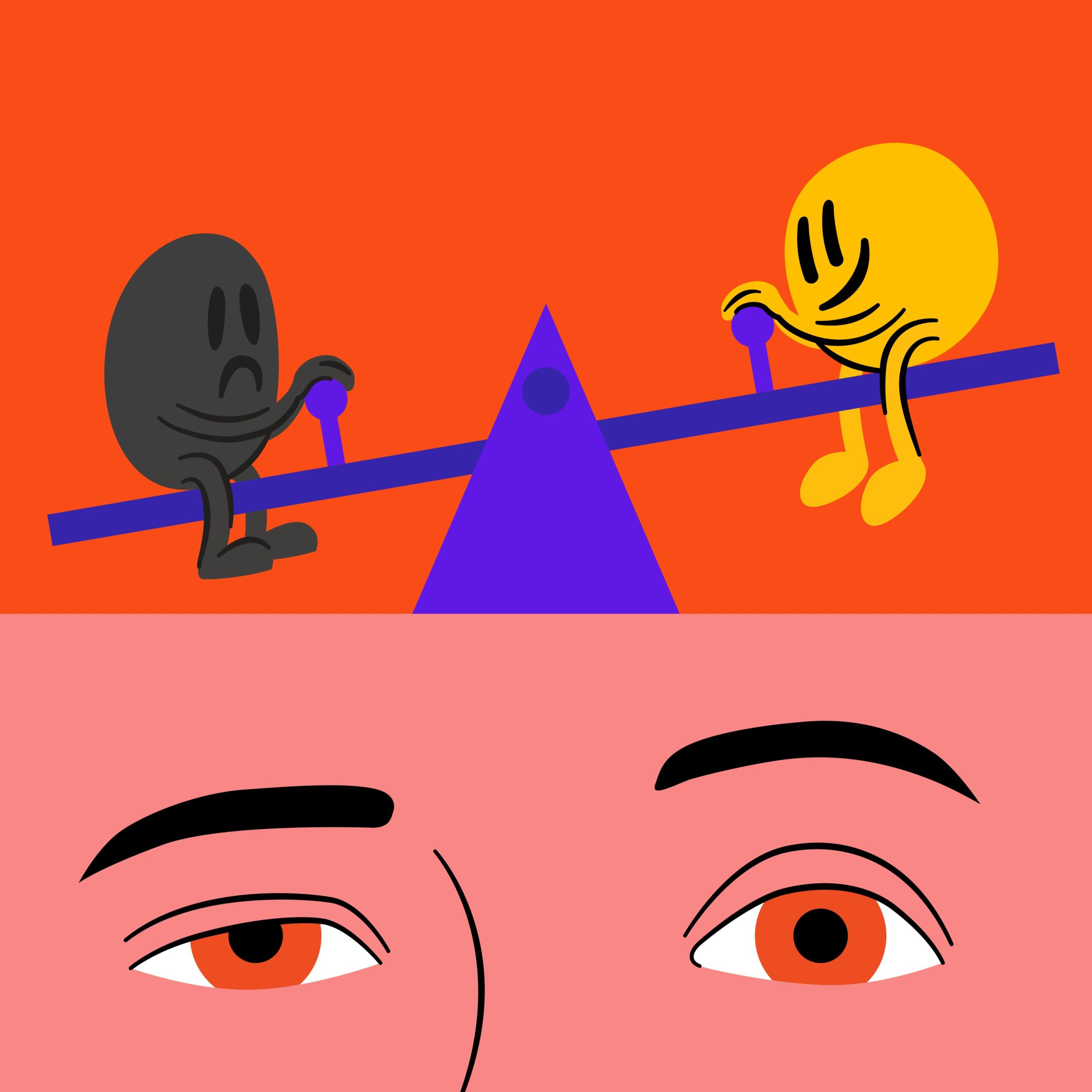
The brain maintains balance by counteracting any deviation to the pleasure side with an equal and opposite reaction to the pain side. This opponent process is why we experience hangovers and why chronic indulgence leads to a dopamine deficit state, driving us to use more just to feel normal.

Artist Michelle Rial describes a creative peak fueled by a precise amount of coffee where she feels like a genius. However, exceeding that dose doesn't enhance creativity; it triggers anxiety and produces erratic, tangential ideas that are ultimately unproductive.

A common cognitive error in addiction is misattributing the feeling of relief from withdrawal as a positive effect of the substance itself. The first cigarette of the day doesn't create a good feeling, it simply alleviates the negative, agitated state created by overnight nicotine withdrawal, trapping the user in a cycle.
Many people use substances to treat anxiety or depression, not realizing the substance itself causes a dopamine deficit that mimics those conditions. Abstaining for four weeks allows the brain to reset its reward pathways and restore natural dopamine production, often resolving the symptoms entirely.
Beyond blocking sleepiness, regular caffeine intake increases the number and efficacy of D2 and D3 dopamine receptors. This amplifies the effect of your existing dopamine, leading to enhanced motivation and drive, not just alertness. It's a tool for motivation as much as for energy.

Michael Pollan argues that psychedelics make consciousness, normally a transparent medium for experiencing reality, an object of awareness itself. He compares this to a smudge on a windshield, which suddenly makes you notice the glass you've been looking through all along.

Constantly bombarding our reward pathways causes the brain to permanently weigh down the 'pain' side of its pleasure-pain balance. This alters our baseline mood, or 'hedonic set point,' meaning we eventually need our substance or behavior not to get high, but simply to escape a state of withdrawal and feel normal.
Physiological responses, like a caffeine-withdrawal headache, occur because the brain predicts an event (coffee intake) and preemptively adjusts the body's state (dilating blood vessels). When the expected event doesn't happen, the preparatory physical action causes symptoms. This shows how expectation directly drives our physical reality.
