Get your free personalized podcast brief
We scan new podcasts and send you the top 5 insights daily.
Physiological responses, like a caffeine-withdrawal headache, occur because the brain predicts an event (coffee intake) and preemptively adjusts the body's state (dilating blood vessels). When the expected event doesn't happen, the preparatory physical action causes symptoms. This shows how expectation directly drives our physical reality.

Related Insights
Anxiety often isn't a brain chemistry issue but a physical stress response. A blood sugar crash or caffeine can trigger a physiological state of emergency, and the mind then invents a psychological narrative (like work stress) to explain the physical sensation.

Our perception of sensing then reacting is an illusion. The brain constantly predicts the next moment based on past experiences, preparing actions before sensory information fully arrives. This predictive process is far more efficient than constantly reacting to the world from scratch, meaning we act first, then sense.
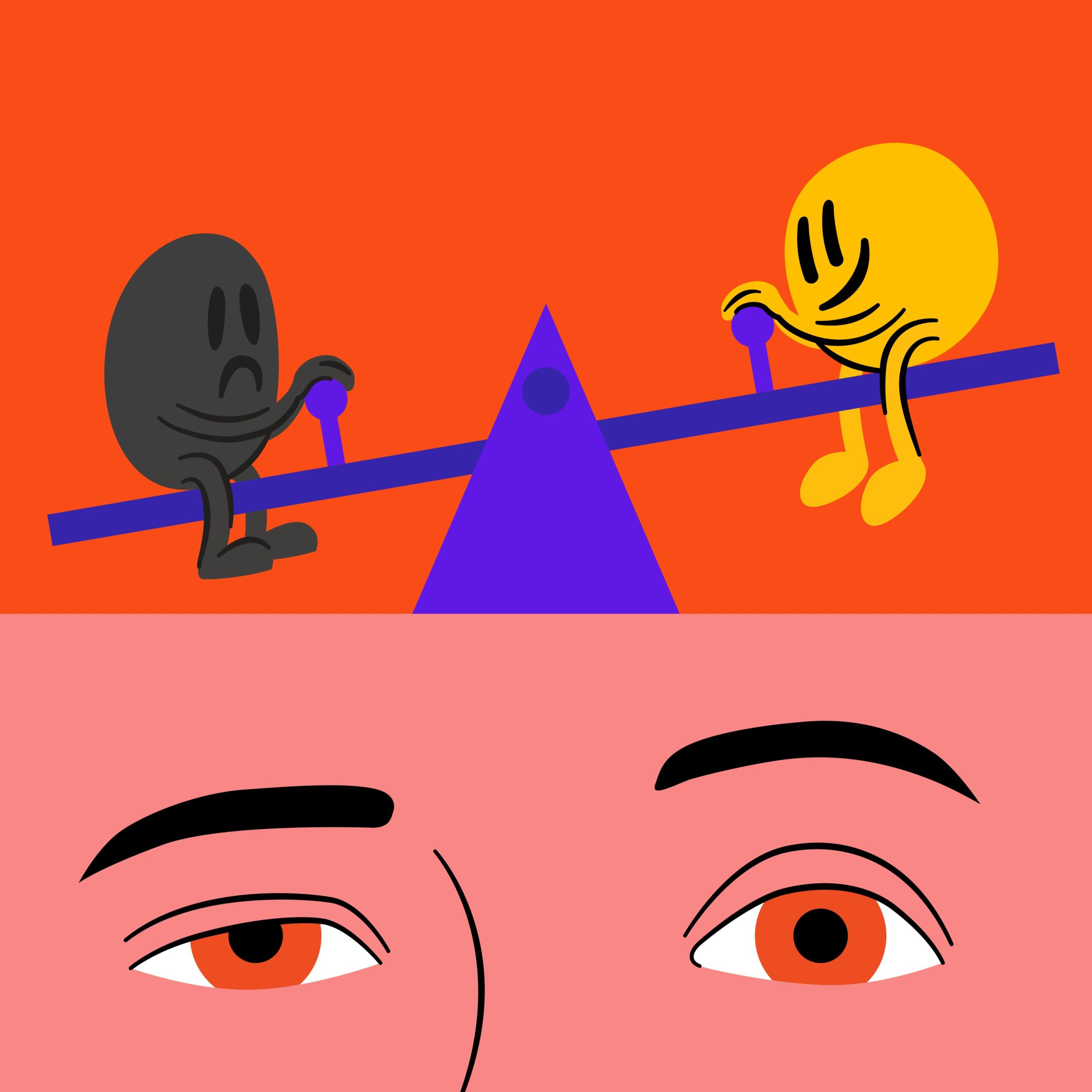
Neuroscience shows pleasure and pain are co-located in the brain and work like a seesaw. When we experience pleasure, the brain immediately compensates by tilting towards pain to restore balance. This neurological 'come down' is why constant pleasure-seeking eventually leads to a state of chronic pain and craving.
The RAS in your brain acts as a filter, showing you information that aligns with your core beliefs. If you adopt the belief 'I am a lucky person,' your RAS will start pointing out opportunities that were always there but previously filtered out. This is the neuroscience behind 'creating your own luck.'

Instead of medicating or ignoring symptoms like fatigue or mood swings, view them as your body's way of signaling an underlying issue. By treating symptoms as messages, you can focus on the root cause (like glucose spikes), which makes the 'messages' disappear.

You cannot simply think your way out of a deep-seated fear, as it is an automatic prediction. To change it, you must systematically create experiences that generate "prediction error"—where the feared outcome doesn't happen. This gradual exposure proves to your brain that its predictions are wrong, rewiring the response over time.
Contrary to popular belief, intuition isn't just a "gut feeling" or brain pattern. Research, particularly from trauma studies like "The Body Keeps the Score," shows that wisdom and life patterns are physically embedded in the body's fascia and musculature.

Labels like 'imposter syndrome' or 'feeling like a failure' are purely mental stories, not physical realities. Your body doesn't know what 'failure' is; it only experiences sensations like a churning stomach or tightness in the chest. By focusing on the raw physical feeling, you disconnect from the mind's debilitating narrative.
Studies show that mindset can override biology. Athletes told they had a performance-enhancing gene performed better, even if they didn't. People believing they ate gluten had physical reactions without any present. This demonstrates that our expectations can create powerful physiological realities (placebo/nocebo effects).

Most pain during intense exertion isn't a direct measure of physiological damage, but the brain's predictive mechanism to prevent harm. You can manage this by resetting the brain's expectations with small sensory changes, like how runner Elliot Kipchoge smiles when he's hurting to trick his brain into feeling okay.