Get your free personalized podcast brief
We scan new podcasts and send you the top 5 insights daily.
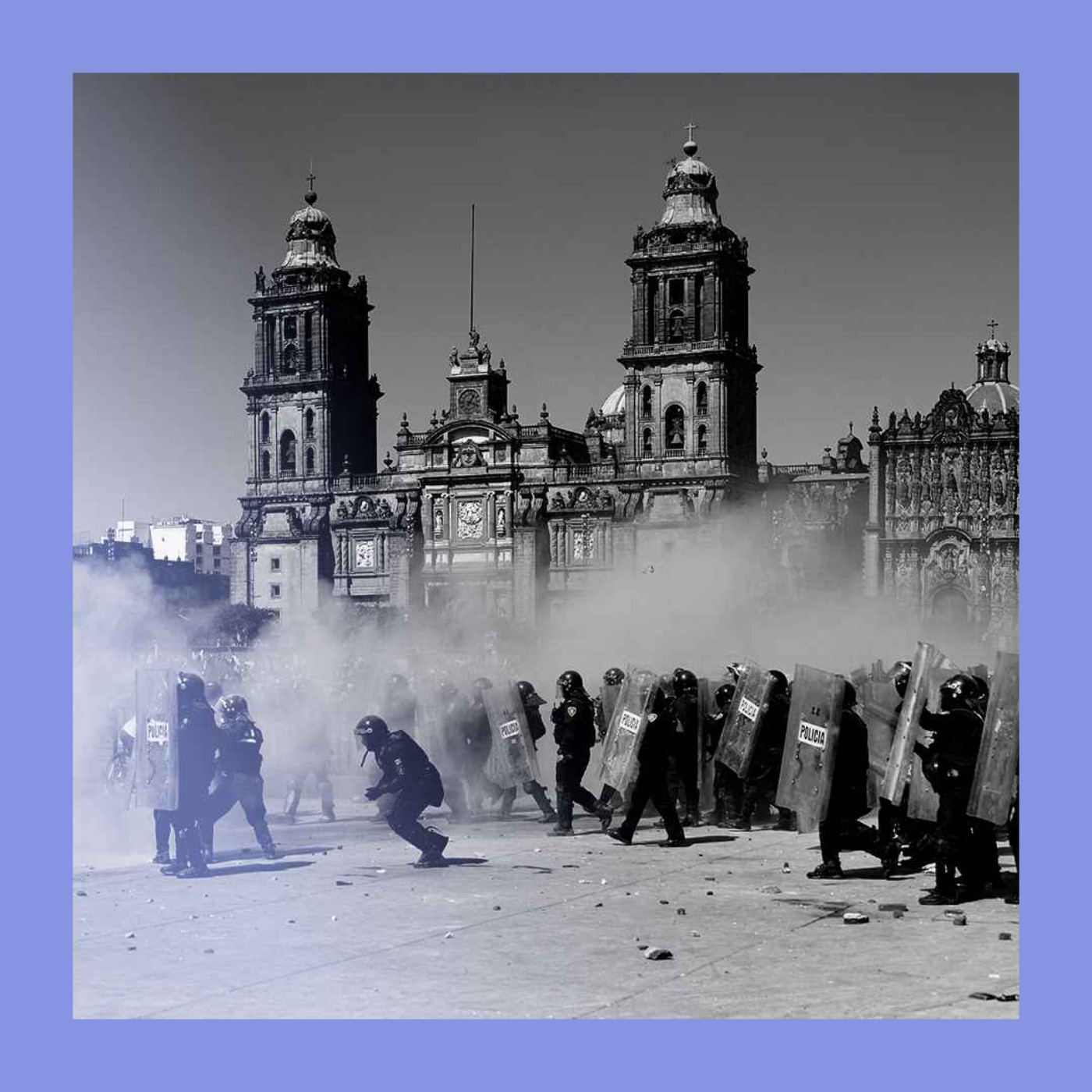
Mexico avoided the coups and civil wars of its neighbors through a unique political formula. The one-party state provided stability, but locally rigged elections, when challenged by popular protest, offered a genuine path for representation. This was reinforced by a deep national trauma from the revolution, prioritizing peace above all.

Related Insights
The Yucatan Peninsula, once a site of rebellion, is now remarkably safe. This peace is driven by its tourism-centric economy, which creates a strong incentive for stability as foreigners are considered "untouchable." It has also ceased to be a primary drug trafficking route.
For generations, Western societies have viewed peace and prosperity as the default state. This perception is a historical outlier, making the return to 'dog eat dog' great power politics seem shocking, when in fact it's a reversion to the historical norm of conflict.

Despite a strong regional identity and a near-successful secession attempt, Yucatan remained part of Mexico. The key factor was not federal suppression but deep internal racial divisions, as the ruling white plantocracy had no interest in leading a unified independence movement.
President Claudia Scheinbaum's hesitant response to cartel violence is framed not as weakness, but as a calculated political gamble. She may believe letting the violence 'blow over' is less risky than an all-out war that could threaten her family and destabilize her government.

The failure of Western nation-building highlights a key principle: establishing durable institutions must precede the promotion of democratic ideals. Without strong institutional frameworks for order, ideals like "freedom" can lead to chaos. America’s own success was built on inherited institutions, a luxury many developing nations lack, making the export of democracy exceptionally difficult.
Mexico's progress against crime is highly localized. While states like Zacatecas see murder rates fall steeply due to methodical police reform, others like Sinaloa remain nightmarish 'war zones' controlled by cartels. This demonstrates that national-level policies do not produce uniform results on the ground.
Despite political polarization, FX volatility is expected to be less than half of the 20% depreciation seen in the last cycle. This is due to a less tense social fabric, more moderate economic agendas, and strong institutions that have proven effective at limiting executive power and radical reforms.

Oaxaca's overrepresentation in national politics isn't accidental. Its mountainous terrain fostered a history of political independence. After Mexico's independence, villages eagerly established local governments, creating a deeply competitive political environment that functions as a training ground for skilled politicians.
Unlike other large post-colonial American states that fragmented, Mexico remained intact. Its mountainous geography necessitated a decentralized, hands-off governance style, which fostered a deep-rooted federalism that ultimately prevented regions from breaking away.
A CIA task force analyzed 38 variables to predict political instability, including common assumptions like poverty and inequality. They found only two were highly predictive: 1) a country being a partial democracy, or “anocracy,” and 2) its political parties organizing around identity (race, religion) rather than ideology.
