Get your free personalized podcast brief
We scan new podcasts and send you the top 5 insights daily.
Unlike other large post-colonial American states that fragmented, Mexico remained intact. Its mountainous geography necessitated a decentralized, hands-off governance style, which fostered a deep-rooted federalism that ultimately prevented regions from breaking away.

Related Insights
Unlike China's vast, easily unified plains, Europe's geography of mountains and rivers created natural barriers. This prevented a single empire from dominating and instead fostered centuries of intense competition between states. This constant conflict spurred rapid technological and military innovation, ultimately leading to European dominance.

Despite growing talk of "national divorce," the idea of a state peacefully seceding is highly unrealistic. The federal government would almost certainly not allow it and would likely resort to military intervention to maintain the union, rendering the scenario a fantasy.

Latin America's strong legal commitment to national sovereignty and non-intervention was not an abstract ideal developed in a vacuum. It was a pragmatic and principled response, forged over centuries of living next to the United States as it expanded, conquered territory, and asserted its dominance across the hemisphere.

Despite a strong regional identity and a near-successful secession attempt, Yucatan remained part of Mexico. The key factor was not federal suppression but deep internal racial divisions, as the ruling white plantocracy had no interest in leading a unified independence movement.
Mexico avoided the coups and civil wars of its neighbors through a unique political formula. The one-party state provided stability, but locally rigged elections, when challenged by popular protest, offered a genuine path for representation. This was reinforced by a deep national trauma from the revolution, prioritizing peace above all.
Geography provides the foundational 'hardware' for a nation (e.g., navigable rivers, defensible borders). However, this must be paired with effective 'software'—governance, laws, and culture—to achieve prosperity. One without the other, like in Argentina's case, leads to underperformance.
Mexico's progress against crime is highly localized. While states like Zacatecas see murder rates fall steeply due to methodical police reform, others like Sinaloa remain nightmarish 'war zones' controlled by cartels. This demonstrates that national-level policies do not produce uniform results on the ground.
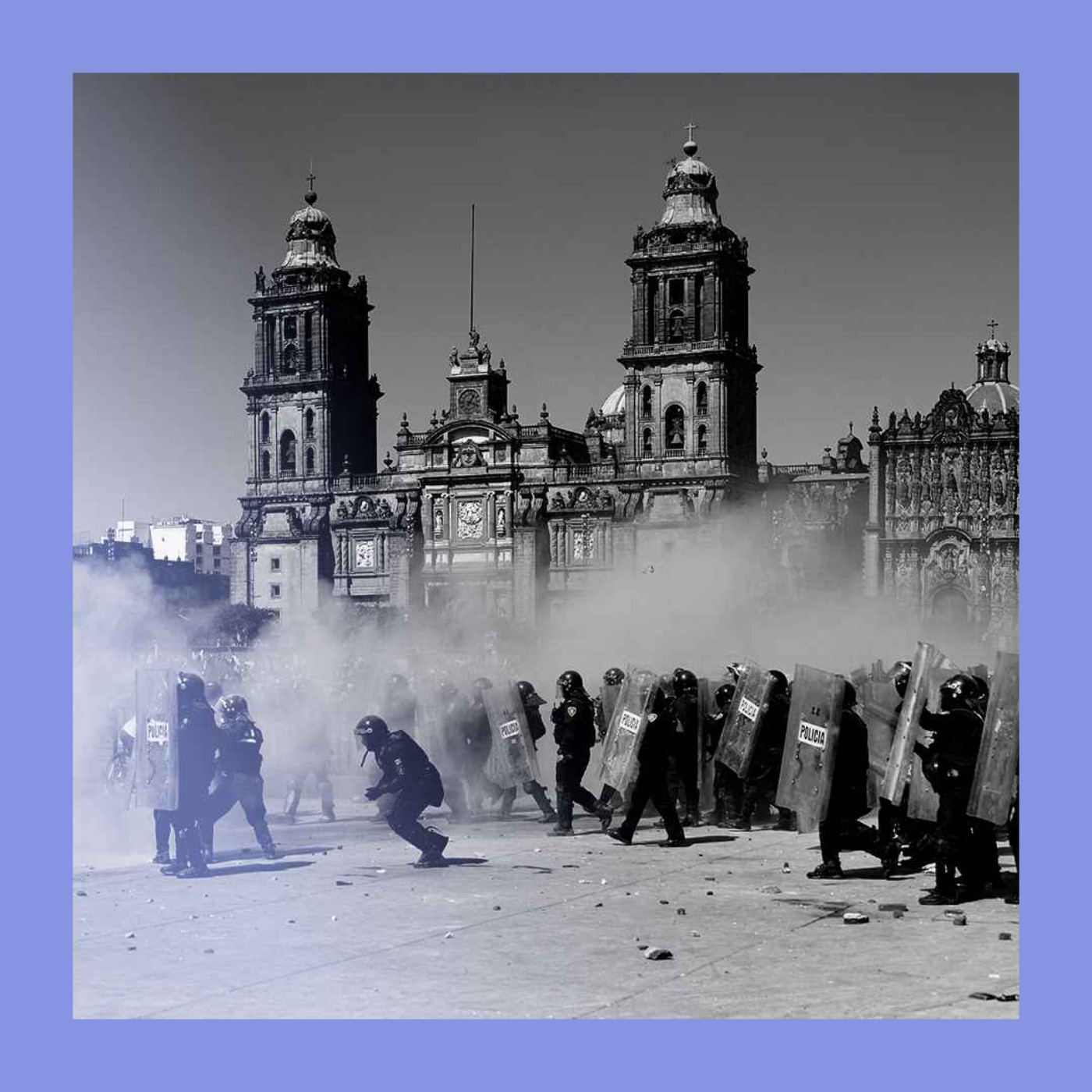
Due to its deep integration with the US economy, Mexico has developed a massive industrial base. If Mexico were located elsewhere and had more diversified trade relationships, it would be globally recognized as a major industrial power, rivaling European giants like Germany and France.

Oaxaca's overrepresentation in national politics isn't accidental. Its mountainous terrain fostered a history of political independence. After Mexico's independence, villages eagerly established local governments, creating a deeply competitive political environment that functions as a training ground for skilled politicians.
Beyond its mountainous terrain and independent culture, Guerrero's chronic violence is explained by its closeness to the nation's capital. This proximity makes any local insurgency a direct threat to central power, leading to a relentless, centuries-long cycle of state repression and fierce local opposition.