Get your free personalized podcast brief
We scan new podcasts and send you the top 5 insights daily.
China is unlikely to use a blockade as its primary reunification strategy. A blockade is a risky precursor because it would give the United States the time it needs to move forces into the region, making a subsequent amphibious assault prohibitively difficult for the PLA.

Related Insights
Despite its military buildup, China's primary strategy for Taiwan is not a direct invasion, which remains highly difficult. Instead, President Xi Jinping favors a coerced diplomacy, aiming to squeeze Taiwan on all sides until it feels it has no choice but to accept a 'one country, two systems' model.
Instead of a risky invasion, Xi Jinping's preference is to slowly suffocate Taiwan's will to resist. This strategy involves chipping away at U.S. commitments and eroding the conviction of regional allies, buying time while avoiding a costly direct conflict.
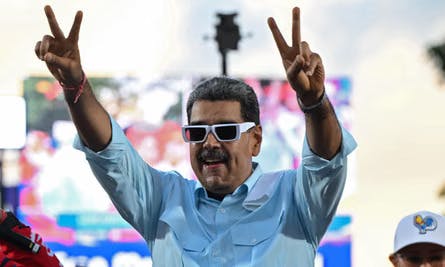
The U.S. operation to capture Maduro serves as a real-world case study for China's potential 'decapitation' strike against Taiwan. China has already rehearsed such scenarios in mock-ups of Taipei's presidential palace. This event demonstrates the feasibility of a quick, surgical strike, which is more aligned with the CCP's goals than a costly amphibious invasion.
Contrary to widespread fear, the probability of a Chinese invasion of Taiwan before 2028 is extremely low (~5%). China believes its goal of 'peaceful reunification' is progressing, its military is in disarray after deep purges, and it views President Trump as an accommodating US leader on the Taiwan issue.

Contrary to popular comparisons with Ukraine, Taiwan has 'zero chance' of defending itself independently. Its entire military posture is designed to hold out long enough for the United States to intervene, not to win a war of self-defense. This makes U.S. intervention speed the critical factor.
China's strategy for Taiwan likely mirrors its 2019 Hong Kong takeover. Instead of a direct military assault, Beijing will use political influence, espionage, and legislative changes to create administrative bridges, making any physical resistance illegal before troops ever move in.

Instead of a full-scale invasion, China is employing an "anaconda strategy" of constant, low-level pressure. Tactics like cutting undersea cables and sending drones are designed to exhaust and demoralize Taiwan, making a military response from the US difficult to justify.
While the U.S. is preoccupied with Iran and the Strait of Hormuz, China has significantly increased its military presence around Taiwan. This may not be just a show of force, but a strategic dress rehearsal for an invasion, testing capabilities while global attention is focused elsewhere.

A naval and air blockade, or "cordon sanitaire," presents a more dangerous and likely scenario than a direct cross-strait assault. This strategy would force an enormously difficult political and military decision upon the U.S. about whether to break the blockade and come to Taiwan's aid.

The primary danger to the West's technology infrastructure is not a Chinese invasion of Taiwan, but a simple naval blockade. This less aggressive act could halt the flow of 90% of the world's advanced microprocessors, crippling Western economies and defense systems without firing a shot.
