Get your free personalized podcast brief
We scan new podcasts and send you the top 5 insights daily.
The constitutional requirement for congressional war approval isn't a mere technicality. It's a crucial process for building public support and national buy-in. Democracies that skip this step become fragile and lack the staying power to endure prolonged conflicts, undermining their own war efforts.

Related Insights
A U.S. President wields unparalleled authority to launch military actions abroad without congressional approval. However, they possess virtually no power to dismantle or significantly roll back the entrenched military-industrial complex. Attempting to do so results in being compromised, framed, or politically neutralized.

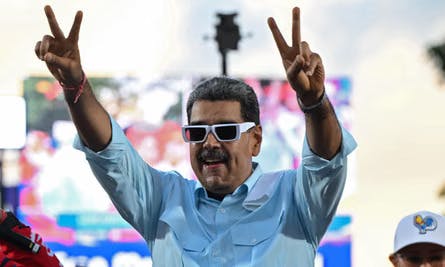
The US executive branch increasingly initiates military action by citing inherent commander-in-chief powers, sidestepping the constitutional requirement for Congress to declare war. This shift, exemplified by the Venezuela operation, marks a 'third founding' of the American republic where historical checks and balances on war-making are now considered quaint.
A population can be habituated to war through gradual escalation. By starting with seemingly small, contained "lightning strikes," each subsequent step feels less shocking. This incremental approach can lead a nation into a major conflict without a single decisive moment of public debate or consent.

Unlike wars where a nation is attacked first (e.g., Pearl Harbor), "wars of choice" lack the sustained public support needed for a long conflict. The aggressor has a political weak point, which adversaries exploit to win a war of attrition, not battlefield victories.

Autocratic regimes can endure prolonged economic and political hardship. Democratic leaders, facing voters and market pressures, cannot. This gives non-democracies significant leverage, as they know democracies will fold first.

The political precedent set by the Bush administration—convincing Americans they can have both major wars and tax cuts—has disconnected the public from the true costs of conflict. This mindset makes it easier for governments to enter into tremendously expensive, multi-trillion-dollar quagmires without clear objectives or public accountability for the fiscal trade-offs.

Autocracies can achieve operational surprise, but democracies have a deeper strategic advantage: genuine, voluntary dedication. When attacked, citizens of democracies, from all walks of life, rush to defend their nation with an enthusiasm that cannot be commanded or coerced in an authoritarian state.

A democratic nation's ability to wage war is limited less by its military capacity and more by its own internal moral compass. The potential for domestic and global outcry over civilian casualties acts as a powerful deterrent, preventing the full use of force and creating strategic stalemates.

Described as 'sole presidential authority,' this doctrine means the President can decide to launch nuclear weapons alone. This power is not subject to a vote or veto from Congress, the Secretary of Defense, or the Joint Chiefs of Staff, placing immense destructive power in one person's hands.

By forgoing consultation with allies, Congress, or the UN, the Trump administration frames its military action as ad hoc rather than a defense of international rules. This erodes legitimacy and alienates key European partners who prioritize a rules-based system, contrasting sharply with the coalition-building of past interventions like the Iraq War.