Get your free personalized podcast brief
We scan new podcasts and send you the top 5 insights daily.
Unlike wars where a nation is attacked first (e.g., Pearl Harbor), "wars of choice" lack the sustained public support needed for a long conflict. The aggressor has a political weak point, which adversaries exploit to win a war of attrition, not battlefield victories.

Related Insights
Recent, pointless-seeming wars in Iraq and Afghanistan have created a new version of "Vietnam Syndrome." This public and political aversion to foreign intervention makes it nearly impossible for the US to commit to providing crucial, early support in conflicts where it may be necessary, such as in Ukraine.

An act of aggression can become so popular domestically that leaders feel compelled to see it through, even if initially intended as a negotiating tactic. The Argentine junta found the Falklands invasion was "the most popular thing they'd ever done," trapping them in a conflict they couldn't easily abandon.

Former official Jon Finer posits that sustained American public support for aiding Ukraine stems from its clear, digestible narrative of a perpetrator (Russia) and a victim (Ukraine). This contrasts sharply with the Iraq War, where complex justifications and moral ambiguity made it harder for the public to engage.

Unlike nations that have historically endured massive losses, the United States has a low willingness to suffer casualties, which is a strategic vulnerability. Adversaries understand that American political will for a prolonged conflict is fragile and can be broken by simply waiting out the initial shock and absorbing blows.
The bombing campaign, aimed at regime change, could be counterproductive. Prior to the conflict, Iran's regime was seen as unpopular and frail, potentially heading for collapse or moderation. The external attack risks creating a rally-round-the-flag effect, allowing the regime to consolidate power where mere survival becomes a victory.
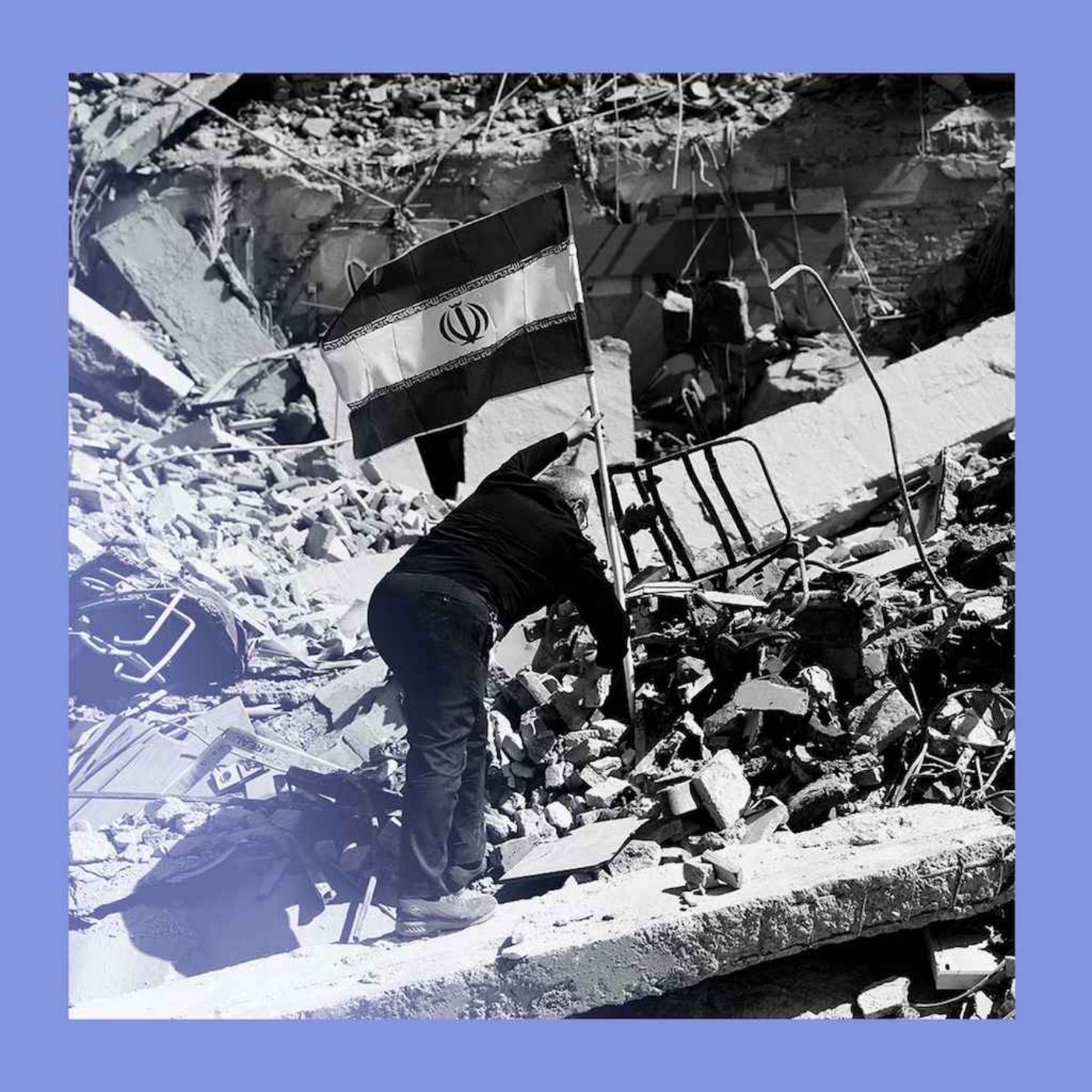
The hosts describe how quickly public support for the Iran conflict evaporated, terming it a "dramatic vibe shift." This demonstrates the extreme fragility of political capital for major actions. Perceived incompetence can cause a supportive narrative to collapse in just 48 hours, long before strategic objectives can be met.
Initial military actions, like successful bombings, can feel like victories. However, they often fail to solve the core political issue, trapping leaders into escalating the conflict further to achieve the original strategic goal, as they don't want to accept failure.
A government's inability to answer basic questions like "Why now?" during a military action is perceived as incompetence. This defensive communication signals a lack of conviction to adversaries, encouraging them to simply endure until American political will collapses.
Iran's strategy isn't a quick military victory but a war of attrition. By accepting a long timeline and inflicting small but consistent damage, it aims to erode US domestic support for the war, especially in an election year, and outlast the current administration.

Nations like the US and USSR prolong involvement in failed conflicts like Afghanistan primarily due to "reputational risk." The goal shifts from achieving the original mission to avoiding the perception of failure, creating an endless commitment where objectives continually morph.
