Get your free personalized podcast brief
We scan new podcasts and send you the top 5 insights daily.
European leaders have shifted from seeing Ukraine as a moral cause to a vital strategic asset. Ukraine's battle-tested army is viewed as Europe's "shield," and its innovations in drone warfare are seen as Europe's future "arsenal," especially amid doubts about US security guarantees.

Related Insights
The conflict in Ukraine exposed the vulnerability of expensive, "exquisite" military platforms (like tanks) to inexpensive technologies (like drones). This has shifted defense priorities toward cheap, mass-producible, "attritable" systems. This fundamental change in product and economics creates a massive opportunity for startups to innovate outside the traditional defense prime model.

The unified fear of Russia is compelling Europe to pivot its economic focus towards industrial and defense manufacturing. This is a significant strategic shift for a region recently more focused on regulation and legacy industries, potentially revitalizing its industrial base.

A swift peace deal in Ukraine might not be the preferred outcome for all its European partners. Some may see a longer conflict as a strategic opportunity to bolster their own military capabilities while Russia is occupied.

The President of Finland's quick reversal on whether Europe can defend itself without America reveals a critical vulnerability. Despite public posturing of self-sufficiency, European security is deeply dependent on the U.S., undermining their leverage in negotiations and exposing their claims as a bluff.

With the U.S. stepping back from its traditional leadership role, European countries are creating new, direct alliances to ensure their own security. A notable example is the emerging UK-Scandinavia-Baltic-Poland axis, which signals a fundamental shift in the continent's geopolitical architecture away from a singular reliance on Washington.

Europe faces a dual threat: an aggressive Russia waging hybrid warfare on its eastern flank, and a Trump-led America that actively prefers a fragmented, weaker Europe. A disunified EU allows the U.S. to cut more favorable bilateral deals, leaving Europe vulnerable from both sides without its traditional transatlantic security guarantee.

Traditionally a defensive strength, Russia's immense size makes it nearly impossible to provide adequate air defense for its sprawling network of almost 40 major oil refineries. This geographic vulnerability allows Ukraine to inflict significant, widespread economic damage with low-cost, long-range drones that are difficult to counter.

Instead of slow, bureaucratic rearmament, Germany could apply an 'Operation Warp Speed' model to its defense industry. By mass-producing Ukraine’s innovative drone designs at scale, Germany would not only create a powerful deterrent against Russia but also trigger its own economic recovery, a decisive strategic win-win.

By committing to a multi-year, ~$400 billion funding plan, Europe can turn Ukraine's financial weakness into a strategic advantage. This sustained support would exacerbate Russia's already high financial burden, potentially triggering a banking or inflation crisis and crippling its war machine.
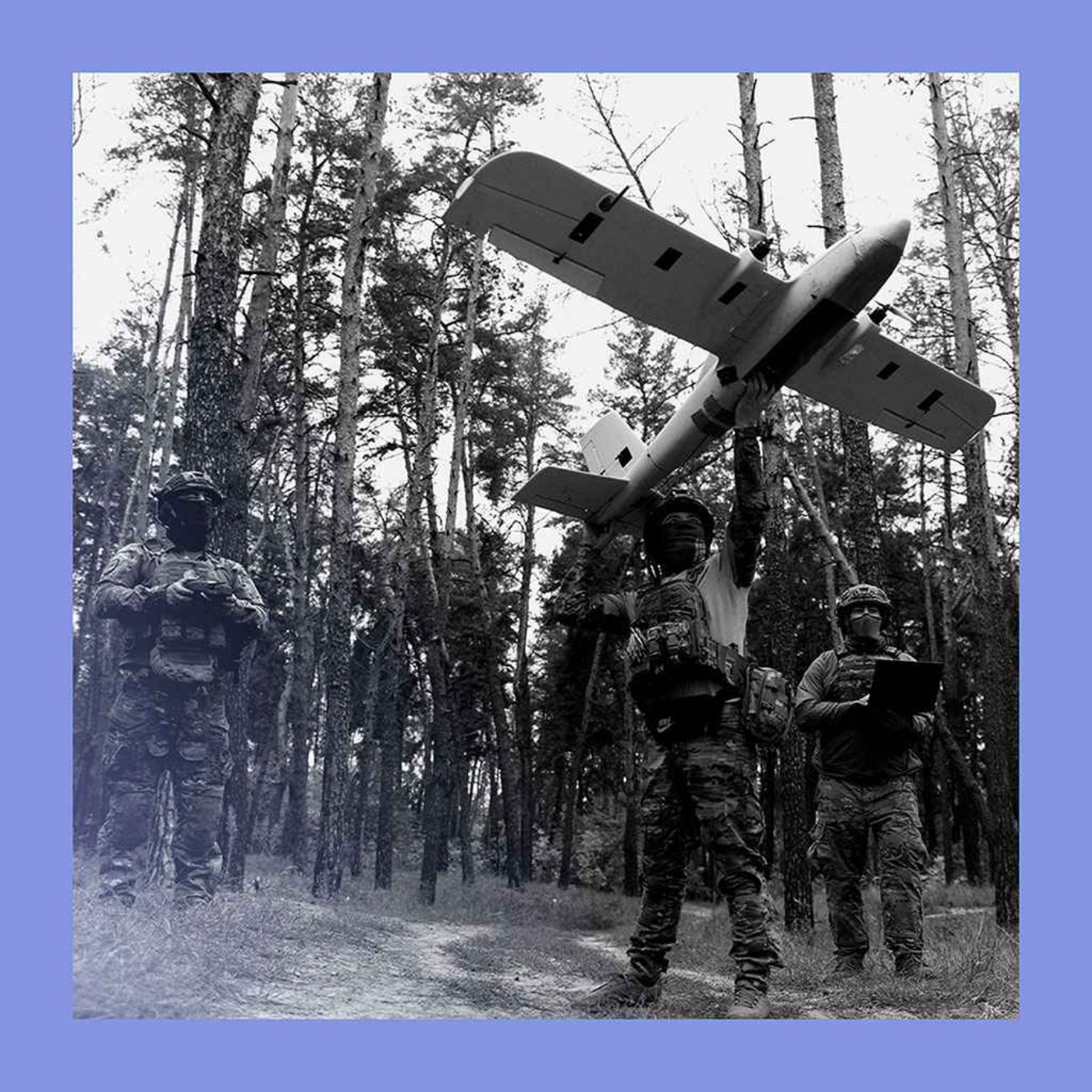
The war in Ukraine has evolved from a traditional territorial conflict into a "robot war," with drones dominating the front lines. This real-world battlefield is accelerating innovation at an "unbelievable" pace, driving new solutions for secure communications and autonomous targeting, providing critical lessons for US drone strategy.