Get your free personalized podcast brief
We scan new podcasts and send you the top 5 insights daily.
The unified fear of Russia is compelling Europe to pivot its economic focus towards industrial and defense manufacturing. This is a significant strategic shift for a region recently more focused on regulation and legacy industries, potentially revitalizing its industrial base.
Related Insights
The conflict in Ukraine exposed the vulnerability of expensive, "exquisite" military platforms (like tanks) to inexpensive technologies (like drones). This has shifted defense priorities toward cheap, mass-producible, "attritable" systems. This fundamental change in product and economics creates a massive opportunity for startups to innovate outside the traditional defense prime model.

The administration's explicit focus on re-shoring manufacturing and preparing for potential geopolitical conflict provides a clear investment playbook. Capital should flow towards commodities and companies critical to the military-industrial complex, such as producers of copper, steel, and rare earth metals.

Increased defense spending is not just a security measure. It presents a prime opportunity to create a European safe asset, funded at both national and EU levels, which is key to developing the deep, liquid capital market Europe currently lacks.

German defense firm Rheinmetall's market cap surged from $5B to $80B post-Ukraine invasion, mirroring the explosive growth of AI companies. This highlights how major geopolitical shifts can act as powerful, unexpected catalysts for traditional industries, creating immense value for well-positioned incumbents.

Massive backlogs for critical US military hardware are making America an unreliable supplier. This strategic vulnerability is pushing allied nations to develop their own defense industrial bases, creating a huge market for companies like Anduril that can co-develop and establish local production.

While the upcoming 2026 German/EU fiscal stimulus is expected to boost industrial demand, the benefits won't materialize immediately. The key investment strategy is identifying companies with the cash flow and balance sheet strength to survive the interim period before the stimulus-led recovery begins.

Rheinmetall's market cap surged from $5B to $80B in three years. The growth was driven by the Ukraine war boosting demand, a century of institutional knowledge, and strong leadership, demonstrating how legacy firms can achieve hyper-growth during geopolitical shifts.

The decisive advantage in future conflicts will not be just technological superiority, but the ability to mass-produce weapons efficiently. After decades of offshoring manufacturing, re-industrializing the US to produce hardware at scale is Anduril's core strategic focus, viewing the factory itself as the ultimate weapon.
Countries are rapidly increasing defense spending due to global instability and the US's shifting role. Massive backlogs for US equipment, like a reported 15-year wait for Patriot missiles, are forcing allies to invest in domestic production and R&D for assured supply.
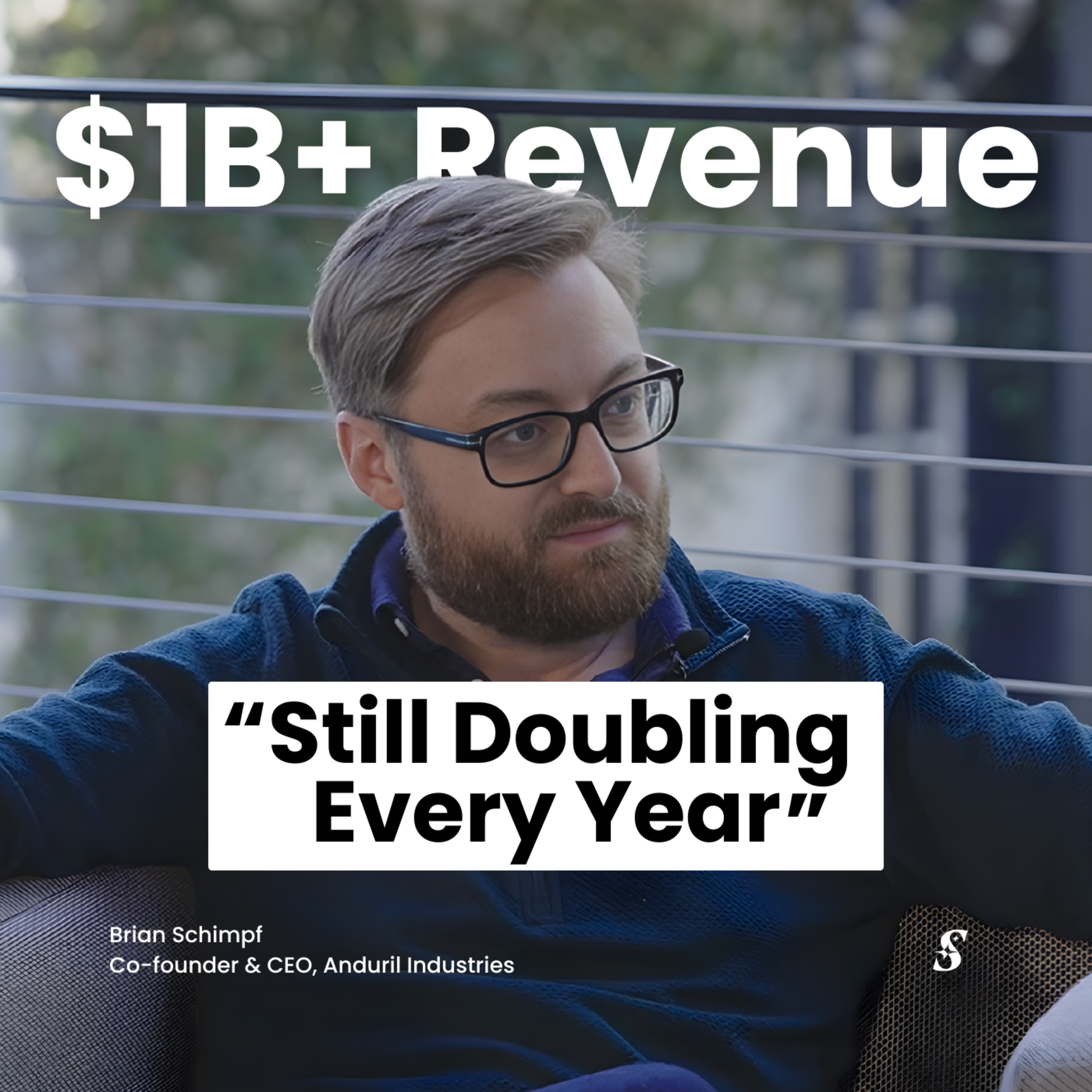
Anduril's co-founder argues America's atrophied manufacturing base is a critical national security vulnerability. The ultimate strategic advantage isn't a single advanced weapon, but the ability to mass-produce "tens of thousands of things" efficiently. Re-industrializing is therefore a core pillar of modern defense strategy.