Get your free personalized podcast brief
We scan new podcasts and send you the top 5 insights daily.
Instead of using million-dollar aerospace computers, Zipline implements safety concepts like redundant flight computers by engineering solutions with components from the smartphone supply chain. This allows them to achieve comparable safety levels at a fraction of the cost and with much faster development cycles.

Related Insights
Successful "American Dynamism" companies de-risk hardware development by initially using off-the-shelf commodity components. Their unique value comes from pairing this accessible hardware with sophisticated, proprietary software for AI, computer vision, and autonomy. This approach lowers capital intensity and accelerates time-to-market compared to traditional hardware manufacturing.

Zipline initially tried buying off-the-shelf components, which proved expensive and unreliable, leading to constant crashes. This forced them, part by part, to design everything from scratch—motor controllers, GPS modules, etc.—to meet the specific reliability and cost requirements of their new hardware category.
Against investor advice and industry trends favoring VTOL (vertical takeoff and landing) drones, Zipline opted for a fixed-wing airplane design. They realized their customers valued range above all else, and a simple airplane could fly 10-30x farther, solving the core problem more effectively.

Hardware founders often fixate on the core device. Zipline learned the hard way that their aircraft was only 15% of the total system complexity. The truly difficult challenges lay in the surrounding logistics: inventory management, cold chain, maintenance, air traffic control, and ground infrastructure.

Zipline's testing philosophy extends beyond simple pass/fail. They subject components to extreme conditions in "highly accelerated lifetime testing" with the explicit goal of breaking them. This approach reveals true failure modes and system limits, enabling them to build more robust and reliable aircraft.
Zipline's CEO argues the US can't compete with China's scale on simple drones. The winning strategy is to innovate on complex, state-of-the-art aircraft where America leads, and then scale that manufacturing advantage.
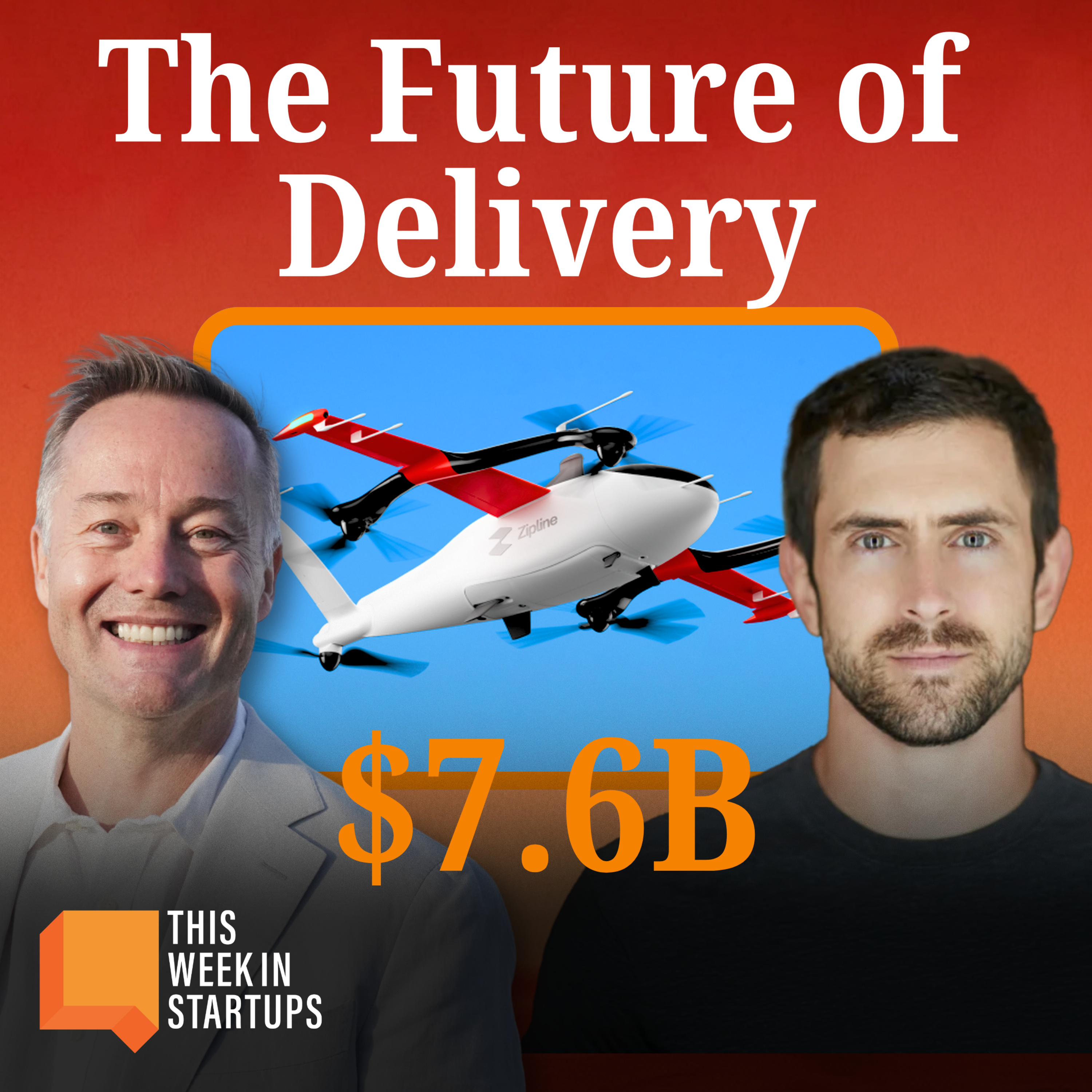
Zipline's 50% cost reduction for its next-gen aircraft wasn't just from supply chain optimization. The primary driver was a design philosophy focused on eliminating components entirely ("the best part is no part"), which also improves reliability.

The venture capital mantra that "hardware is hard" is outdated for the American Dynamism category. Startups in this space mitigate risk by integrating off-the-shelf commodity hardware with sophisticated software. This avoids the high capital costs and unpredictable sales cycles of consumer electronics.

Zipline learned the physical drone is a small fraction of the complexity. The majority lies in building auxiliary software, maintenance systems, inventory management, and integrations with civil aviation and healthcare systems to create a reliable logistics service.
Zipline had to build its own components because the market only offered two extremes: cheap, unreliable consumer drone parts or prohibitively expensive military-grade systems. This "automotive grade" gap for reliable, cost-effective components forced them to vertically integrate to achieve their performance and cost goals.