Get your free personalized podcast brief
We scan new podcasts and send you the top 5 insights daily.
Zipline initially tried buying off-the-shelf components, which proved expensive and unreliable, leading to constant crashes. This forced them, part by part, to design everything from scratch—motor controllers, GPS modules, etc.—to meet the specific reliability and cost requirements of their new hardware category.

Related Insights
Citing the space industry's cost-plus contracting culture, Impulse Space adopted extreme vertical integration to gain control over cost, schedule, and quality. This move is a direct response to the unreliability of traditional aerospace vendors, who are often slow and overpriced.

Instead of using million-dollar aerospace computers, Zipline implements safety concepts like redundant flight computers by engineering solutions with components from the smartphone supply chain. This allows them to achieve comparable safety levels at a fraction of the cost and with much faster development cycles.
Underwater drone company Ulysses adopted heavy vertical integration after discovering the maritime industry's massive "Idiot Index" (the ratio of a part's cost to its raw material cost). Buying 20-year-old sensor technology at inflated prices was untenable, forcing them to build components like cameras and pressure vessels in-house to lower costs.

SpaceX's iconic vertical integration wasn't an initial strategic choice but a reaction to crisis. An early plan to outsource manufacturing was shattered when their fastest vendor abruptly closed. This forced them to insource talent and machinery out of necessity, creating the model they are known for today.

Zipline's 50% cost reduction for its next-gen aircraft wasn't just from supply chain optimization. The primary driver was a design philosophy focused on eliminating components entirely ("the best part is no part"), which also improves reliability.

When deciding whether to buy or build a component, Reflect Orbital uses a non-traditional factor: vendor friction. If a supplier is unresponsive or difficult, the pain of dealing with them becomes a strong motivator to bring that capability in-house.

Planet Labs had to build most of its satellite components, like custom radios and telescopes, in-house because a robust supplier ecosystem didn't exist when they started. This contrasts with today's space startups that can leverage a mature market of specialized third-party vendors.

Zipline had to build its own components because the market only offered two extremes: cheap, unreliable consumer drone parts or prohibitively expensive military-grade systems. This "automotive grade" gap for reliable, cost-effective components forced them to vertically integrate to achieve their performance and cost goals.
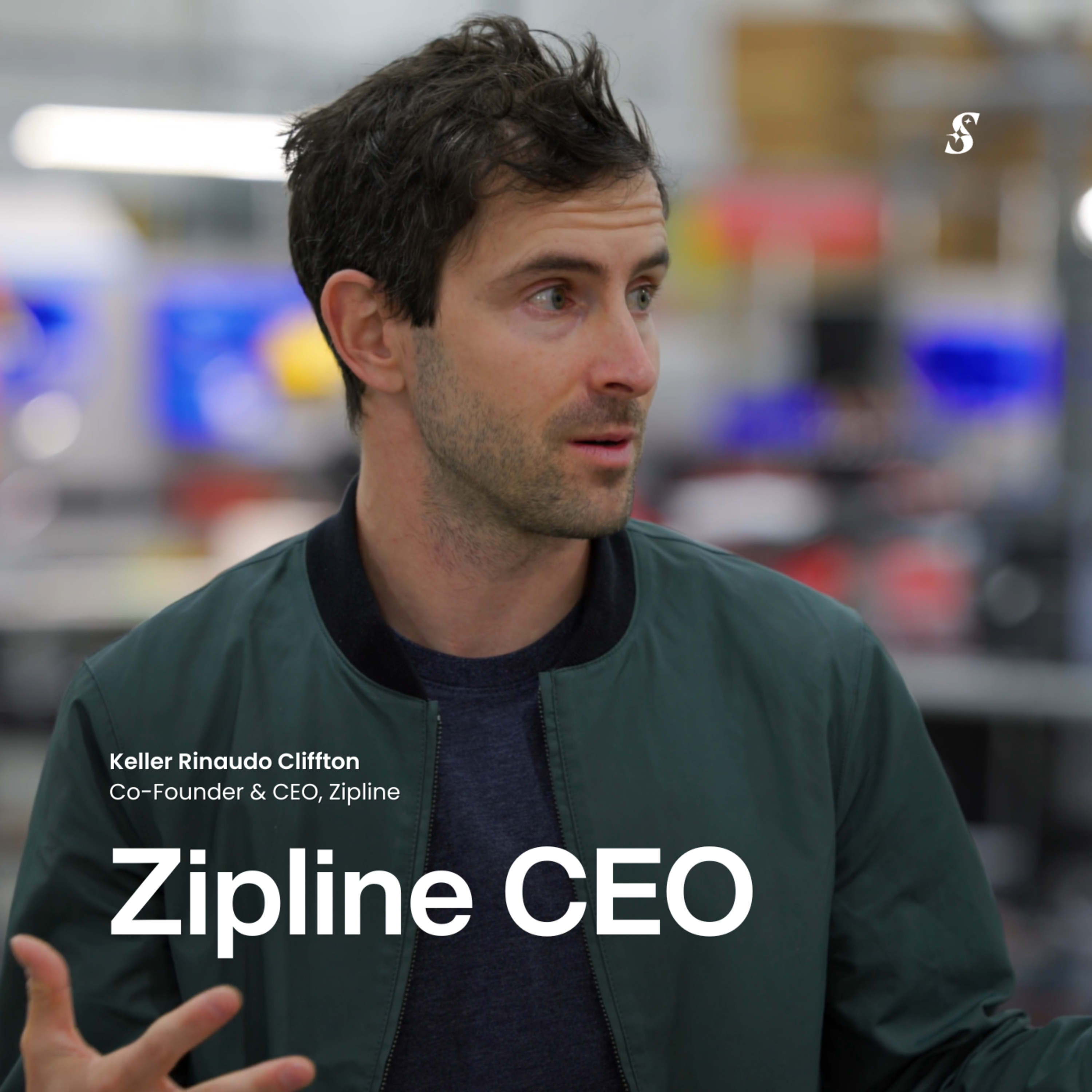
Figure designs nearly every component of its robots in-house, from motors to batteries. This extreme vertical integration, though costly upfront, prevents being at the mercy of third-party vendor timelines, code problems, or supply chain issues, enabling faster iteration and deeper system control.

Etched builds its own chips, boards, cold plates, interconnects, and even its own racks. This full-stack ownership allows for extreme parallelization and iteration speed, a key advantage over startups that rely on a fragmented supply chain and multiple vendors.
![Etched - Building AI Hardware to Make Inference Faster and Cheaper - [Invest Like the Best, EP.480] thumbnail](https://megaphone.imgix.net/podcasts/532910c4-743d-11f1-b7dc-b31915c88b79/image/810c9e3a23b5c4ea0a56e5e4cc8d7e47.jpg?ixlib=rails-4.3.1&max-w=3000&max-h=3000&fit=crop&auto=format,compress)