Get your free personalized podcast brief
We scan new podcasts and send you the top 5 insights daily.
Autonomous delivery vehicles face a unique challenge not present in robotaxis. While a passenger can handle getting in and out of a car, a robot must solve the complex logistical problems of loading goods at the merchant and unloading them at the customer's specific front door.

Related Insights
Creating the Dot delivery robot wasn't just a hardware challenge. DoorDash had to build the vehicle hardware, a custom L4 autonomy software stack, integrate them, and then plug the entire system into its complex logistics and merchant platform—a multi-year, first-principles effort.

Amazon's purchase of River, a maker of autonomous robots for navigating stairs and pathways, marks a strategic expansion beyond its traditional focus on warehouse automation. This move targets the complex and costly last-mile segment of the delivery chain.

Before autonomous vehicles can dominate delivery, a more fundamental problem must be solved: creating a structured, real-time catalog of the tens of millions of items available in a city. Without knowing what exists and where, advanced fulfillment technology is useless.
While many see autonomous vehicles as a threat to Uber's ride-hailing, its delivery segment may be more important and defensible. Automating last-mile delivery of goods from varied locations is significantly more complex and less economical than automating passenger transport, providing a durable moat.

While 2025 saw major advancements for robots in commercial settings like autonomous driving (Waymo) and logistics (Amazon), consumer-facing humanoid robots remain impractical. They lack the fine motor skills and dexterity required for complex household chores, failing the metaphorical "laundry test."

Autonomous commerce will be a multimodal ecosystem using drones, sidewalk bots, and AVs. This creates a massive integration problem for retailers. The winning strategy is not building one vehicle, but creating the universal orchestration layer that allows retailers to manage all autonomous delivery form factors seamlessly.

The inefficiency of using a 4,000-pound gas vehicle for a 5-pound delivery ensures drone delivery will eventually be far cheaper. This physics-based argument underpins the entire business model's long-term economic viability.
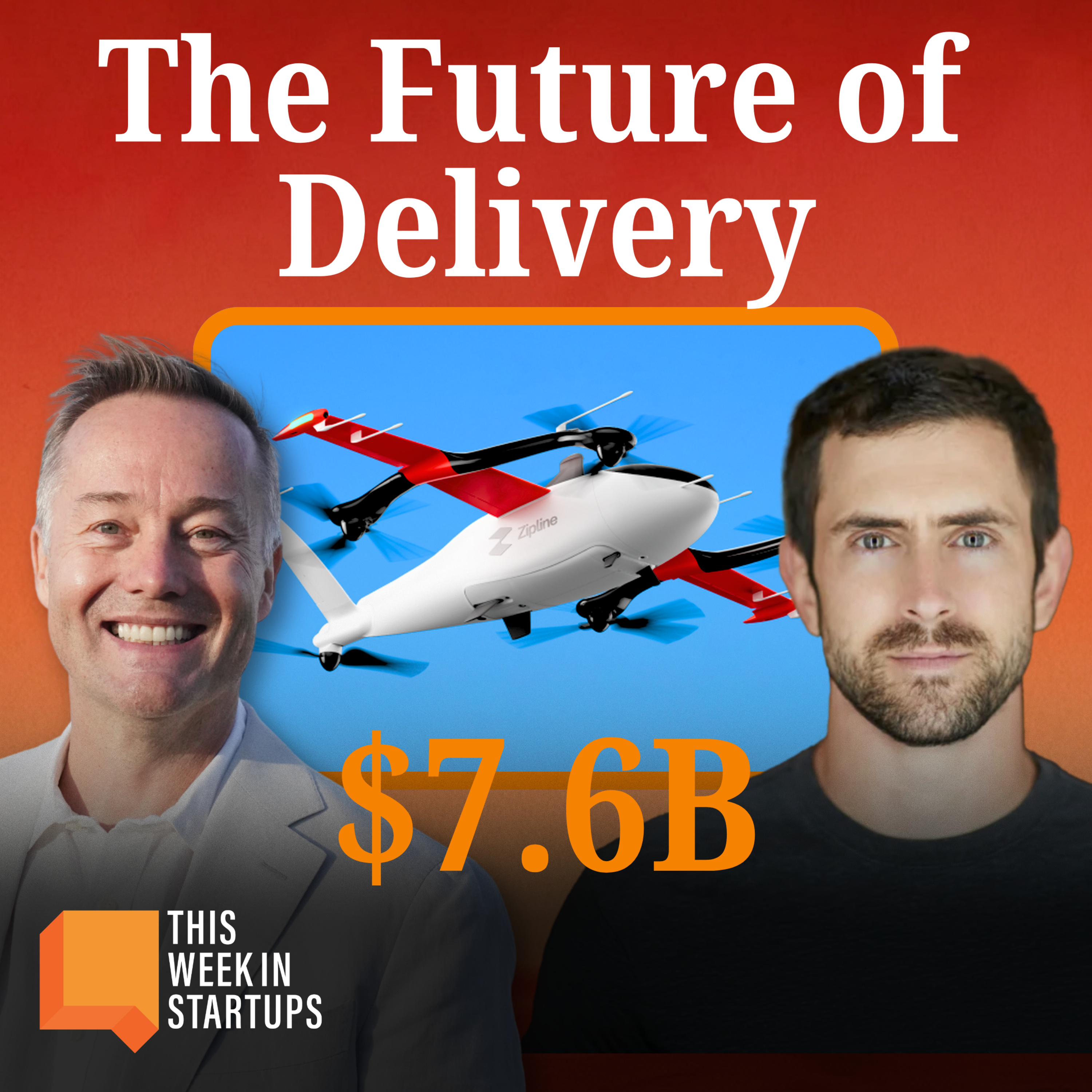
Zipline's CEO argues from first principles that current delivery logistics are absurdly inefficient. Replacing a human-driven, gas-powered car with a small, autonomous electric drone is not just an incremental improvement but a fundamental paradigm shift dictated by physics.

Beyond basic navigation, the most nuanced challenge for AVs is mastering pickups and drop-offs. The system must understand complex social context, like when it is acceptable to briefly double-park or how to avoid blocking a driveway, which is a more subtle problem than structured highway driving.

Self-driving cars, a 20-year journey so far, are relatively simple robots: metal boxes on 2D surfaces designed *not* to touch things. General-purpose robots operate in complex 3D environments with the primary goal of *touching* and manipulating objects. This highlights the immense, often underestimated, physical and algorithmic challenges facing robotics.