Get your free personalized podcast brief
We scan new podcasts and send you the top 5 insights daily.
The venom from a bullet ant is ingeniously evolved to do more than inflict pain. Its most debilitating effect is psychological, creating an intense, panicked feeling of impending doom. This debilitating stress response is designed to make the victim flee and avoid the area in the future.

Related Insights
Rejection isn't just a feeling; it's a neurophysical 'fight or flight' response where your body perceives a threat. Understanding this science helps salespeople detach from the emotional pain and manage it as a biological process, not a personal failing.

The speaker hypothesizes we are descendants of those who survived by running or hiding from danger, not confronting it. This suggests that the 'freeze' or 'flight' responses are more deeply ingrained evolutionary traits for survival than 'fight,' which is the rarest instinct of all.

Experiments show that perception doesn't speed up in life-threatening situations. Instead, the brain's fear center (amygdala) lays down much denser memories. When recalling the event, the brain interprets this high density of information as a longer duration of time.

The neural systems evolved for physical survival—managing pain, fear, and strategic threats—are the same ones activated during modern stressors like workplace arguments or relationship conflicts. The challenges have changed from starvation to spreadsheets, but the underlying brain hardware hasn't.

Our fascination with danger isn't a flaw but a survival mechanism. Like animals that observe predators from a safe distance to learn their habits, humans consume stories about threats to understand and prepare for them. This 'morbid curiosity' is a safe way to gather crucial information about potential dangers without facing direct risk.
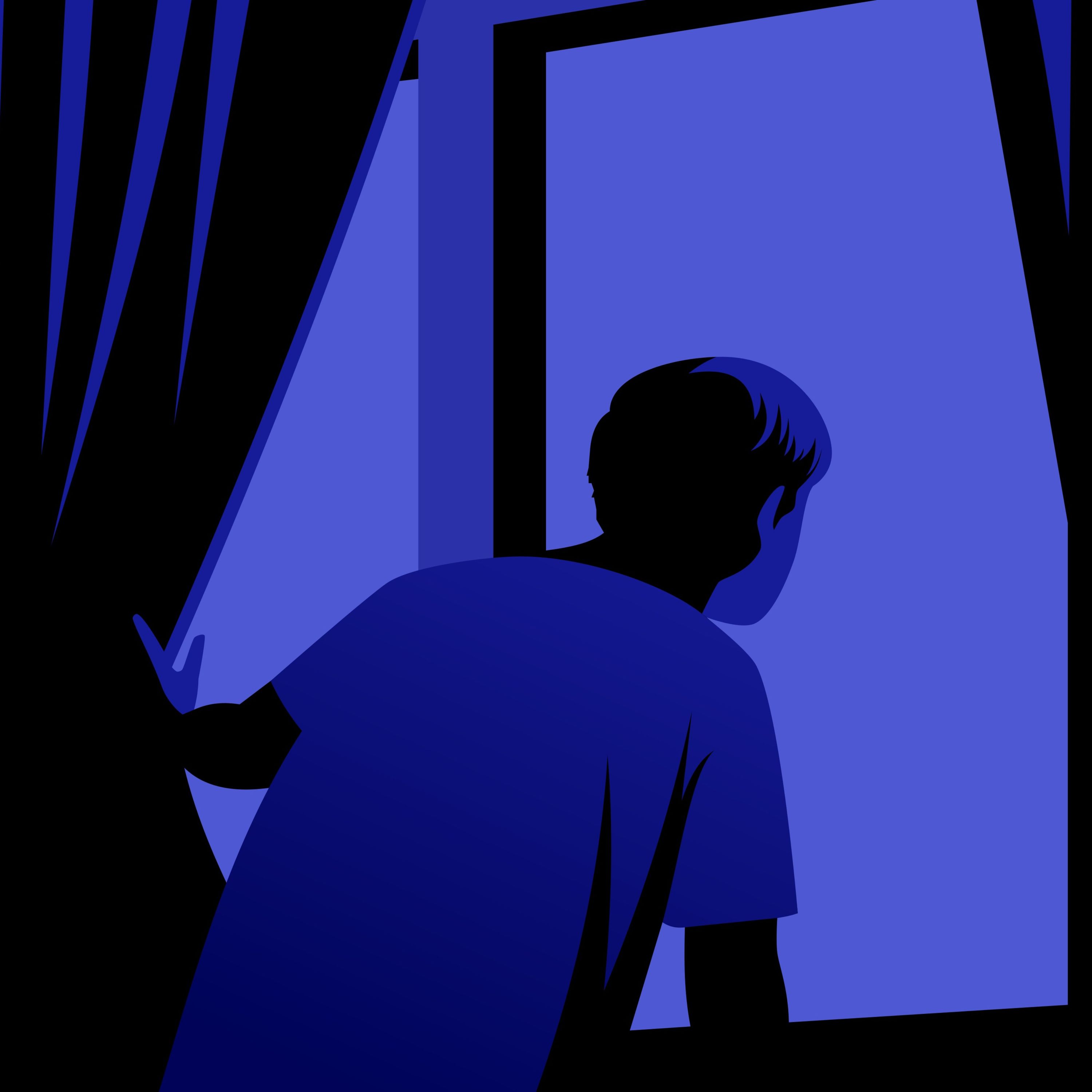
Your nervous system doesn't distinguish between a lion and an awkward conversation; it just registers "threat." The intense fear you feel over modern, low-stakes situations is a biological mismatch. The real pain comes from the secondary shame of believing your fear is illegitimate.
Horror can act as a tool for managing generalized anxiety. It hijacks the mind's vigilance cycle, which looks for a threat but can't find one, and provides a specific, identifiable, and controllable fictional threat on screen. Once the movie ends, the threat disappears, triggering the body's relaxation response and calming the nervous system.
Anxiety is not always a pathology but can be a purposeful signal. A study on chimps showed that removing the most sensitive, anxious members led to the entire group's demise, as they were the advance warning system for dangers. This reframes anxiety as a crucial societal function.
The most terrifying part of a close encounter with a wild tiger was not its aggression, but its utter lack of acknowledgment. The tiger looked straight through him as if he were an irrelevant blade of grass. This display of complete indifference was a more profound statement of power than any overt threat.
In his later, lesser-known work, Ivan Pavlov discovered that dogs subjected to extreme stress (like a flood) experienced a total reversal of their conditioned personalities. This suggests that severe stress doesn't just impair judgment; it can fundamentally and dangerously rewire cognitive patterns and loyalties.
![Charlie Munger and The Psychology of Human Misjudgement [Outliers] thumbnail](https://megaphone.imgix.net/podcasts/ffb628d4-c418-11f0-acd7-b3217b3943c4/image/37067138e685dc4ea5d98531397f6711.png?ixlib=rails-4.3.1&max-w=3000&max-h=3000&fit=crop&auto=format,compress)