Get your free personalized podcast brief
We scan new podcasts and send you the top 5 insights daily.
A core pillar of Rocket Lab's strategy is extreme vertical integration. The company builds nearly every component in-house, from engines and tanks to flight computers and solar panels. This control over the entire stack is considered a key competitive advantage across all its business units.

Related Insights
Rocket Lab's acquisitions were a strategic move to own the spacecraft component supply chain. This vertical integration creates a massive competitive advantage because the external supply chain is too small and fragmented to support building satellites at scale, effectively walling off competitors.
Subcontracting creates fixed interfaces between teams, leading to a "calcified architecture" where system-level optimization is impossible. Vertically integrating engineering and manufacturing in-house allows for dynamic trade-offs between disciplines, accelerating innovation and reducing costs.
![Scott Nolan - SpaceX, Founders Fund, and Rebuilding American Uranium Enrichment - [Invest Like the Best, EP.467] thumbnail](https://megaphone.imgix.net/podcasts/5edee546-3776-11f1-b41d-a76759576e87/image/908aaa6e87baf2b3d364892c4b7f9fd8.jpg?ixlib=rails-4.3.1&max-w=3000&max-h=3000&fit=crop&auto=format,compress)
Companies like Phantom Space build their own rockets not just for cost, but as a strategic necessity. The aerospace supply chain is inadequate, and relying on competitors like SpaceX for launch services is untenable as they prioritize their own constellations, effectively cutting off rivals from accessing space.

Citing the space industry's cost-plus contracting culture, Impulse Space adopted extreme vertical integration to gain control over cost, schedule, and quality. This move is a direct response to the unreliability of traditional aerospace vendors, who are often slow and overpriced.

By acquiring Iridium, Rocket Lab gains a mature satellite network, valuable spectrum, and a customer base. This shift from a niche launch provider to an integrated space powerhouse is a direct challenge to SpaceX's dominance in the space applications market, proving vertical integration is the core strategy.

SpaceX's success isn't from one tactic but a reinforcing system. First principles identify waste in cost, vertical integration provides the control to eliminate it, and standardization creates the volume needed to make that control profitable. Removing any one part breaks the system.

Companies like SpaceX built their own operating systems (like Warp Drive) because off-the-shelf solutions couldn't handle their complexity and speed. For Senra, this means building custom software and automation. Vertical integration is not a choice but a necessity when the external industrial base is a bottleneck to growth.
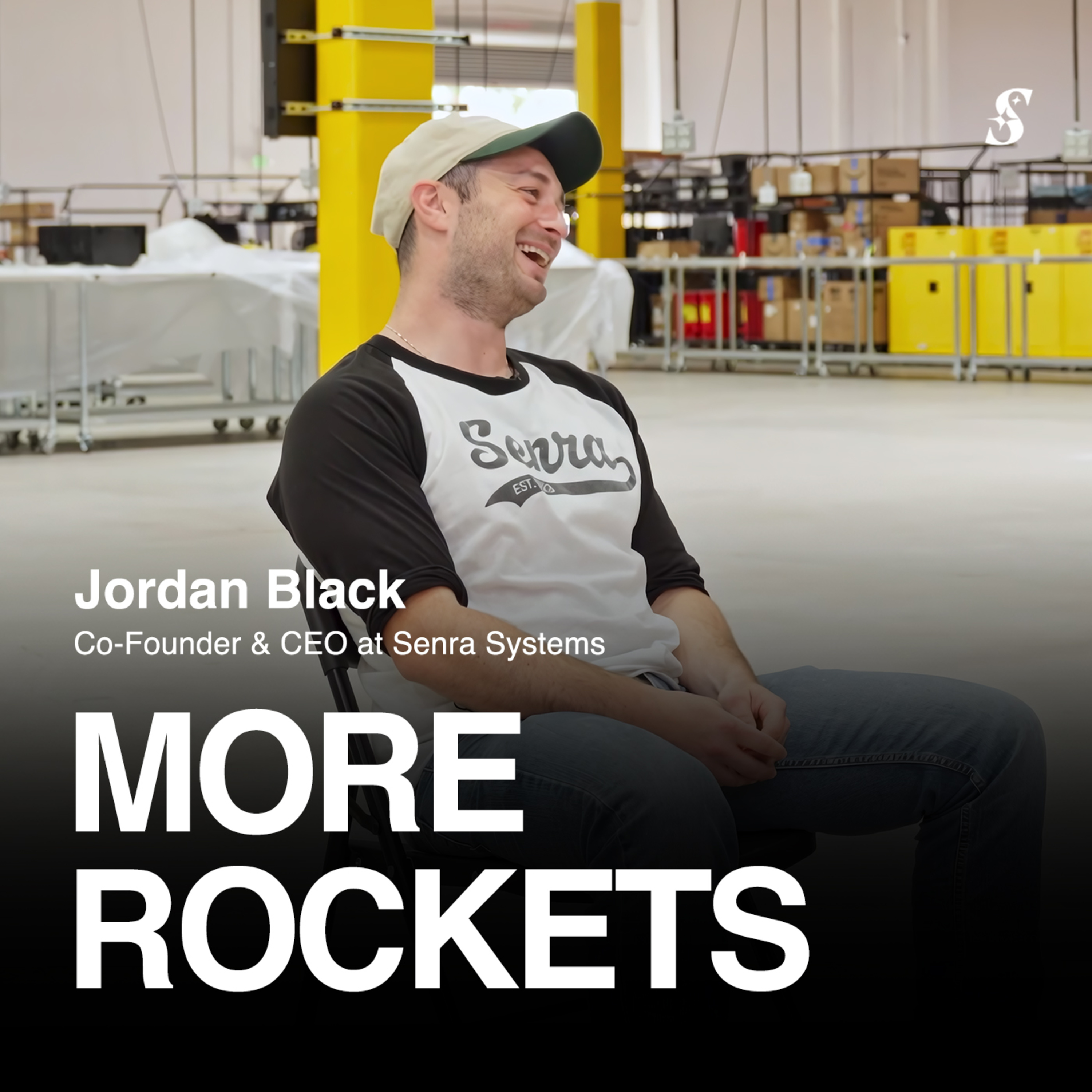
The key benefits of vertical integration at extreme scale are speed and destiny control, not just cost. Owning the stack allows you to re-architect every layer simultaneously for a new product. This is impossible when relying on vendors who cater to the median customer, not your bleeding-edge needs.

Learning from Robinhood, Bhatt believes controlling unit economics requires vertical integration. For Cowboy Space, this means building its own rockets. There isn't enough launch capacity available, and owning the stack is the only way to control costs and destiny for such an ambitious project.

Figure designs nearly every component of its robots in-house, from motors to batteries. This extreme vertical integration, though costly upfront, prevents being at the mercy of third-party vendor timelines, code problems, or supply chain issues, enabling faster iteration and deeper system control.