Get your free personalized podcast brief
We scan new podcasts and send you the top 5 insights daily.
Companies like Phantom Space build their own rockets not just for cost, but as a strategic necessity. The aerospace supply chain is inadequate, and relying on competitors like SpaceX for launch services is untenable as they prioritize their own constellations, effectively cutting off rivals from accessing space.

Related Insights
Major US tech-industrial companies like SpaceX are forced to vertically integrate not as a strategic choice, but out of necessity. This reveals a critical national infrastructure gap: the absence of a multi-tiered ecosystem of specialized component suppliers that thrives in places like China.

Robinhood co-founder's Cowboy Space is vertically integrating into rocket manufacturing not just for launch capacity, but because its core architecture requires it. They plan to transform the rocket's upper stage directly into a data center, a design that necessitates full control over the launch vehicle itself.

As space becomes critical for compute and communications, large tech companies won't rely solely on partners like K2 or SpaceX. Just as Meta builds its own deep-sea fiber cables while also using partners, hyperscalers will develop their own space assets alongside external providers to ensure redundancy and control.

The push to build defense systems in America reveals that critical sub-components, like rocket motors or high-powered amplifiers, are no longer manufactured domestically at scale. This forces new defense companies to vertically integrate and build their own factories, essentially rebuilding parts of the industrial base themselves.

Citing the space industry's cost-plus contracting culture, Impulse Space adopted extreme vertical integration to gain control over cost, schedule, and quality. This move is a direct response to the unreliability of traditional aerospace vendors, who are often slow and overpriced.

By acquiring Iridium, Rocket Lab gains a mature satellite network, valuable spectrum, and a customer base. This shift from a niche launch provider to an integrated space powerhouse is a direct challenge to SpaceX's dominance in the space applications market, proving vertical integration is the core strategy.

SpaceX's iconic vertical integration wasn't an initial strategic choice but a reaction to crisis. An early plan to outsource manufacturing was shattered when their fastest vendor abruptly closed. This forced them to insource talent and machinery out of necessity, creating the model they are known for today.

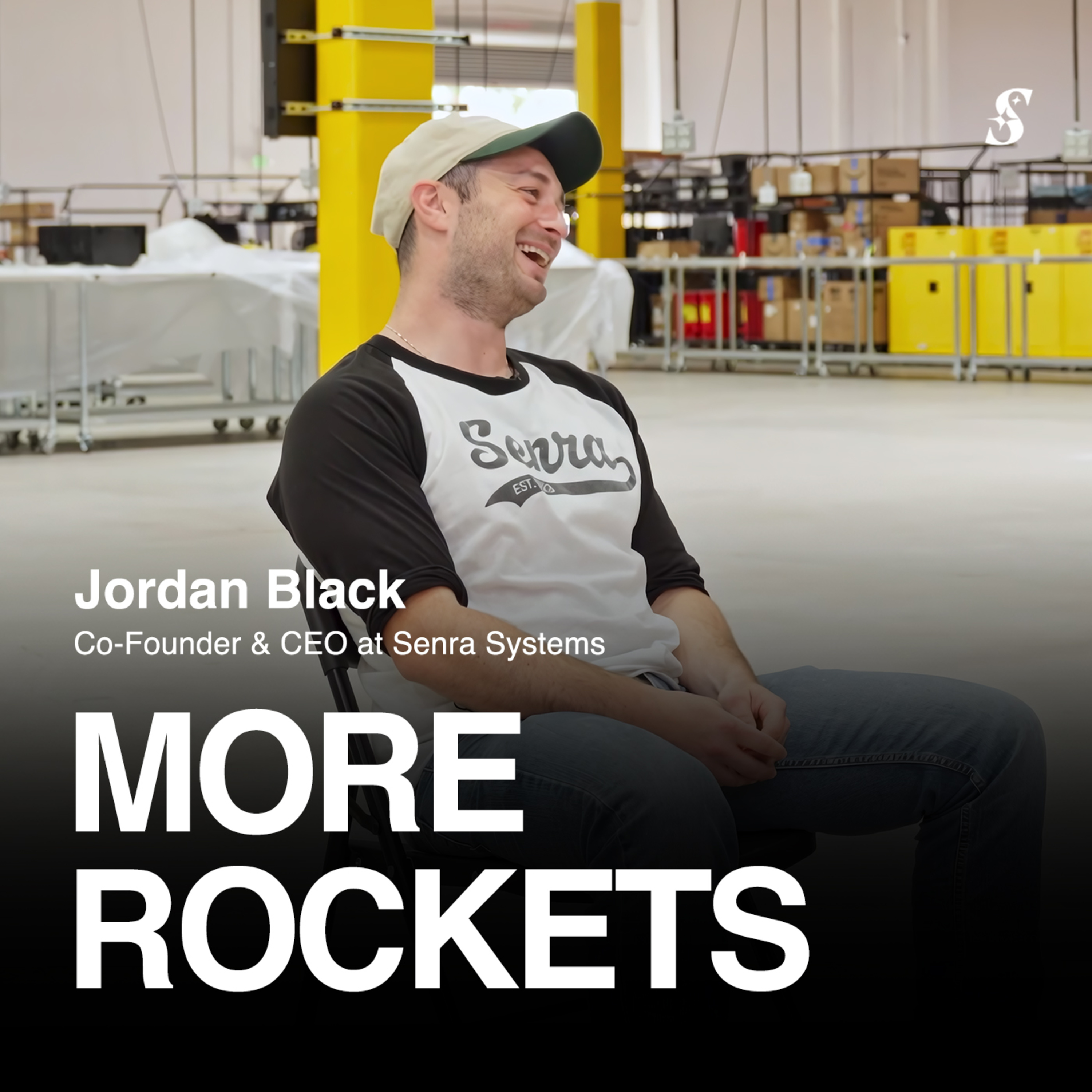
Companies like SpaceX built their own operating systems (like Warp Drive) because off-the-shelf solutions couldn't handle their complexity and speed. For Senra, this means building custom software and automation. Vertical integration is not a choice but a necessity when the external industrial base is a bottleneck to growth.
Planet Labs had to build most of its satellite components, like custom radios and telescopes, in-house because a robust supplier ecosystem didn't exist when they started. This contrasts with today's space startups that can leverage a mature market of specialized third-party vendors.

Figure designs nearly every component of its robots in-house, from motors to batteries. This extreme vertical integration, though costly upfront, prevents being at the mercy of third-party vendor timelines, code problems, or supply chain issues, enabling faster iteration and deeper system control.