Get your free personalized podcast brief
We scan new podcasts and send you the top 5 insights daily.
The key benefits of vertical integration at extreme scale are speed and destiny control, not just cost. Owning the stack allows you to re-architect every layer simultaneously for a new product. This is impossible when relying on vendors who cater to the median customer, not your bleeding-edge needs.

Related Insights
Subcontracting creates fixed interfaces between teams, leading to a "calcified architecture" where system-level optimization is impossible. Vertically integrating engineering and manufacturing in-house allows for dynamic trade-offs between disciplines, accelerating innovation and reducing costs.
![Scott Nolan - SpaceX, Founders Fund, and Rebuilding American Uranium Enrichment - [Invest Like the Best, EP.467] thumbnail](https://megaphone.imgix.net/podcasts/5edee546-3776-11f1-b41d-a76759576e87/image/908aaa6e87baf2b3d364892c4b7f9fd8.jpg?ixlib=rails-4.3.1&max-w=3000&max-h=3000&fit=crop&auto=format,compress)
For long-term defensibility, AI companies must control the entire stack: the model, the middleware, and the end-user work product. While some can start with the model layer, others can successfully start with the user interface and vertically integrate downwards over time to build a durable business.

Nebius's competitive edge is full vertical integration. By controlling the stack "down" to building its own data centers, it gains cost and speed advantages. By building "up" with software platforms, it accesses enterprise markets that competitors focused on raw compute cannot.

For hard tech startups, the decision to vertically integrate and build a factory shouldn't be automatic. It's a strategic imperative only when "cadence"—the speed of iteration and delivery—is the primary competitive advantage. In such cases, the in-house capability to move fast outweighs the high capital cost.

When deciding whether to buy or build a component, Reflect Orbital uses a non-traditional factor: vendor friction. If a supplier is unresponsive or difficult, the pain of dealing with them becomes a strong motivator to bring that capability in-house.

Companies like SpaceX built their own operating systems (like Warp Drive) because off-the-shelf solutions couldn't handle their complexity and speed. For Senra, this means building custom software and automation. Vertical integration is not a choice but a necessity when the external industrial base is a bottleneck to growth.
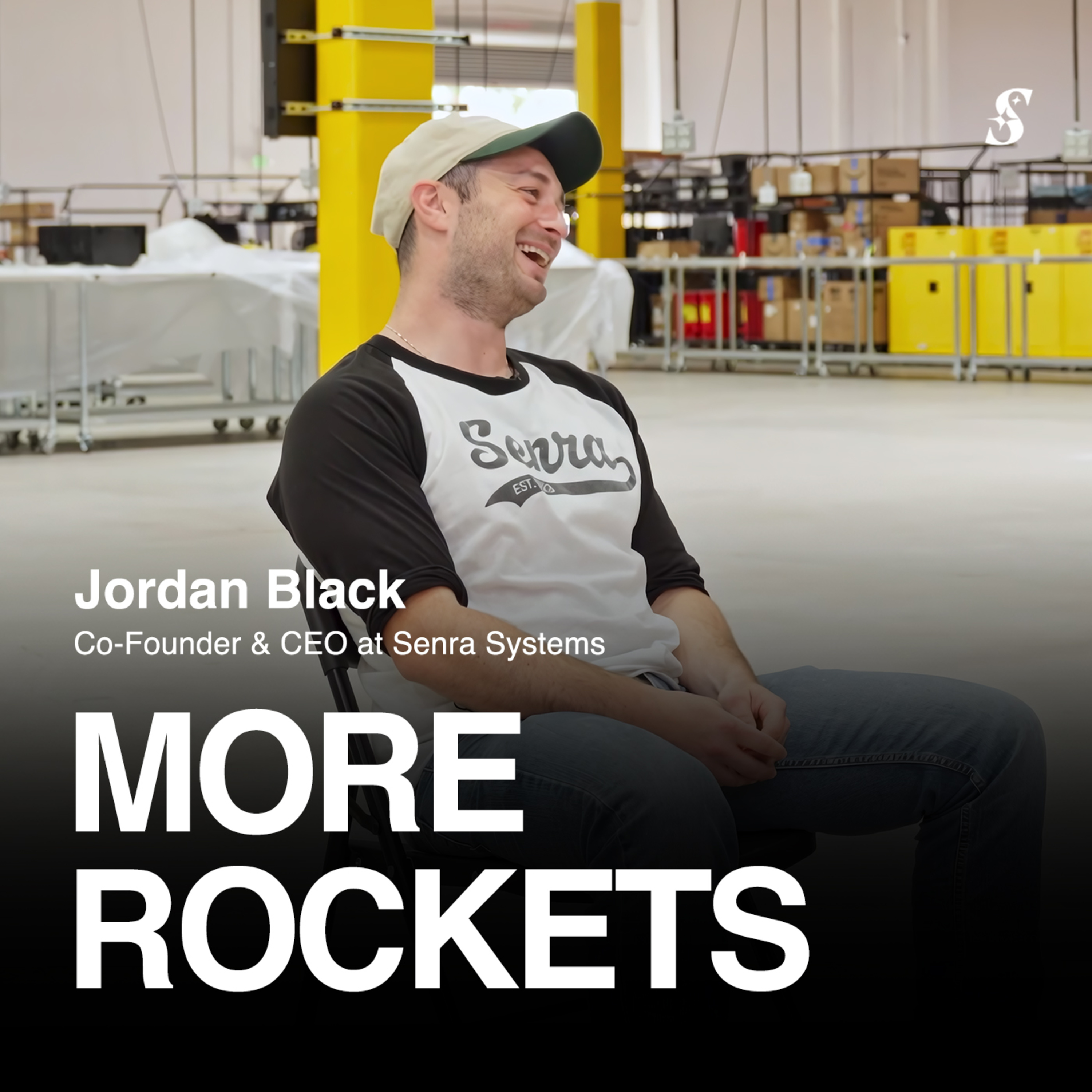
Figure designs nearly every component of its robots in-house, from motors to batteries. This extreme vertical integration, though costly upfront, prevents being at the mercy of third-party vendor timelines, code problems, or supply chain issues, enabling faster iteration and deeper system control.

For early-stage hard tech startups, the decision to vertically integrate isn't about margin improvement. It's a question of survival. You should only take on the immense risk and capital intensity of vertical integration if the company literally cannot exist without controlling that part of the supply chain or tech stack.

Beyond capturing more profit margin, vertically integrating your supply chain is a powerful defensive move. It mitigates the risk of key suppliers failing and disrupting your operations. By owning critical production and distribution components, you gain proactive control over quality, supply, and your company's stability.

Etched builds its own chips, boards, cold plates, interconnects, and even its own racks. This full-stack ownership allows for extreme parallelization and iteration speed, a key advantage over startups that rely on a fragmented supply chain and multiple vendors.
![Etched - Building AI Hardware to Make Inference Faster and Cheaper - [Invest Like the Best, EP.480] thumbnail](https://megaphone.imgix.net/podcasts/532910c4-743d-11f1-b7dc-b31915c88b79/image/810c9e3a23b5c4ea0a56e5e4cc8d7e47.jpg?ixlib=rails-4.3.1&max-w=3000&max-h=3000&fit=crop&auto=format,compress)