Get your free personalized podcast brief
We scan new podcasts and send you the top 5 insights daily.
SpaceX's success isn't from one tactic but a reinforcing system. First principles identify waste in cost, vertical integration provides the control to eliminate it, and standardization creates the volume needed to make that control profitable. Removing any one part breaks the system.

Related Insights
Major US tech-industrial companies like SpaceX are forced to vertically integrate not as a strategic choice, but out of necessity. This reveals a critical national infrastructure gap: the absence of a multi-tiered ecosystem of specialized component suppliers that thrives in places like China.

SpaceX correctly bet customers valued low prices over customization. By creating a single standardized platform—the Falcon 9—they forced the entire satellite industry to design around their rocket's specs. This flipped the traditional power dynamic and unlocked automotive-scale manufacturing efficiencies.
The sequential mergers of X with xAI, then with SpaceX, and potentially Tesla, signal the formation of a single entity. This "Musk Industries" would leverage shared manufacturing learnings and AI development across cars, rockets, robots, and social networks, creating powerful synergies.
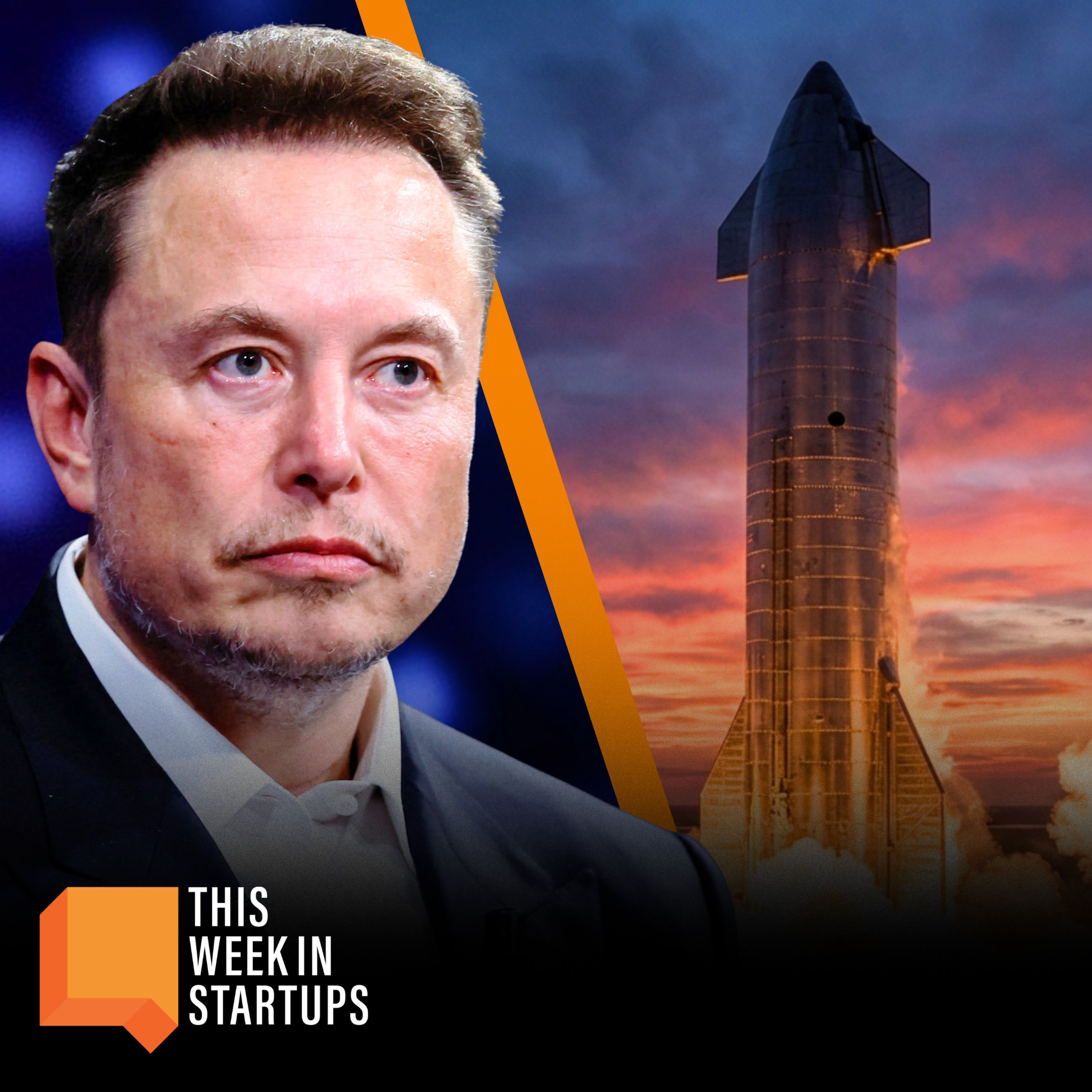
The next wave of space companies is moving away from the vertically integrated "SpaceX model" where everything is built in-house. Instead, a new ecosystem is emerging where companies specialize in specific parts of the stack, such as satellite buses or ground stations. This unbundling creates efficiency and lowers barriers to entry for new players.

The new wave of space startups is moving away from the SpaceX "build everything yourself" model. Instead, companies like Apex Space are unbundling the stack, specializing in one component like satellite buses. This allows for faster development cycles and creates a more robust, collaborative industry.

SpaceX measures the ratio of a part's market price to its raw materials' cost (the "idiot index"). A high ratio signals an opportunity for radical cost savings by building it in-house, dismantling supplier dependency and rethinking cost from first principles.
Dan Sundheim defines the best businesses as those that are sustainable low-cost producers. Companies like SpaceX in launch or Costco in retail create a powerful positive feedback loop: lower costs drive more volume, which in turn drives costs even lower. This creates a more substantial and impenetrable moat than a temporary monopoly.
![Dan Sundheim - The Art of Public and Private Market Investing - [Invest Like the Best, EP.460] thumbnail](https://megaphone.imgix.net/podcasts/6935741a-1133-11f1-8658-83eef776ecd3/image/6ba553323d1caefe2f648a5990d7bb69.jpg?ixlib=rails-4.3.1&max-w=3000&max-h=3000&fit=crop&auto=format,compress)
A key lesson from SpaceX is its aggressive design philosophy of questioning every requirement to delete parts and processes. Every component removed also removes a potential failure mode, simplifies the system, and speeds up assembly. This simple but powerful principle is core to building reliable and efficient hardware.

By designing, manufacturing, installing, and operating its own batteries, Base Power creates a flywheel. Greater scale lowers costs, which allows for lower consumer prices, which in turn drives more scale and demand. This strategy is key in a commodity industry.

A high production rate is a core R&D tool for SpaceX, not just a manufacturing goal. By creating a "hardware rich" environment with abundant, cheaper prototypes, it enables an aggressive build-test-learn cycle. Failure becomes a low-cost data-gathering exercise, not a catastrophic setback.