Get your free personalized podcast brief
We scan new podcasts and send you the top 5 insights daily.
As AI drives the cost of content creation to zero, the world floods with 'average' material. In this environment, the most valuable and scarce skill becomes 'taste'—the ability to identify, curate, and champion high-quality, commercially viable work. This elevates the role of human curators over pure creators.
![Ari Emanuel - The Anti-AI Bet - [Invest Like the Best, EP.448] thumbnail](https://megaphone.imgix.net/podcasts/c5910280-c4dd-11f0-94be-ab6a7a5865b0/image/1e5a2263eb62fcde200846919e24419a.jpg?ixlib=rails-4.3.1&max-w=3000&max-h=3000&fit=crop&auto=format,compress)
Related Insights
AI won't replace designers because it lacks taste and subjective opinion. Instead, as AI gets better at generating highly opinionated (though not perfect) designs, it will serve as a powerful exploration tool. This plants more flags in the option space, allowing human designers to react, curate, and push the most promising directions further, amplifying their strategic role.

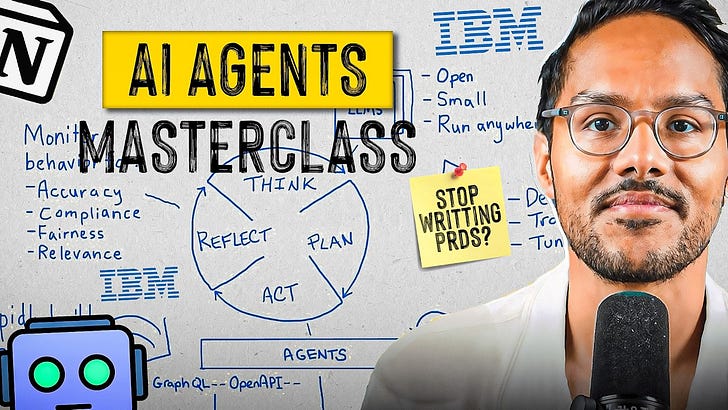
While AI tools once gave creators an edge, they now risk producing democratized, undifferentiated output. IBM's AI VP, who grew to 200k followers, now uses AI less. The new edge is spending more time on unique human thinking and using AI only for initial ideation, not final writing.
In the age of AI, the new standard for value is the "GPT Test." If a person's public statements, writing, or ideas could have been generated by a large language model, they will fail to stand out. This places an immense premium on true originality, deep insight, and an authentic voice—the very things AI struggles to replicate.

Technical talent is not the primary driver of resonant creative work. The key ingredient is 'taste'—an unteachable ability to discern what will be emotionally pleasing and impactful to an audience. This intuitive sense separates good creators from great ones.

As AI-generated content creates a sea of sameness, audiences will seek what machines cannot replicate: genuine emotion and deep, personal narrative. This will drive a creator-led shift toward more meaningful, long-form content that offers a real human connection.

In the AI era, marketing and growth roles are splitting into two distinct archetypes: the 'tastemaker' who has exceptional creative taste and intuition, and the 'engineer' who can technically analyze and orchestrate complex systems. Being average at both is no longer a viable path to success.

The best AI models are trained on data that reflects deep, subjective qualities—not just simple criteria. This "taste" is a key differentiator, influencing everything from code generation to creative writing, and is shaped by the values of the frontier lab.

The mantra 'ideas are cheap' fails in the current AI paradigm. With 'scaling' as the dominant execution strategy, the industry has more companies than novel ideas. This makes truly new concepts, not just execution, the scarcest resource and the primary bottleneck for breakthrough progress.

As AI makes it incredibly easy to build products, the market will be flooded with options. The critical, differentiating skill will no longer be technical execution but human judgment: deciding *what* should exist, which features matter, and the right distribution strategy. Synthesizing these elements is where future value lies.

Contrary to the belief that distribution is the new moat, the crucial differentiator in AI is talent. Building a truly exceptional AI product is incredibly nuanced and complex, requiring a rare skill set. The scarcity of people who can build off models in an intelligent, tasteful way is the real technological moat, not just access to data or customers.