Get your free personalized podcast brief
We scan new podcasts and send you the top 5 insights daily.
One founder (the Visionary) drives creative vision and product DNA, while the other (the Integrator) translates it into scalable systems and operations. This separation of duties, inspired by the book 'Traction', prevents conflict and enables focused execution, especially in family-run businesses.

Related Insights
Guy Kawasaki identifies successful founders like Steve Jobs and David Chang as being both "plumbers" (handling the messy, operational details like cleaning up literal shit) and "poets" (driving the grand, artistic vision). Excelling at only one without the other is insufficient for building a remarkable company.

Contrary to stereotypes, the best creative leaders possess a strong understanding of business mechanics. They use this knowledge not just for operational success, but as a crucial tool to protect their creative vision and build a robust, defensible enterprise.

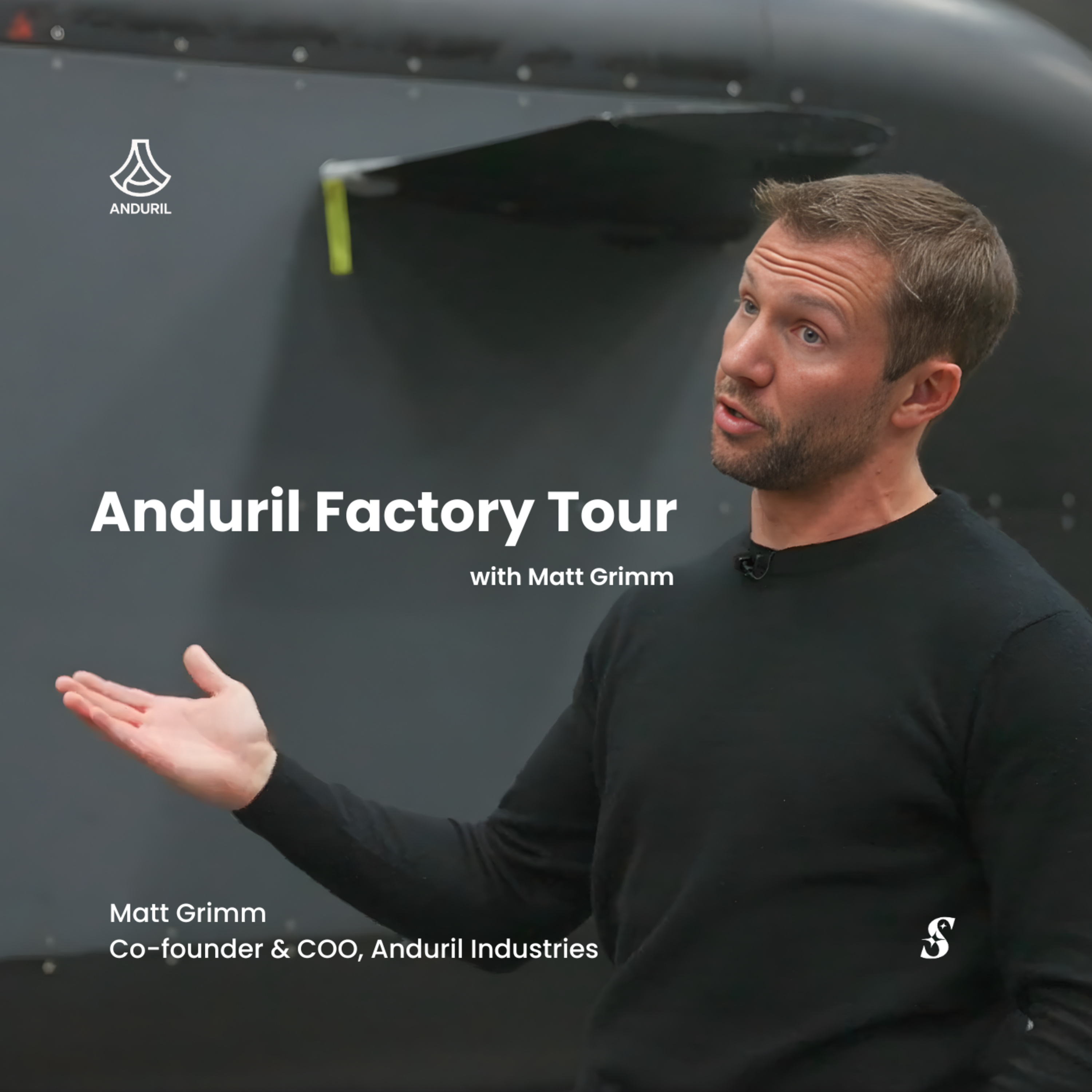
As Anduril scaled, its founders specialized. Palmer Luckey drives product innovation. CEO Brian Schimpf is the strategic 'genius' who sees the global chessboard. Trey Stephens handles investor relations and brand marketing. Matt Grimm acts as COO, the 'chief janitor' managing the complex operational guts of the company.
For creative projects, founders should own the first 10% (ideation) and the final 10% (integration), delegating the middle 80% (execution). This framework, used by Steve Jobs with his design team, allows leaders to set direction and add their final touch without micromanaging the core creative process.

To scale his company Exit Five, the founder (the "Visionary") promoted his COO to CEO (the "Integrator"). This structure, from the book *Traction*, allows the creator to focus on ideas and content while the operator runs the business, manages the team, and implements processes.

The greatest friction for co-founder couples arises when they operate in the same domain, such as parenting or co-writing a book. In business, they thrived by establishing clear, non-overlapping responsibilities (e.g., operations vs. sales), which prevented micromanagement and conflict. This specialization is key to their partnership's success.

Optimal product leadership structures separate the long-term, visionary role from the tactical, execution role. One person focuses on the big picture and selling the future ("the house"), while the other translates that chaos into immediate, actionable work ("fixing the walls").

The ideal company culture balances two opposing forces: the 'artisan' (creativity, innovation, imagination) and the 'operator' (predictability, efficiency, financial controls). Founder Eric Ryan strives to build teams that excel at both, creating a durable business that can innovate at scale, citing Apple and Nike as examples.

A key advantage for couples in business is when their skill sets are complementary. This natural synergy allows them to "share the load" effectively by splitting responsibilities according to their innate talents, helping the business go "further faster" than a single owner could.

The business grew quickly because its three co-founders each brought a distinct, essential skill: creative design, business management, and deep product knowledge (fandom). This division of labor allowed them to scale the company while still working their other full-time jobs, with each founder's expertise complementing the others.