Get your free personalized podcast brief
We scan new podcasts and send you the top 5 insights daily.
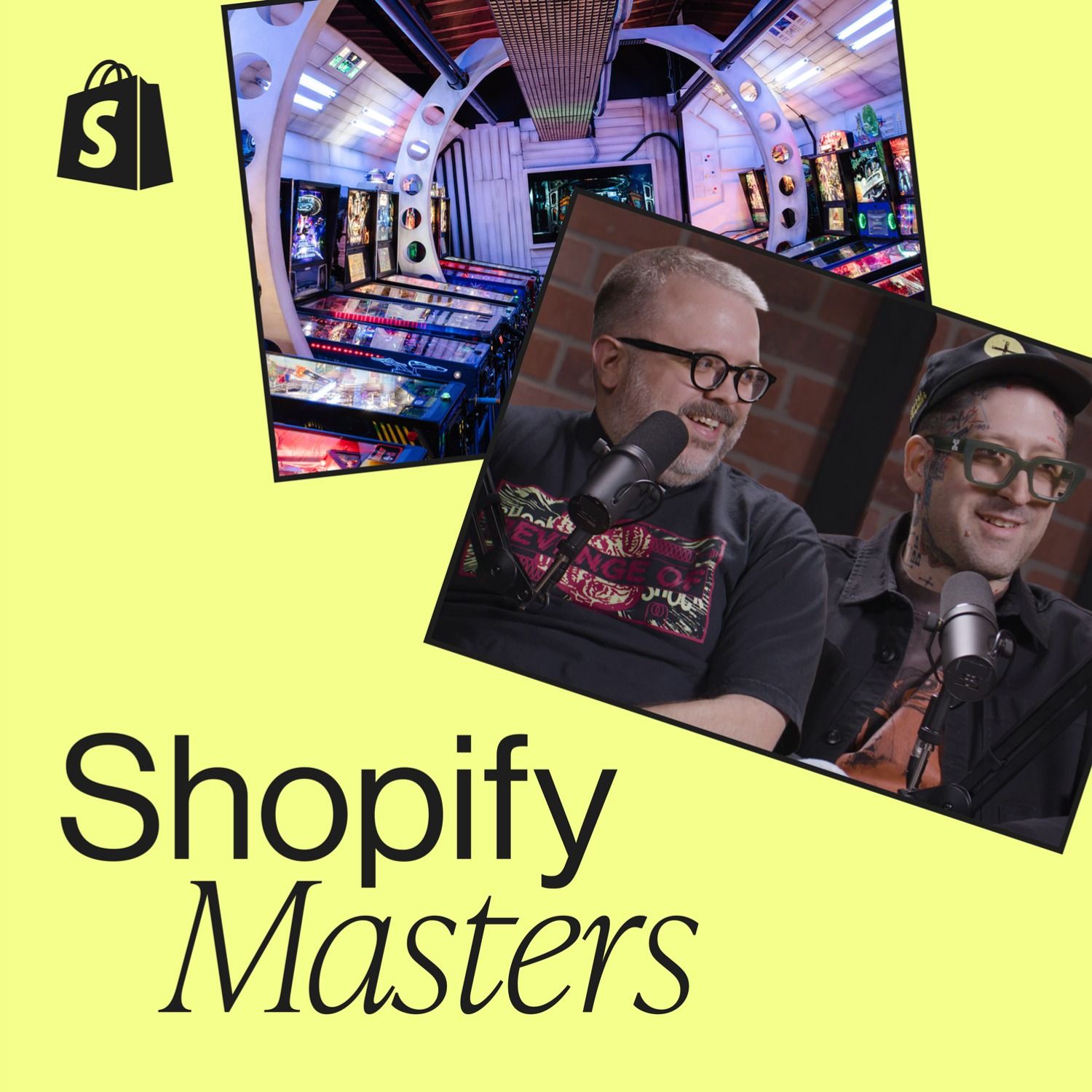
The business grew quickly because its three co-founders each brought a distinct, essential skill: creative design, business management, and deep product knowledge (fandom). This division of labor allowed them to scale the company while still working their other full-time jobs, with each founder's expertise complementing the others.
Related Insights
The ideal founder archetype starts with deep technical expertise and product sense. They then develop exceptional business and commercial acumen over time, a rarer and more powerful combination than a non-technical founder learning the product.
![David George - Building a16z Growth, Investing Across the AI Stack, and Why Markets Misprice Growth - [Invest Like the Best, EP.450] thumbnail](https://megaphone.imgix.net/podcasts/8da7dbd8-ceeb-11f0-941c-ef83bcdd4c9f/image/d44107bc94719f78fbe91befb141073e.jpg?ixlib=rails-4.3.1&max-w=3000&max-h=3000&fit=crop&auto=format,compress)
Founders often believe they can hire one "integrator" (like a COO) to handle all operational details. This is a myth. True scaling requires hiring specific, talented functional leaders (e.g., Head of Sales, Head of Product) who can solve a single, major business constraint, not a generalist helper.

Conventional scaling crushes founders by making them hold everything. Instead, invert the model: create a supportive architecture where your frameworks hold your work, which in turn holds you. This 'nesting bowl' approach enables scaling without feeling responsible for holding everything yourself.

Instead of replacing leaders at each growth stage, the Uber Eats management team was built like an "organism" with complementary strengths and was kept largely intact from launch to a $20 billion run rate. This proves a cohesive team that can learn together is more valuable than constantly hiring for "scale experience."

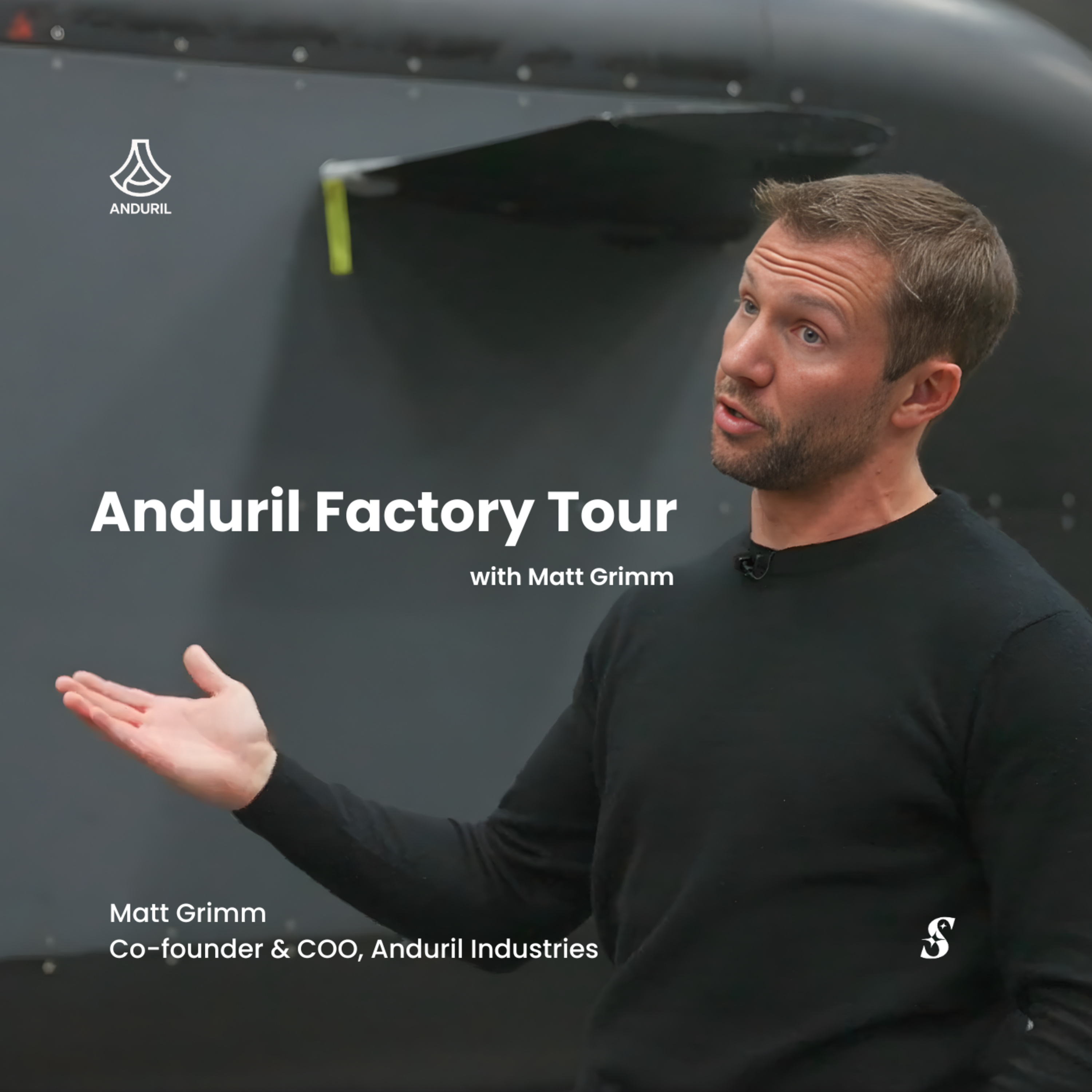
As Anduril scaled, its founders specialized. Palmer Luckey drives product innovation. CEO Brian Schimpf is the strategic 'genius' who sees the global chessboard. Trey Stephens handles investor relations and brand marketing. Matt Grimm acts as COO, the 'chief janitor' managing the complex operational guts of the company.
To scale his company Exit Five, the founder (the "Visionary") promoted his COO to CEO (the "Integrator"). This structure, from the book *Traction*, allows the creator to focus on ideas and content while the operator runs the business, manages the team, and implements processes.

The greatest friction for co-founder couples arises when they operate in the same domain, such as parenting or co-writing a book. In business, they thrived by establishing clear, non-overlapping responsibilities (e.g., operations vs. sales), which prevented micromanagement and conflict. This specialization is key to their partnership's success.

Founders are "unicorns" with unique skill sets impossible to hire for in a single person. To scale and remove yourself as a bottleneck, break your responsibilities into their component parts (e.g., sales, marketing, product) and hire specialists for each, assembling a team that approximates your output, even at a lower margin.

The founders credit their successful partnership to an equal commitment to hard work. By dividing responsibilities and working independently before collaborating ('divide and conquer'), they ensure an even playing field and avoid the common pitfalls of co-founder burnout or resentment that often ruin business friendships.

A key advantage for couples in business is when their skill sets are complementary. This natural synergy allows them to "share the load" effectively by splitting responsibilities according to their innate talents, helping the business go "further faster" than a single owner could.