Get your free personalized podcast brief
We scan new podcasts and send you the top 5 insights daily.
Demonstrating extreme conviction, CEO Brad Jacobs invested $1 billion of his own capital into QXO through Jacobs Private Equity. This sum represents a high-single-digit percentage of his estimated $15.7 billion net worth, creating powerful alignment with fellow shareholders.
Related Insights
In an unprecedented display of conviction for a company at a $50B valuation, the founder of Chinese AI firm DeepSeek is personally contributing $3 billion to its new $7 billion funding round. This move, while he already owns 90% of the company, deviates sharply from typical venture capital structures and signals extreme personal and financial commitment.
Rather than a traditional IPO, QXO acquired a small public company (SilverSun Technologies), appointed Brad Jacobs as CEO, and injected $5 billion of liquidity. This SPAC-like strategy provided immediate access to public markets and a massive capital base for acquisitions.
Founder and CEO Michael Kehoe owns a $350M stake in Kinsale. His compensation, and that of his team, is tied to profitability metrics like ROE and combined ratio, not just revenue growth. This creates powerful alignment with long-term shareholder interests.

Unlike many founders who guard their equity, Brad Jacobs intentionally uses share issuance to fund value-accretive acquisitions. He has stated he's willing to go from 90% ownership to 10% if the resulting company's value makes his smaller stake worth more in absolute terms.
Greg Abel’s $25 million flat salary at Berkshire Hathaway works because his alignment stems from his significant personal wealth tied to the company's success. Having invested over $100 million of his own money into Berkshire stock, his motivation is intrinsic ownership, avoiding the short-termism often induced by typical performance-based CEO compensation plans.
Exceptional CEOs sometimes exhibit true altruism, prioritizing shareholders above personal enrichment. Mark Leonard of Constellation Software cutting his salary to zero and refusing options is a prime example. This rare trait signals a deep alignment with long-term shareholder value creation.

When founders invest their own money, it signals an unparalleled level of commitment and belief. This act serves as a powerful 'magnetic pull,' de-risking the opportunity in the eyes of external investors and making them significantly more likely to commit their own capital.

QXO operates in a commoditized industry with few barriers to entry. Its primary competitive advantage is CEO Brad Jacobs himself, whose track record gives him unparalleled access to capital and M&A opportunities, a non-replicable "cornered resource" moat.
Warren Buffett's successor, Greg Abel, is investing his entire $15 million salary into Berkshire Hathaway stock. This is a powerful form of "eating your own dog food" that signals ultimate confidence in the company's future to the market, aligning his personal financial success directly with shareholder outcomes.

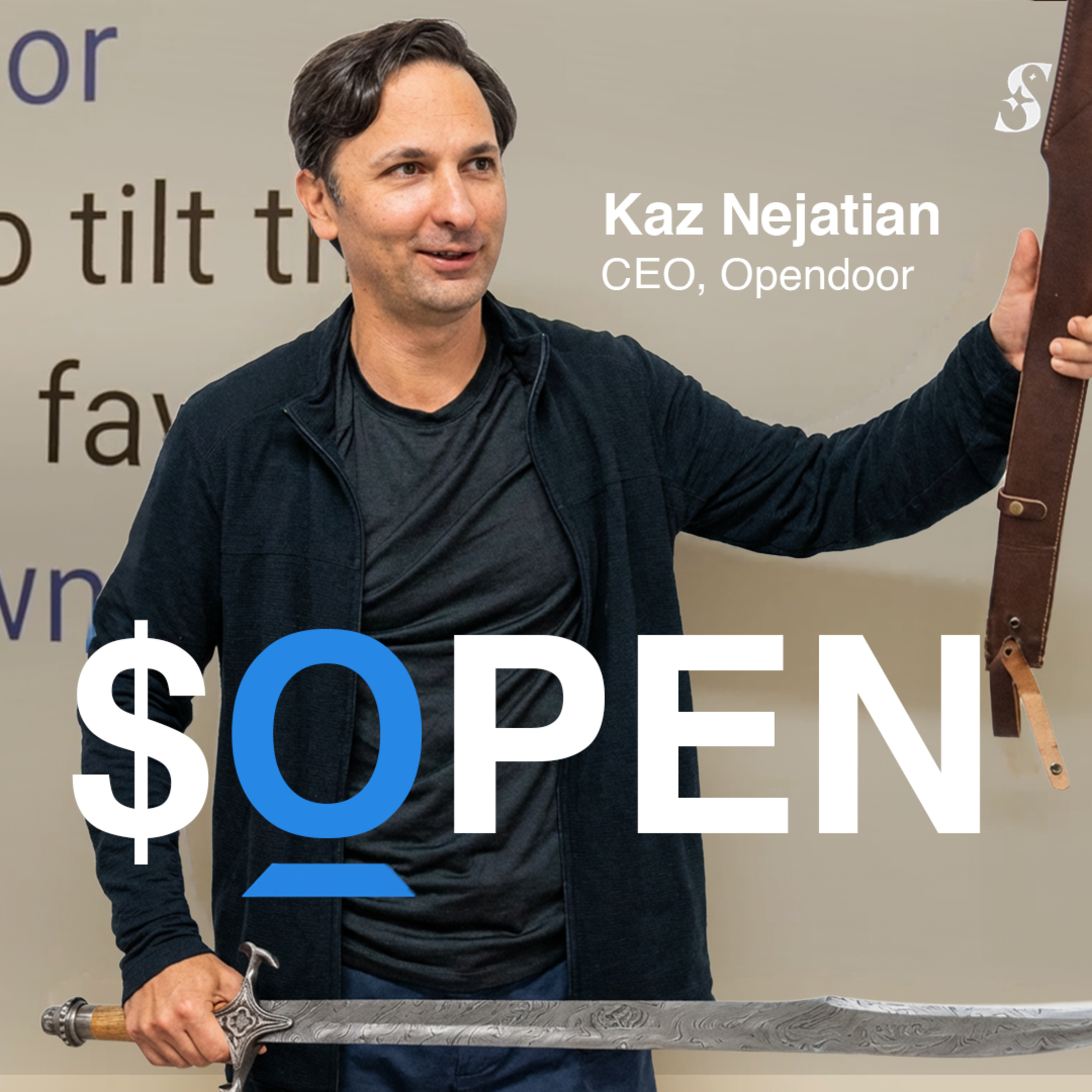
CEO Kaz Nejatian's compensation is a $1 salary, and he pays for his own benefits, resulting in a net-negative cash flow. This is an extreme form of "skin in the game" that aligns his incentives entirely with long-term shareholder value over a personal paycheck.