Get your free personalized podcast brief
We scan new podcasts and send you the top 5 insights daily.
Rather than a traditional IPO, QXO acquired a small public company (SilverSun Technologies), appointed Brad Jacobs as CEO, and injected $5 billion of liquidity. This SPAC-like strategy provided immediate access to public markets and a massive capital base for acquisitions.
Related Insights
Instead of a traditional IPO, Candid Therapeutics secured a NASDAQ listing and a massive capital infusion by merging with RallyBio. This reverse merger, coupled with a concurrent private investment, provides nearly $700 million in cash to fund operations through 2030, demonstrating a powerful alternative financing path to public markets.
The SPAC structure, which allows early investors to redeem shares before a merger, creates high uncertainty. Because of this risk, any company strong enough for a traditional IPO will choose that route. By definition, this leaves SPACs with a pool of weaker companies that cannot go public otherwise.

QXO's goal to scale from zero to $50B in revenue isn't funded by cash flow but by significant leverage. The strategy necessitates borrowing billions to fund acquisitions quickly. Post-TopBuild, the company's pro-forma debt will be approximately $9.1 billion, making debt management central to the investment thesis.
Demonstrating extreme conviction, CEO Brad Jacobs invested $1 billion of his own capital into QXO through Jacobs Private Equity. This sum represents a high-single-digit percentage of his estimated $15.7 billion net worth, creating powerful alignment with fellow shareholders.
To tap into public market investors, Adaptin Bio merged with a 'Form 10' public shell company. This distinct route is not a SPAC as it doesn't raise money in an IPO. Instead, it provides a faster path to becoming a public reporting entity to attract a wider investor base.

When traditional venture funding dried up for Madrigal Pharmaceuticals, they found an unconventional path to capital and a public listing. They pursued a reverse merger with Cinta, a public company that had recently failed a Phase 3 trial and was seeking an exit. This "bake off" victory secured Madrigal $41 million.

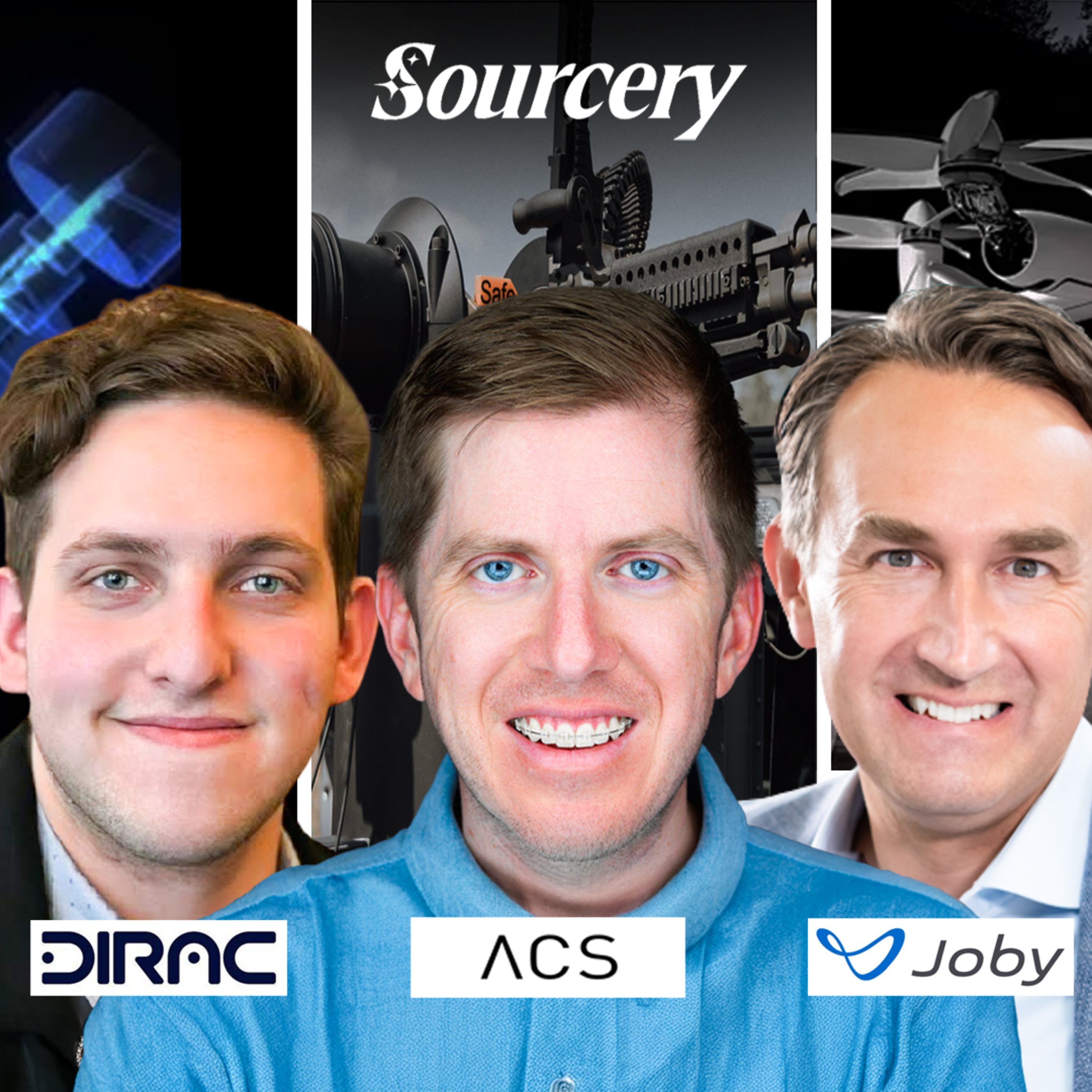
Joby's business is extremely capital-intensive because they are vertically integrated 'down' to manufacturing components and 'up' to the customer-facing software. They strategically chose to go public early to secure the massive capital required to fund this full-stack approach, which includes commercial partnerships with Uber and Delta.
Beyond capital access, being a public company offers constant, free marketing. The visibility from quarterly earnings reports, analyst coverage, and media attention can attract acquisition targets, investors, and top talent who might not otherwise have been aware of the company.

Beyond its market position and revenue, QXO's acquisition of TopBuild brings in a highly successful M&A team. This "acqui-hire" of dealmakers provides Brad Jacobs with an embedded engine for sourcing and executing future acquisitions, accelerating his roll-up strategy.
Contrary to popular decentralized models, QXO fully integrates its acquisitions like Beacon and Kodiak into a single brand. This centralized approach aims to maximize synergies through consolidated procurement, cross-selling, and a unified tech stack, a departure from leaving acquired companies independent.