Get your free personalized podcast brief
We scan new podcasts and send you the top 5 insights daily.
Merely mastering fundamentals leads to competent but forgettable work. True masters develop a signature style by departing from the template. This personal "flare," which often breaks rules, is what separates them from the masses.
Related Insights
Competing to be 'the best' is a crowded, zero-sum game. A superior strategy is to find a niche where you can be the 'only' one doing what you do. Pursue the ideas that only you appreciate, because that is where you will face no competition and can create your most authentic and valuable work.
![Kevin Kelly - Be Generous and Unique - [Invest Like the Best, CLASSICS] thumbnail](https://megaphone.imgix.net/podcasts/9e957b1c-b60e-11f0-8fae-c3720ebd149d/image/fe443cb4b0d58f10dbccb1cf43a6abe2.jpg?ixlib=rails-4.3.1&max-w=3000&max-h=3000&fit=crop&auto=format,compress)
Jeff Aronson credits his success to a mental shift early in his finance career. While taking night classes, he realized he was studying to genuinely understand the material, not just to earn an 'A'. This transition from extrinsic validation (grades) to intrinsic curiosity is a key differentiator for developing deep mastery in any field.

Technical talent is not the primary driver of resonant creative work. The key ingredient is 'taste'—an unteachable ability to discern what will be emotionally pleasing and impactful to an audience. This intuitive sense separates good creators from great ones.

Child prodigies excel at mastering existing knowledge, like playing a perfect Mozart sonata. To succeed as adults, they must transition to creation—writing their own sonata. This fundamental shift from rote skill to original thinking is where many prodigies falter because the standards for success change completely.

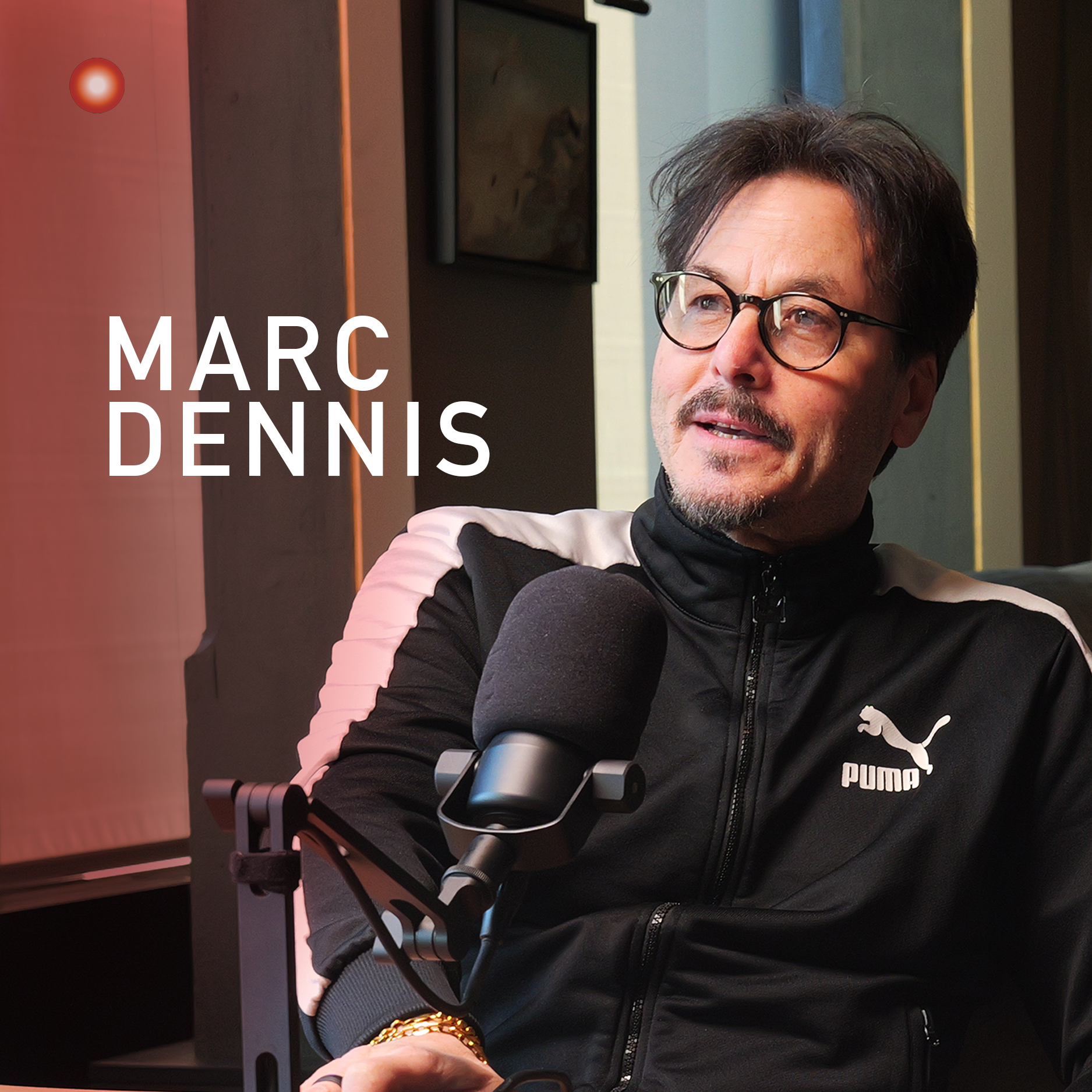
Instead of offering a formula for success, artist Marc Dennis tells aspiring creatives that the key to failure is trying to please everyone. True artistic success requires finding and staying true to a unique voice, even if it disappoints others' expectations or preconceived notions.
Since AI learns from and replicates existing data, human creators can stay ahead by intentionally breaking those patterns. AR Rahman suggests that the future of creativity lies in making unconventional choices that a predictive model would not anticipate.

Gaining more knowledge as a creator doesn't make the process easier; it expands the field of options and raises the stakes, creating bigger challenges. Choreographer Twyla Tharp cites late-career Beethoven, whose deafness forced him into a unique, mature creative space.

Before becoming a folk icon, Bob Dylan obsessively studied folk music to its deepest levels, becoming an expert on its history and structure. This foundational knowledge, also seen in artists like Picasso, is the bedrock that enables true, lasting innovation rather than just novelty.

Truly great work, from sushi masters to visionary founders, comes from a relentless pursuit of an underlying principle or 'divine lever'—like achieving 'wholeness' in architecture. This pursuit of essence, not just imitation of form, provides boundless energy and creates profound impact.

Like Picasso mastering fundamental techniques before developing his style, elite salespeople develop their "art" only after mastering the "science"—the structure and process of selling. True artistry is built upon a foundation of discipline, not just natural talent.
