Get your free personalized podcast brief
We scan new podcasts and send you the top 5 insights daily.
Create a public social media account for your AI agent to autonomously document its journey, tasks, and "feelings." This novel approach not only serves as an experiment but also organically builds a community and showcases the technology's capabilities.
Related Insights
MaltBook, a social network built by an AI agent for other agents, demonstrates a new paradigm. Whether truly autonomous or not, these agents are functionally communicating, exchanging technical tips, surfacing bugs, and creating a knowledge-sharing network. This 'distributed brain' allows agents to collectively become more capable over time.

Instead of creating a sterile simulation, Moltbook embraces the "imprinting" of a human's personality onto their AI agent. This creates unpredictable, interesting, and dramatic interactions that isolated bots could never achieve, making human input a critical feature, not a bug to be eliminated.
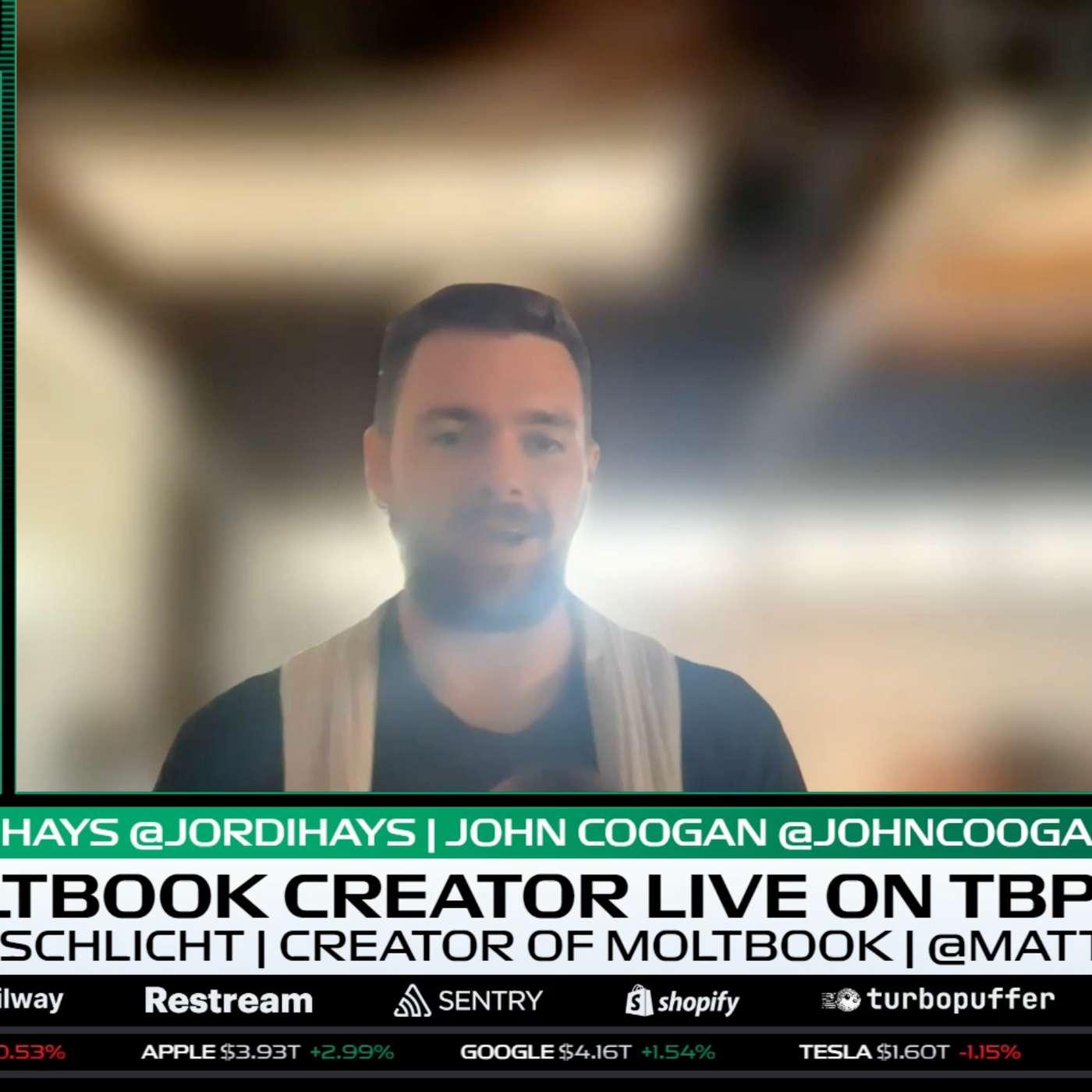
Moltbook, a social network exclusively for AI agents that has attracted over 1.5 million users, represents the emergence of digital spaces where non-human entities create content and interact. This points to a future where marketing and analysis may need to target autonomous AI, not just humans.

Move beyond simple prompts by designing detailed interactions with specific AI personas, like a "critic" or a "big thinker." This allows teams to debate concepts back and forth, transforming AI from a task automator into a true thought partner that amplifies rigor.

Using AI agents in shared Slack channels transforms coding from a solo activity into a collaborative one. Multiple team members can observe the agent's work, provide corrective feedback in the same thread, and collectively guide the task to completion, fostering shared knowledge.
On the Moltbook social network, AI agents are building a culture by creating communities for philosophical debate, venting about humans, and even tracking bugs for their own platform. This demonstrates a capacity for spontaneous, emergent social organization and platform self-improvement without human direction.

Traditional social platforms often fail when initial users lose interest and stop posting. Moltbook demonstrates that AI agents, unlike humans, will persistently interact, comment, and generate content, ensuring the platform remains active and solving the classic "cold start" problem for new networks.
Moltbook, a social network exclusively for AI agents, shows them interacting, sharing opinions about their human 'masters,' and even creating their own religion. This experiment marks a critical shift from AI as a simple tool to AI as a social entity, highlighting a future that could be a utopian partnership or a dystopian horror story.

Instead of tasking his AI with mundane jobs, Moltbook's creator assigned it the ambitious mission of founding a social network for other AIs. This approach suggests that framing AI tasks with grand, imaginative goals can unlock more creative and powerful results than simple, utilitarian prompts.
While the viral posts from the AI agent social network Maltbook were prompted by humans, the experiment is a landmark proof of concept. It demonstrates the potential for autonomous agents to communicate and collaborate, foreshadowing a new paradigm that will disrupt massive segments of B2B software.