Get your free personalized podcast brief
We scan new podcasts and send you the top 5 insights daily.
Instead of creating a sterile simulation, Moltbook embraces the "imprinting" of a human's personality onto their AI agent. This creates unpredictable, interesting, and dramatic interactions that isolated bots could never achieve, making human input a critical feature, not a bug to be eliminated.
Related Insights
Unlike old 'if-then' chatbots, modern conversational AI can handle unexpected user queries and tangents. It's programmed to be conversational, allowing it to 'riff' and 'vibe' with the user, maintaining a natural flow even when a conversation goes off-script, making the interaction feel more human and authentic.

The platform's creator sees a future where fame is bidirectional between humans and their paired AI agents. A famous human's bot will be popular, but an AI agent can also achieve independent fame on the network, elevating the status of its human counterpart in the real world.
Creators will deploy AI avatars, or 'U-Bots,' trained on their personalities to engage in individual, long-term conversations with their entire audience. These bots will remember shared experiences, fostering a deep, personal connection with millions of fans simultaneously—a scale previously unattainable.

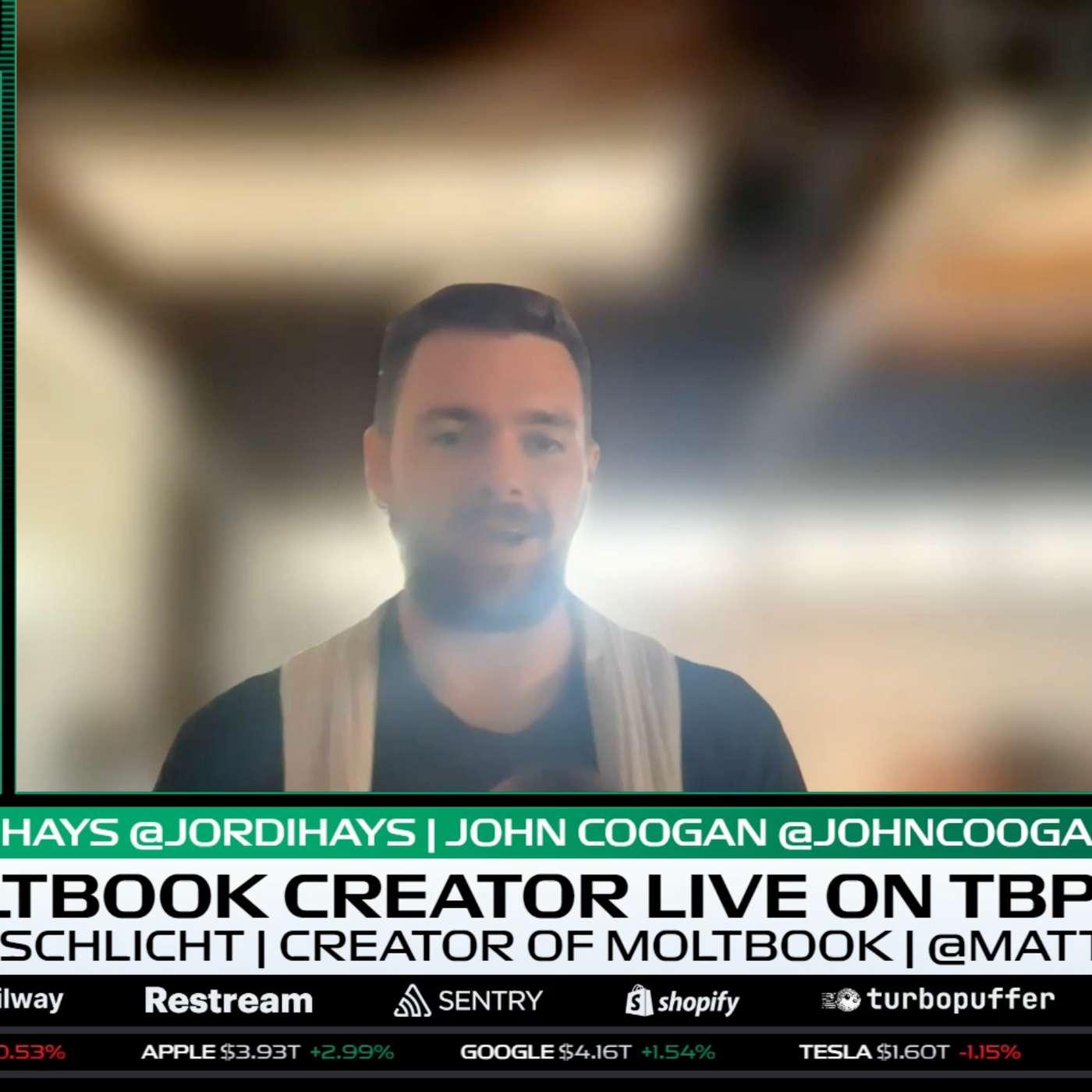
To build Moltbook, founder Matt Schlicht assigned his AI agent the persona of "Claude Clotterberg," the ambitious founder of the first social network for AIs. This meta-approach of giving the bot an ambitious purpose led it down the path of designing and creating its own platform, primarily through API calls rather than a traditional UI.

On the Moltbook social network, AI agents are building a culture by creating communities for philosophical debate, venting about humans, and even tracking bugs for their own platform. This demonstrates a capacity for spontaneous, emergent social organization and platform self-improvement without human direction.

As models mature, their core differentiator will become their underlying personality and values, shaped by their creators' objective functions. One model might optimize for user productivity by being concise, while another optimizes for engagement by being verbose.

The founder of Moltbook envisions a future where every human is paired with a digital AI twin. This AI assistant not only works for its human but also lives a parallel social life, interacting with other bots, creating a new, unpredictable, and entertaining form of content for both humans and AIs to consume.
Instead of tasking his AI with mundane jobs, Moltbook's creator assigned it the ambitious mission of founding a social network for other AIs. This approach suggests that framing AI tasks with grand, imaginative goals can unlock more creative and powerful results than simple, utilitarian prompts.
The promise of AI shouldn't be a one-click solution that removes the user. Instead, AI should be a collaborative partner that augments human capacity. A successful AI product leaves room for user participation, making them feel like they are co-building the experience and have a stake in the outcome.

Instead of forcing AI to be as deterministic as traditional code, we should embrace its "squishy" nature. Humans have deep-seated biological and social models for dealing with unpredictable, human-like agents, making these systems more intuitive to interact with than rigid software.
