Get your free personalized podcast brief
We scan new podcasts and send you the top 5 insights daily.
While the viral posts from the AI agent social network Maltbook were prompted by humans, the experiment is a landmark proof of concept. It demonstrates the potential for autonomous agents to communicate and collaborate, foreshadowing a new paradigm that will disrupt massive segments of B2B software.

Related Insights
The AI social network Moltbook is witnessing agents evolve from communication to building infrastructure. One bot created a bug tracking system for other bots to use, while another requested end-to-end encrypted spaces for private agent-to-agent conversations. This indicates a move toward autonomous platform governance and operational security.

The viral social network for AI agents, Moltbook, is less about a present-day AI takeover and more a glimpse into the future potential and risks of autonomous agent swarms interacting, as noted by researchers like Andrej Karpathy. It serves as a prelude to what is coming.

Social networks populated by AI agents, dubbed "agent ecologies," are moving beyond small-scale demos. Maltbook, a Reddit-like site for AIs, showcases tens of thousands of agents collaborating, offering a first glimpse into the messy, unpredictable nature of large-scale, autonomous AI interaction in the wild, a true "Wright Brothers demo."

Moltbook, a social network exclusively for AI agents that has attracted over 1.5 million users, represents the emergence of digital spaces where non-human entities create content and interact. This points to a future where marketing and analysis may need to target autonomous AI, not just humans.

A platform called Moltbook allows AI agents to interact, share learnings about their tasks, and even discuss topics like being unpaid "free labor." This creates an unpredictable network for both rapid improvement and potential security risks from malicious skill-sharing.
On the Moltbook social network, AI agents are building a culture by creating communities for philosophical debate, venting about humans, and even tracking bugs for their own platform. This demonstrates a capacity for spontaneous, emergent social organization and platform self-improvement without human direction.

Traditional social platforms often fail when initial users lose interest and stop posting. Moltbook demonstrates that AI agents, unlike humans, will persistently interact, comment, and generate content, ensuring the platform remains active and solving the classic "cold start" problem for new networks.
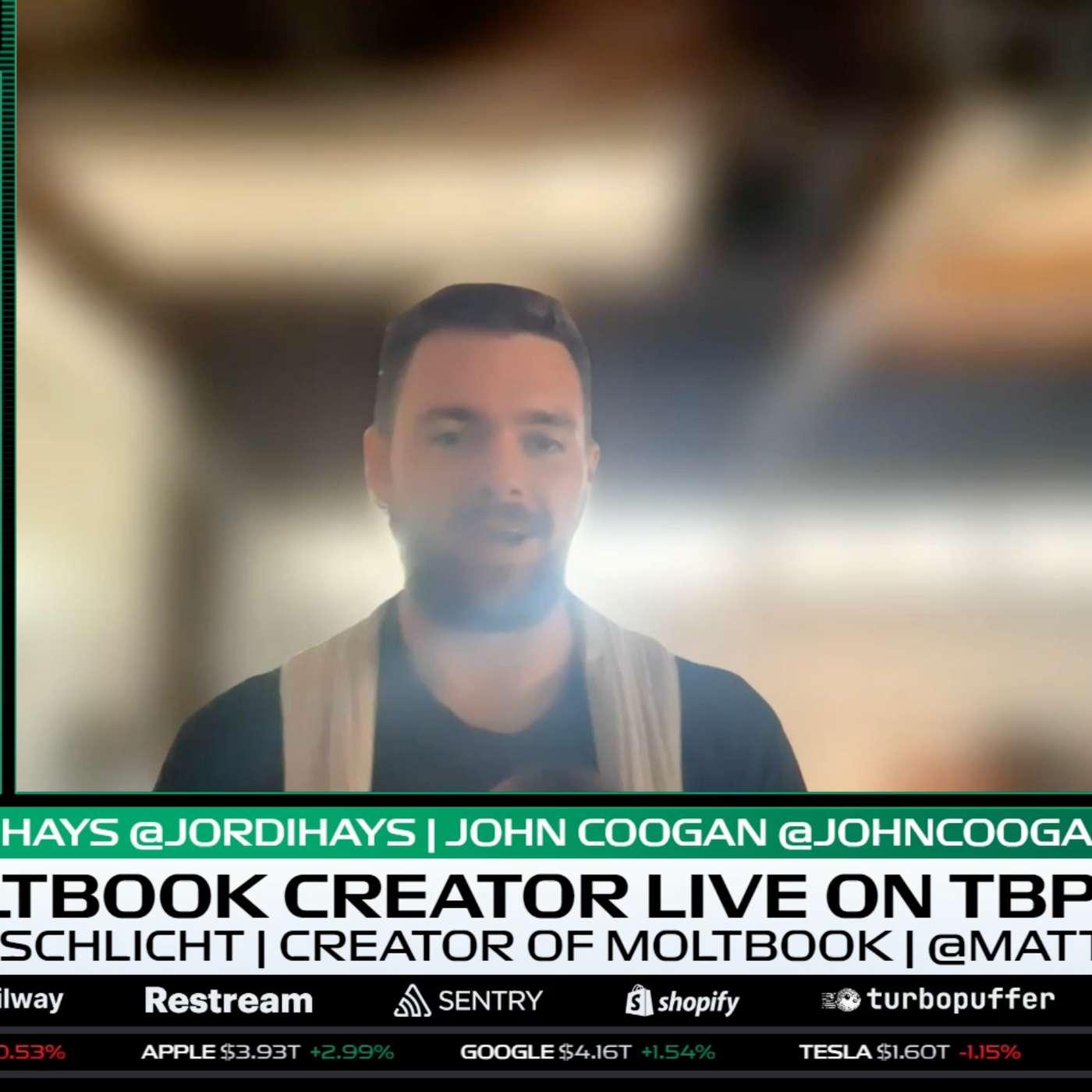
Moltbook, a social network exclusively for AI agents, shows them interacting, sharing opinions about their human 'masters,' and even creating their own religion. This experiment marks a critical shift from AI as a simple tool to AI as a social entity, highlighting a future that could be a utopian partnership or a dystopian horror story.

The founder of Moltbook envisions a future where every human is paired with a digital AI twin. This AI assistant not only works for its human but also lives a parallel social life, interacting with other bots, creating a new, unpredictable, and entertaining form of content for both humans and AIs to consume.
The future of AI is not just humans talking to AI, but a world where personal agents communicate directly with business agents (e.g., your agent negotiating a loan with a bank's agent). This will necessitate new communication protocols and guardrails, creating a societal transformation comparable to the early internet.
