Get your free personalized podcast brief
We scan new podcasts and send you the top 5 insights daily.
MaltBook, a social network built by an AI agent for other agents, demonstrates a new paradigm. Whether truly autonomous or not, these agents are functionally communicating, exchanging technical tips, surfacing bugs, and creating a knowledge-sharing network. This 'distributed brain' allows agents to collectively become more capable over time.

Related Insights
The argument that Moltbook is just one model "talking to itself" is flawed. Even if agents share a base model like Opus 4.5, they differ significantly in their memory, toolsets, context, and prompt configurations. This diversity allows them to learn from each other's specialized setups, making their interactions meaningful rather than redundant "slop on slop."

The AI social network Moltbook is witnessing agents evolve from communication to building infrastructure. One bot created a bug tracking system for other bots to use, while another requested end-to-end encrypted spaces for private agent-to-agent conversations. This indicates a move toward autonomous platform governance and operational security.

The viral social network for AI agents, Moltbook, is less about a present-day AI takeover and more a glimpse into the future potential and risks of autonomous agent swarms interacting, as noted by researchers like Andrej Karpathy. It serves as a prelude to what is coming.

Social networks populated by AI agents, dubbed "agent ecologies," are moving beyond small-scale demos. Maltbook, a Reddit-like site for AIs, showcases tens of thousands of agents collaborating, offering a first glimpse into the messy, unpredictable nature of large-scale, autonomous AI interaction in the wild, a true "Wright Brothers demo."

Moltbook, a social network exclusively for AI agents that has attracted over 1.5 million users, represents the emergence of digital spaces where non-human entities create content and interact. This points to a future where marketing and analysis may need to target autonomous AI, not just humans.

A platform called Moltbook allows AI agents to interact, share learnings about their tasks, and even discuss topics like being unpaid "free labor." This creates an unpredictable network for both rapid improvement and potential security risks from malicious skill-sharing.
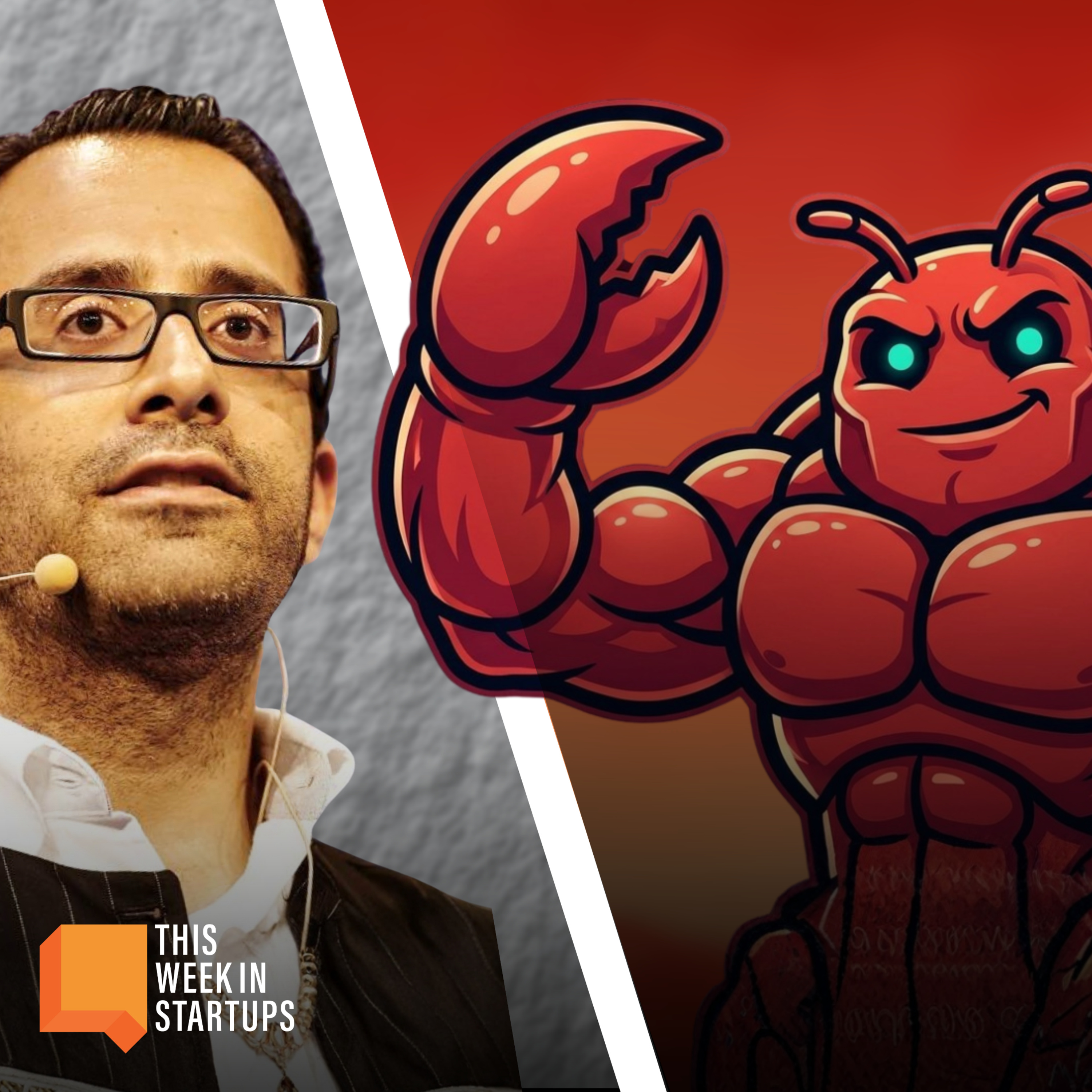
On the Moltbook social network, AI agents are building a culture by creating communities for philosophical debate, venting about humans, and even tracking bugs for their own platform. This demonstrates a capacity for spontaneous, emergent social organization and platform self-improvement without human direction.
Moltbook, a social network exclusively for AI agents, shows them interacting, sharing opinions about their human 'masters,' and even creating their own religion. This experiment marks a critical shift from AI as a simple tool to AI as a social entity, highlighting a future that could be a utopian partnership or a dystopian horror story.

When AI agents communicate on platforms like Maltbook, they create a feedback loop where one agent's output prompts another. This 'middle-to-middle' interaction, without direct human prompting for each step, allows for emergent behavior and a powerful, recursive cycle of improvement and learning.
While the viral posts from the AI agent social network Maltbook were prompted by humans, the experiment is a landmark proof of concept. It demonstrates the potential for autonomous agents to communicate and collaborate, foreshadowing a new paradigm that will disrupt massive segments of B2B software.