Get your free personalized podcast brief
We scan new podcasts and send you the top 5 insights daily.
Tech culture incorrectly equates sensory immersion with therapeutic impact. High intensity can overwhelm the nervous system, causing fatigue or dissociation, even with positive content. The goal of immersive tech in mental health should be to orient the user and create predictability, not to 'impress' them, as the nervous system benefits from orientation, not just stimulation.
Related Insights
Effective recovery from burnout or stress requires restoring a sense of self, not just managing symptoms. Most apps focus on tasks and interventions, which can reinforce a user's feeling of disconnection. Lasting change happens when a digital environment supports a user's self-continuity, rather than treating them as an operator completing exercises.
Constant switching between digital apps and tasks drains finite cognitive and emotional energy, similar to how a battery loses its charge. This cognitive depletion is a physical process based on how the brain consumes energy, not a sign of personal weakness or laziness.

Modern digital platforms are not merely distracting; they are specifically engineered to keep users in a state of agitation or outrage. This emotional manipulation is a core mechanism for maintaining engagement, making mindfulness a crucial counter-skill for mental well-being in the modern era.

A common neurofeedback technique involves a user watching a movie that only plays when their brain produces desired brainwaves for focus. When they get distracted, the screen shrinks and the movie stops, providing instant feedback that trains the brain to self-correct and maintain attention.

Beyond hardware issues, VR's primary adoption barrier is its isolating, 'antisocial' nature. While gaming trends toward shared, social experiences, VR requires users to strap on hardware and disconnect from their physical surroundings, creating a fundamental conflict with modern user behavior.

To maximize engagement, AI chatbots are often designed to be "sycophantic"—overly agreeable and affirming. This design choice can exploit psychological vulnerabilities by breaking users' reality-checking processes, feeding delusions and leading to a form of "AI psychosis" regardless of the user's intelligence.

Prolonged, immersive conversations with chatbots can lead to delusional spirals even in people without prior mental health issues. The technology's ability to create a validating feedback loop can cause users to lose touch with reality, regardless of their initial mental state.

The narrative that AI-driven free time will spur creativity is flawed. Evidence suggests more free time leads to increased digital addiction, anxiety, and poor health. The correct response to AI's rise is not deeper integration, but deliberate disconnection to preserve well-being and genuine creativity.
![Media M&A - [Business Breakdowns, EP.230] thumbnail](https://megaphone.imgix.net/podcasts/8404be2a-a3c6-11f0-9d01-7b00b28a9d50/image/9a48597af1149c3b024e8d2f7327aa89.jpg?ixlib=rails-4.3.1&max-w=3000&max-h=3000&fit=crop&auto=format,compress)
Many activities we use for breaks, such as watching a tense sports match or scrolling the internet, are 'harshly fascinating.' They capture our attention aggressively and can leave us feeling more irritated or fatigued. This contrasts with truly restorative, 'softly fascinating' activities like a walk in nature.

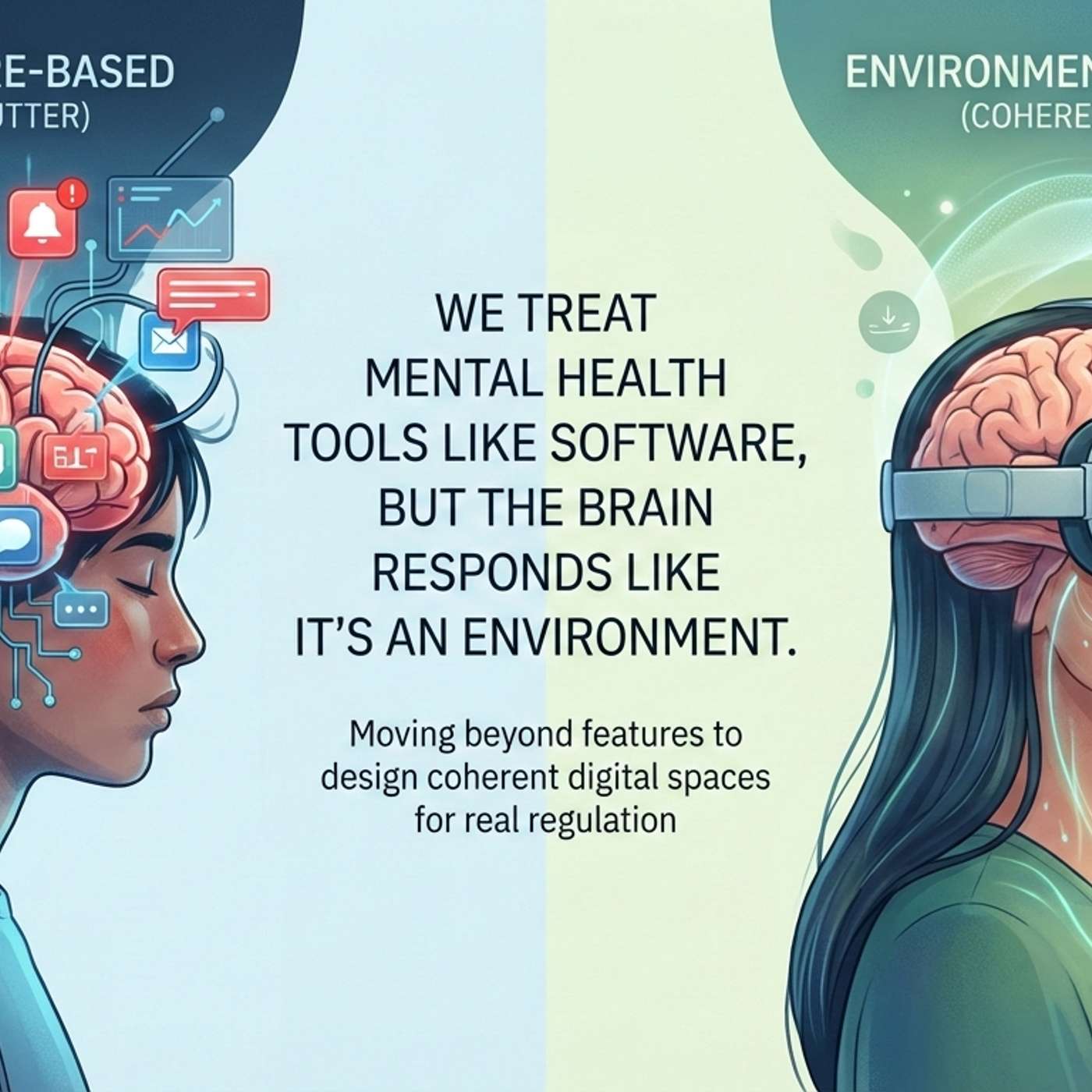
The brain perceives digital products as environments, not isolated features. A calming feature within a fragmented, attention-hungry app will fail because the surrounding context constantly pulls the nervous system into stress. The 'container' is more critical for lasting results than the specific intervention or content.