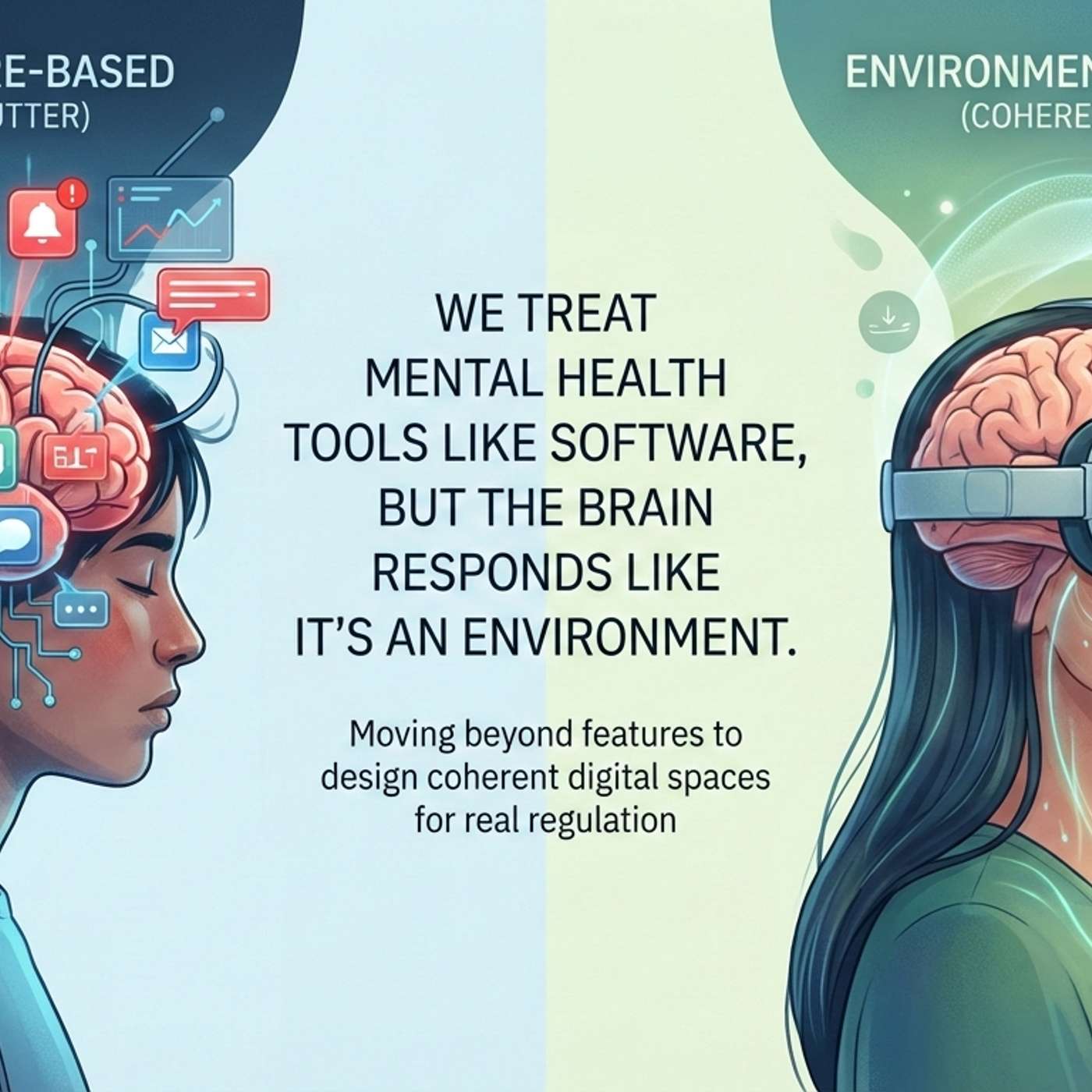
Effective recovery from burnout or stress requires restoring a sense of self, not just managing symptoms. Most apps focus on tasks and interventions, which can reinforce a user's feeling of disconnection. Lasting change happens when a digital environment supports a user's self-continuity, rather than treating them as an operator completing exercises.
The brain perceives digital products as environments, not isolated features. A calming feature within a fragmented, attention-hungry app will fail because the surrounding context constantly pulls the nervous system into stress. The 'container' is more critical for lasting results than the specific intervention or content.
Tech culture incorrectly equates sensory immersion with therapeutic impact. High intensity can overwhelm the nervous system, causing fatigue or dissociation, even with positive content. The goal of immersive tech in mental health should be to orient the user and create predictability, not to 'impress' them, as the nervous system benefits from orientation, not just stimulation.