Get your free personalized podcast brief
We scan new podcasts and send you the top 5 insights daily.
Following recent conflicts and internal unrest, the Iranian stock market is driven by overwhelming fear rather than fundamentals. The median price-to-earnings ratio has fallen below three, near all-time lows. This indicates that investors are pricing in a constant state of extreme geopolitical risk, creating a uniquely distressed market.

Related Insights
The recent unrest originated with merchants in Tehran's Grand Bazaar, a group that prioritizes stability. Their protests highlight the crisis's economic roots: inability to access hard currency for imports, rampant inflation, and collapsing consumer demand, making business untenable for even multi-million dollar traders.
Counter to conventional value investing wisdom, a low Price-to-Earnings (P/E) ratio is often a "value trap" that exists for a valid, negative reason. A high P/E, conversely, is a more reliable indicator that a stock may be overvalued and worth selling. This suggests avoiding cheap stocks is more important than simply finding them.
With the S&P 500's Price-to-Earnings ratio near 28 (almost double the historic average) and the Shiller P/E near 40, the stock market is priced for perfection. These high valuation levels have historically only been seen right before major market corrections, suggesting a very thin safety net for investors.

The valuation gap between Airwallex ($8B) and Ramp ($32B), which have comparable revenues, demonstrates a tangible "Asia discount." Investors significantly mark down companies with a strong presence or founding nexus in Asia due to perceived geopolitical and data security risks.

While markets fixate on Fed rate decisions, the primary driver of liquidity and high equity valuations is geopolitical risk influencing international trade and capital flows. This macro force is more significant than domestic monetary policy and explains market resilience despite higher rates.
Despite alarming geopolitical headlines concerning Venezuela, Iran, and US-NATO relations, emerging markets are showing resilience. Investors are largely ignoring this "noise," focusing on the strong cyclical backdrop: upward growth revisions, loose financial conditions, and supportive commodity prices. Markets are prioritizing the global economic outlook over political shocks unless those shocks directly threaten growth.

The current Iranian protests are uniquely potent because the regime is at its weakest geopolitically. The loss of regional proxies like Hezbollah and Hamas, coupled with key ally Russia's preoccupation with Ukraine, has left the Iranian government more isolated and vulnerable than during any previous wave of unrest.

While US sanctions are a factor, the Iranian currency's freefall is largely due to structural corruption. The economy is dominated by the military and clerical foundations, a political-economic model that stifles growth and fuels public anger—a problem sanctions relief alone cannot solve.
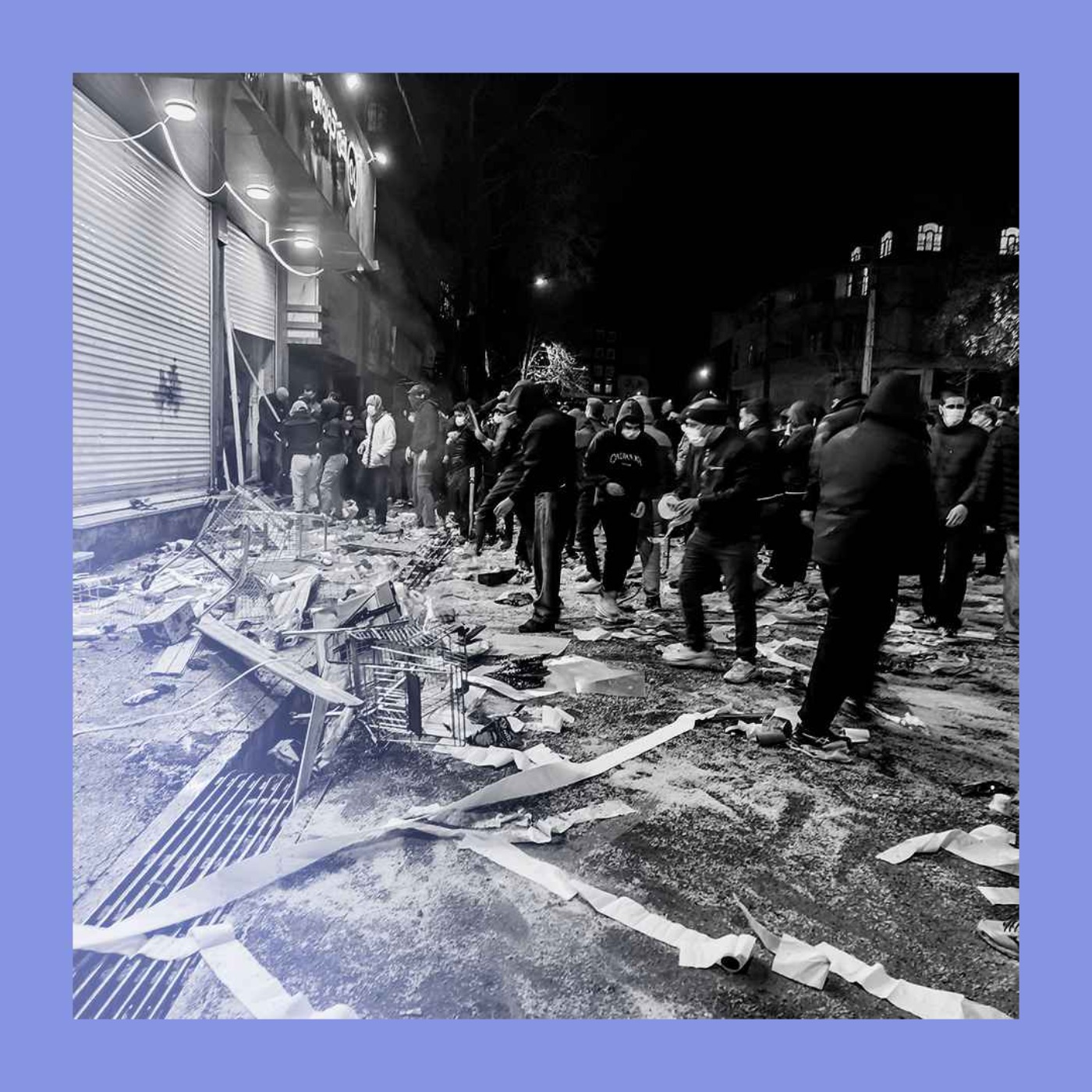
After a two-week stock market shutdown during a previous conflict, a massive sell-off occurred. This was a liquidity event, not a reflection on fundamentals. Retail investors, who dominate the market, were locked out of their funds and sold at any price simply to access cash, creating a cascading effect.
When asset valuations are elevated across all major markets, traditional fundamental analysis becomes less predictive of short-term price movements. Investors should instead focus on macro drivers of liquidity, such as foreign exchange rates, cross-border flows, and interest rates.