Get your free personalized podcast brief
We scan new podcasts and send you the top 5 insights daily.
In just over 30 years, Tehran's population exploded from 500,000 to nearly 5 million. This rapid, oil-fueled urbanization overwhelmed infrastructure and created a vast, alienated urban class, forming a fertile ground for revolutionary discontent.

Related Insights
The recent unrest originated with merchants in Tehran's Grand Bazaar, a group that prioritizes stability. Their protests highlight the crisis's economic roots: inability to access hard currency for imports, rampant inflation, and collapsing consumer demand, making business untenable for even multi-million dollar traders.

Shia tradition dictates memorial services 40 days after a death. This created a repeating protest cycle: state violence created martyrs, whose memorials 40 days later sparked new demonstrations, leading to more deaths and more memorials, thereby escalating the conflict.
Widespread suffering alone doesn't trigger a revolution. Historically, successful uprisings require a politically savvy, well-organized group with a clear agenda and influential leadership. Disparate and unorganized populations, no matter how desperate, tend to see their energy dissipate without causing systemic change.

The Iranian Revolution was fueled by a Shia worldview centered on martyrdom, cosmic struggle between good and evil, and an apocalyptic final battle. U.S. policymakers, lacking any understanding of this religious framework, were completely unprepared for its political power.
The environment has become the number one security issue, manifesting as climate change. In the developing world, this drives migration from unsustainable rural areas to overburdened megacities. This massive, unchecked urbanization creates immense governance challenges and directly fuels populist movements in destination regions like Europe, making it a central factor in global instability.
The Shah’s modernization efforts, including land reform and expanded state education, were intended to build popular support. Instead, they backfired by threatening the economic base and social authority of the powerful clerical class, turning them into organized opponents.
The Iranian populace is exhausted with theocratic rule after five decades. Any future authoritarian leader will likely be a product of the intelligence or security services, appealing to nationalism rather than revolutionary ideology. The era of the turban-wearing ruler is over.

Dara Khosrowshahi theorizes the Shah of Iran's regime collapsed because he modernized too fast, focused excessively on military power over industrial growth, and failed to bring along rural populations and integrate Islam into his vision, creating a power vacuum for the Islamic regime to exploit.

Unlike the 2022 protests led by middle-class women over social freedoms, the current unrest is driven by jobless young men—a traditionally pro-regime group—angry about economic collapse. This shift in demographics and motivation makes the government's usual appeasement tactics less effective.
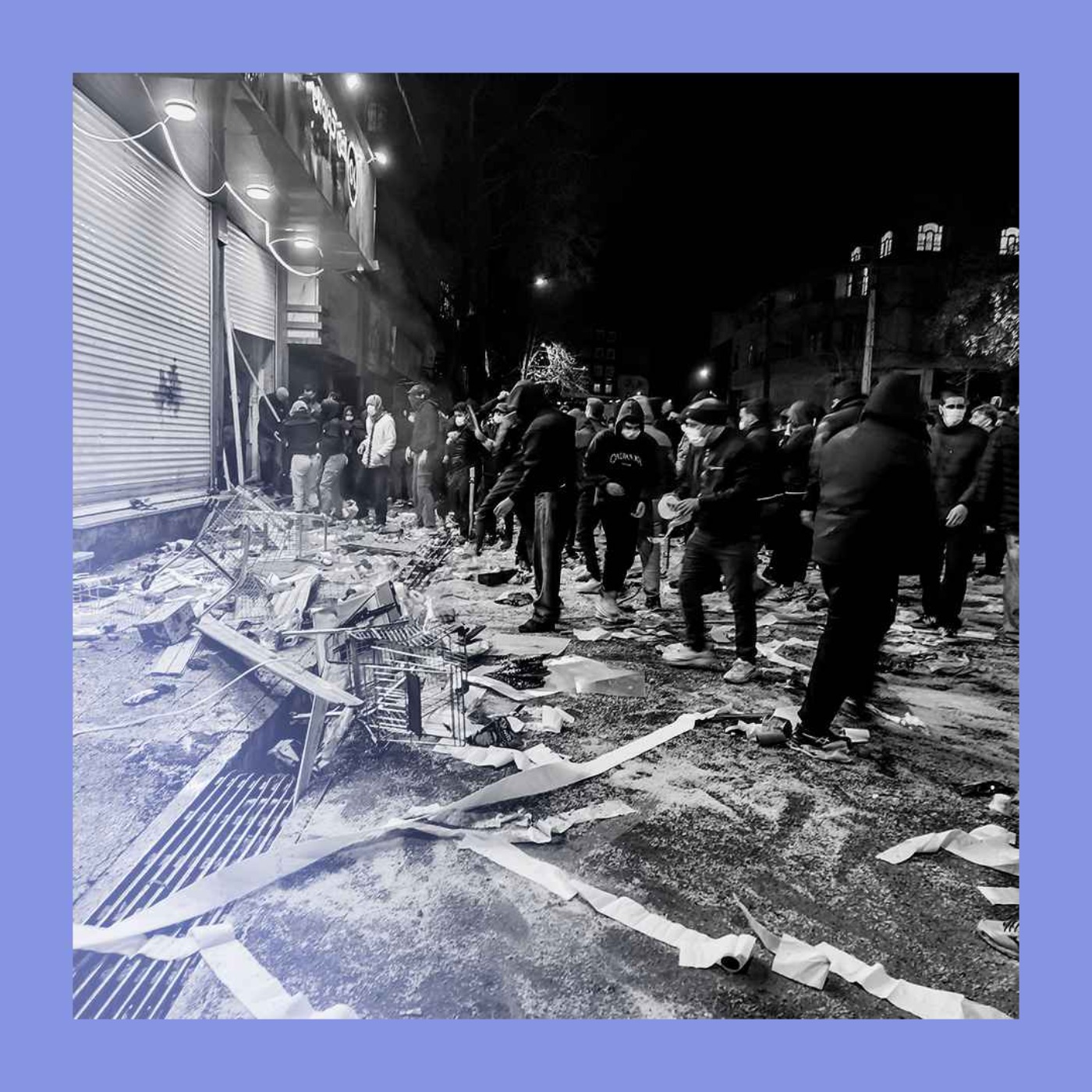
History demonstrates a direct, causal link between widening inequality and violent societal collapse. When a large portion of the population finds the system unbearable, it leads to events like the French Revolution—a blunt cause-and-effect relationship often sanitized in modern discourse.
