Get your free personalized podcast brief
We scan new podcasts and send you the top 5 insights daily.
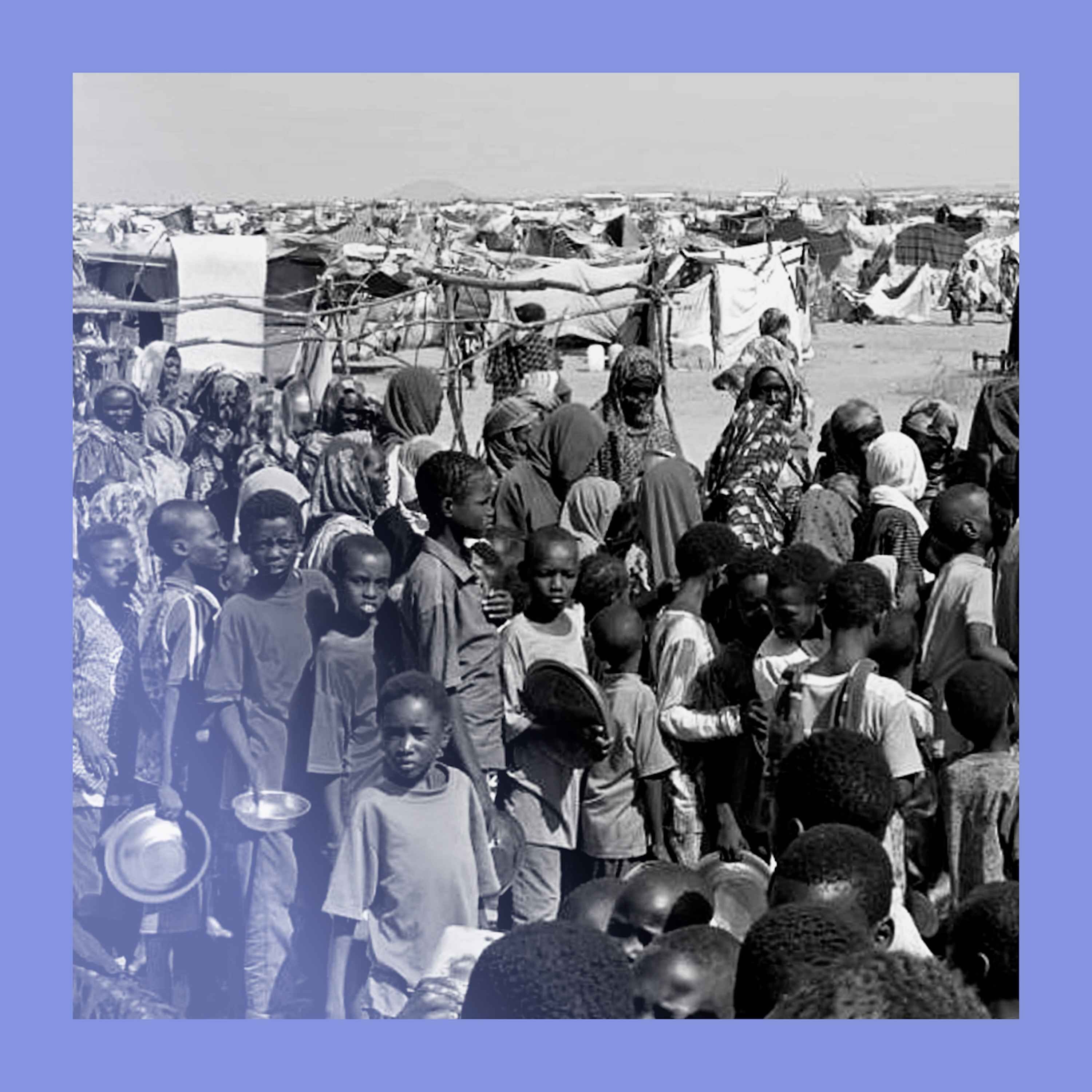
The African Union (AU) maintains a rigid, hardwired opposition to any changes in national borders. Leaders believe that altering borders in one state would unleash "absolute mayhem" across the ethnically diverse continent. This deep-seated fear of a domino effect explains why even seemingly logical unifications, like for the Somali people, are non-starters.

Related Insights
Despite growing talk of "national divorce," the idea of a state peacefully seceding is highly unrealistic. The federal government would almost certainly not allow it and would likely resort to military intervention to maintain the union, rendering the scenario a fantasy.

The paramilitary group's control over Darfur and the west effectively splits Sudan into two territories: one run by the RSF and the other by the conventional army in the east. This simplifies the conflict map but may be used as a negotiating tactic rather than an endpoint.
Historically, Russia and China's strategy as continental empires involves avoiding two-front wars and actively destabilizing neighboring states. This creates buffer zones and prevents any single power from becoming a threat on their borders, ensuring their own security through regional instability.

Joe Studwell argues that, contrary to common academic belief, Africa's primary developmental obstacle has been its historically low population density, a result of a severe disease burden. This lack of human capital concentration has been more fundamental than issues of governance or civil strife, which are often symptoms rather than root causes.
In a diverse, multi-ethnic country, national identity cannot be based on ancestry or "bloodline." Instead, it can be rooted in a shared abstract value. Canada's unifying identity is positioned as "freedom"—the common reason people have historically immigrated, providing a non-ethnic foundation for unity.

The transition to a "minority majority" country, where the formerly dominant ethnic group falls below 50% of the population, is a powerful historical indicator of civil war. This pattern is not unique to the US or white populations; it has been observed globally, including in India, suggesting a deep-seated human response to demographic shifts.

The primary force preventing a collapse of the Iranian regime isn't its own strength, but fear among its neighbors. Countries like Turkey and Pakistan worry a collapse would lead to a massive refugee crisis and empower separatist movements on their borders, creating a strong regional bias for stability.

Contrary to historical trends, policymakers in key African nations are demonstrating a sustained commitment to economic reforms. This resilience, forged by recent global shocks, is signaling to investors that current reform paths are more enduring, reducing perceived political risk and increasing interest in the region's sovereigns.

The failure of Western nation-building highlights a key principle: establishing durable institutions must precede the promotion of democratic ideals. Without strong institutional frameworks for order, ideals like "freedom" can lead to chaos. America’s own success was built on inherited institutions, a luxury many developing nations lack, making the export of democracy exceptionally difficult.

A CIA task force analyzed 38 variables to predict political instability, including common assumptions like poverty and inequality. They found only two were highly predictive: 1) a country being a partial democracy, or “anocracy,” and 2) its political parties organizing around identity (race, religion) rather than ideology.
